

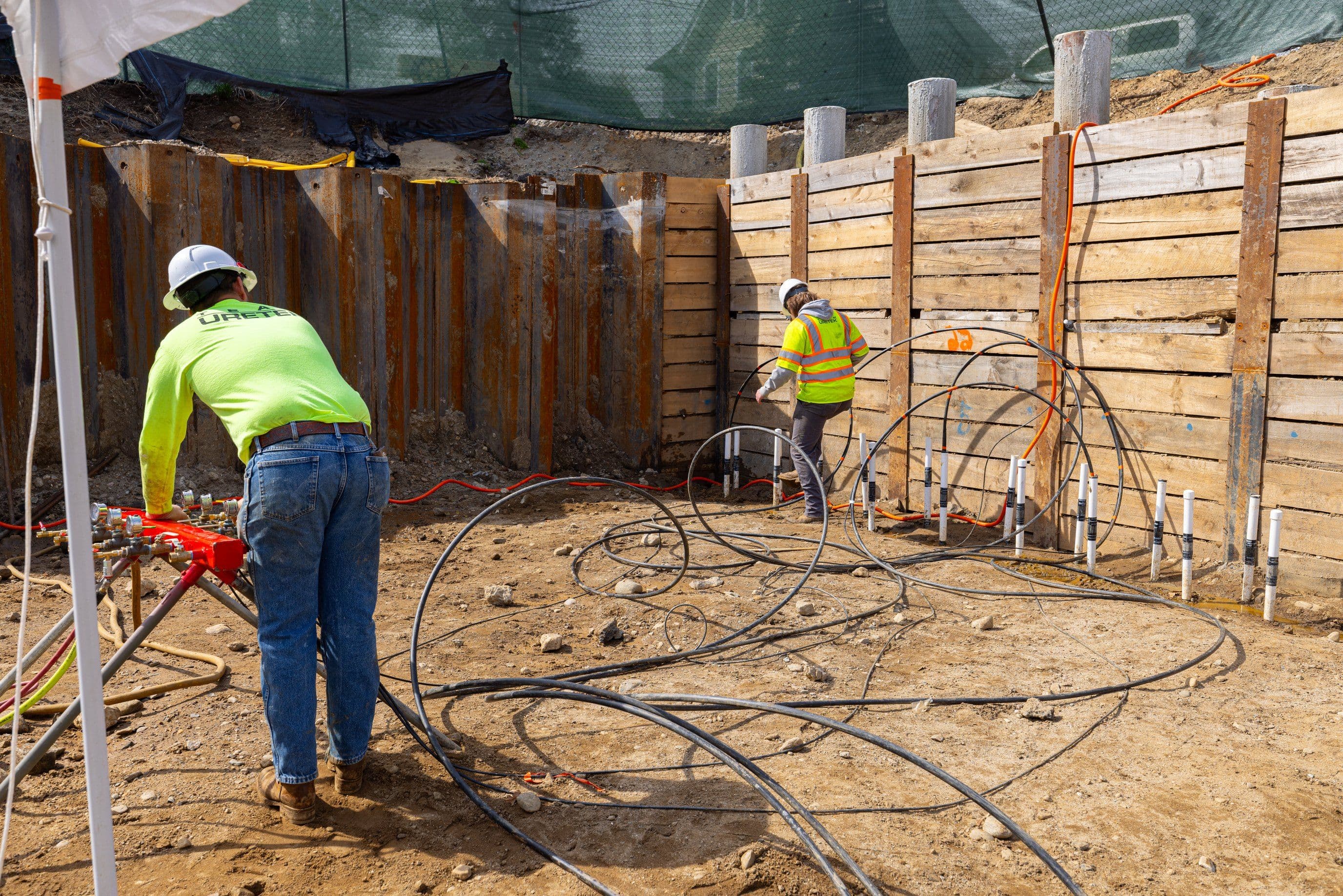
A retaining wall only holds as long as the soil behind and beneath it does. When that soil loosens or washes out, the wall starts to lean, bulge, or crack.
Applied in these Services
Retaining Wall Stabilization

Soil Stabilization
Related Industries
Transportation
Marine and Coastal
Need a Site Assessment?

800-240-7868

A retaining wall only holds as long as the soil behind and beneath it does. When the backfill loosens, washes out through joints and weep holes, or the soil under the footing can't carry the load, the wall starts to lean, bulge, crack, or separate at its joints, even when the wall itself is sound. MSE walls depend on their reinforced backfill the same way. URETEK strengthens that soil in place: expanding polymer fills the voids behind the wall and compacts the loose backfill, or improves the bearing soil beneath the footing, through small injection points with little or no excavation where conditions permit. Transportation agencies, rail operators, cities, and property owners use it when a wall is moving but doesn't need to come down.
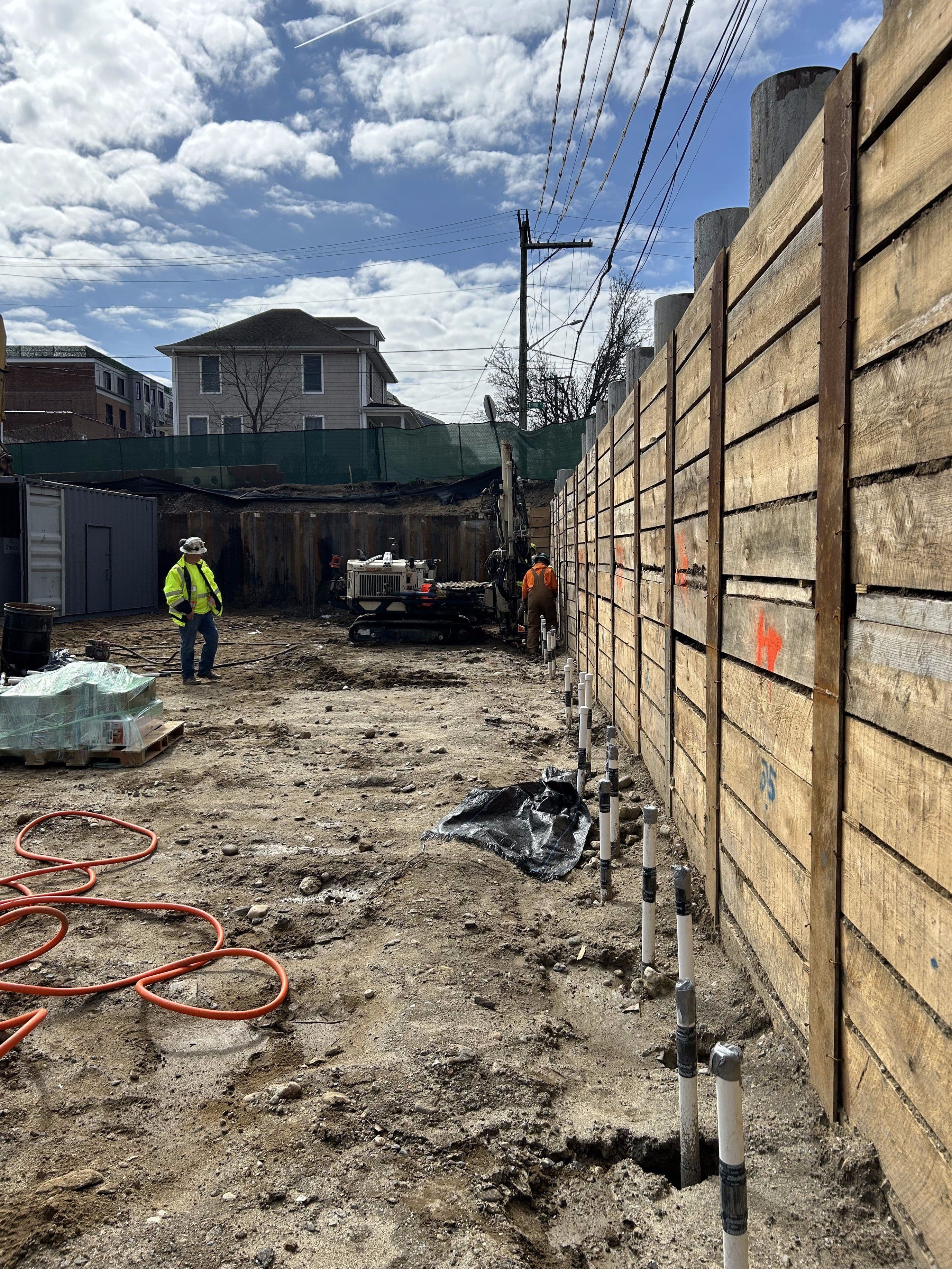
Wall movement usually starts in the soil, not the wall. Here's what URETEK sees most often.

Backfill behind the wall losing density or washing out through joints, cracks, or weep holes
Water building up behind the wall after heavy rain, adding pressure and carrying fine soil away
Tidal scour or flowing water removing the soil a seawall or bulkhead is meant to hold back
Loose or weak soil beneath the wall's footing that can't carry the wall and the load behind it
A retaining wall usually shows warning signs before it fails outright. Watch for these.
A wall that visibly leans or bulges compared to how it was built
Cracks running horizontally or diagonally through the wall face
Panel joints opening or panels shifting out of line on an MSE or segmental wall face
Soil pulling away from the top of the wall, leaving a visible gap
Water seeping or pooling at the base of the wall after rain
Guardrails, sidewalks, or pavement above the wall starting to crack or shift
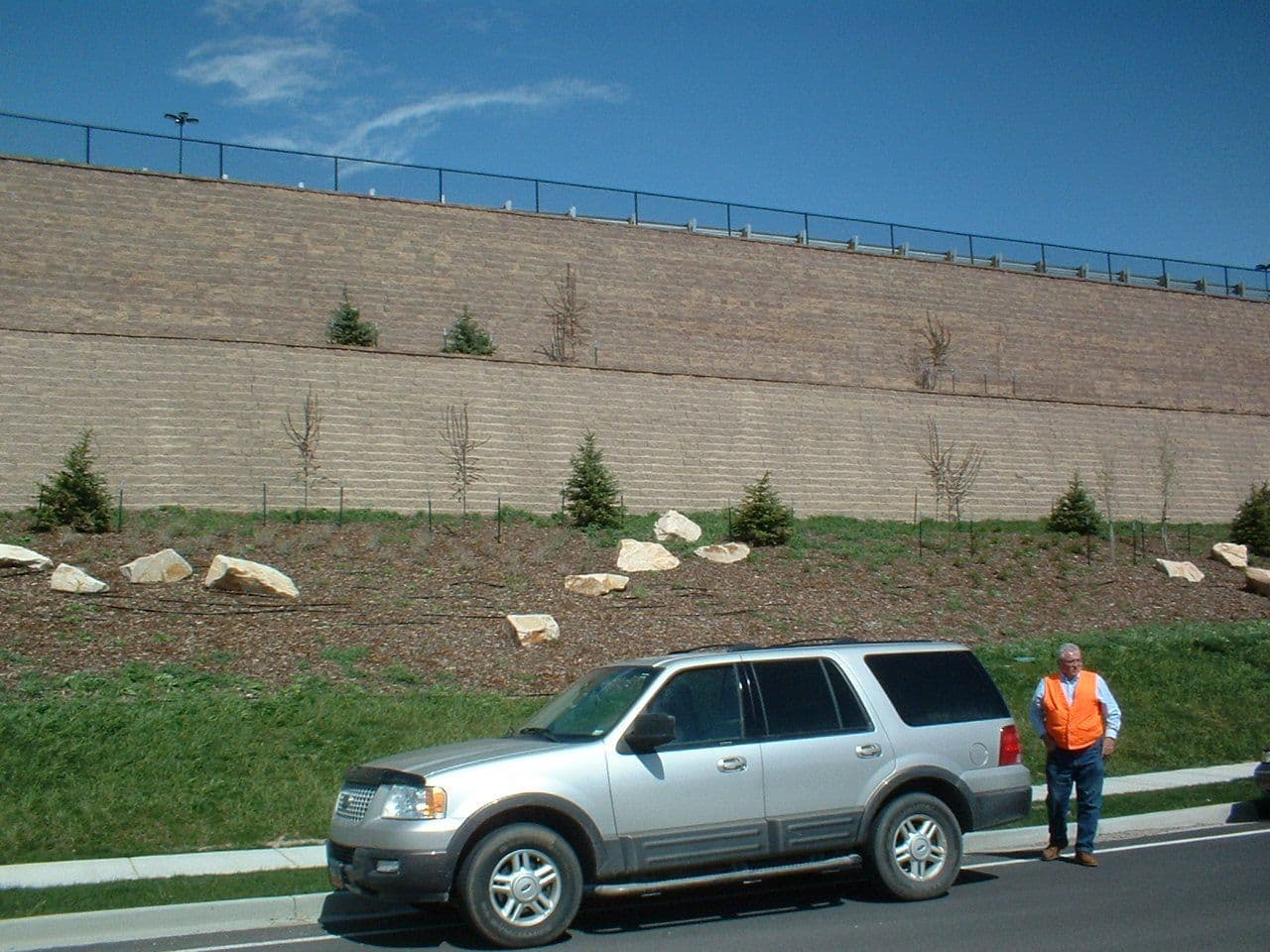
This is the right page when a retaining wall, MSE wall, seawall, or bulkhead is leaning, bulging, cracking, or separating, or when the soil behind or beneath it can no longer support it.
It's not the best fit in every case. Check these first:
 An embankment or slope is losing soil, with no wall holding it? See Embankment & Slope Repair.The ground behind the wall washed out suddenly after a storm or water-main break? See Storm Washouts & Water-Main Breaks.A building's foundation is settling, not a wall? See Foundation Settlement.
Drainage or structural deficiencies in the wall itself are addressed with the engineer of record.
What strengthening the soil behind and beneath a wall, instead of rebuilding the wall, actually gets you.
Treats the soil where the movement starts, filling voids and compacting loose backfill behind the wall rather than patching the wall face
Doesn't require the wall to come down. The injection happens from behind or through the wall, so there's no demolition, and the road, dock, or property above stays usable during the work
Works where there's no room to excavate. On a new rail-platform retaining wall in Coatesville, Pennsylvania, beside active electrified tracks, URETEK improved the loose soil beneath the footing in place. The sealed engineering calculation put the improved soil at 2,551 psf against a 2,500 psf requirement, with no wider footing and no extra over-excavation
Works on walls of nearly any type: highway retaining walls, MSE walls with reinforced backfill, bridge abutments, and marine seawalls and bulkheads
Keeps roads open. A Massachusetts seawall that had lost the soil behind it to tidal scour was stabilized in one week with lane restrictions instead of a full road closure, and the section has remained sound since
Retaining Wall Stabilization and Soil Stabilization, the Services, perform this fix, chosen based on whether the weakness is in the backfill behind the wall or the soil beneath it
URETEK's general approach starts with surveying the wall and investigating the soil behind and beneath it to find where support has been lost. Crews then inject expanding polymer through small holes behind or through the wall, filling voids and compacting the loose backfill, or improving the bearing soil beneath the footing, with movement monitored throughout so the wall isn't pushed. We verify the result with a pre/post survey of wall movement plus monitoring.
This is the job Retaining Wall Stabilization performs, with Soil Stabilization where the weakness is in the soil beneath the wall. It's different from Embankment & Slope Repair's focus on ground that no wall is holding.
URETEK has stabilized highway retaining structures, rail-platform walls, and marine seawalls nationwide, backed by decades of engineering and execution experience.





We verify the result with a pre/post survey of wall movement plus monitoring. URETEK 486 Star® reaches about 90% of its strength within 15 minutes of injection. Designed for long-term performance when properly selected and installed.
In most cases, yes, when the wall itself is sound and the problem is the soil. Injection happens from behind or through the wall, so there's no demolition, no new wall materials, and the road, dock, or property above stays usable.
An MSE (mechanically stabilized earth) wall holds its shape through layers of reinforcement in compacted backfill behind its facing panels. When that backfill loosens or washes out, panels start to shift or separate. URETEK stabilizes MSE walls with reinforced backfill, as well as highway retaining walls, bridge abutments, and marine seawalls and bulkheads.
Yes. On a new rail-platform retaining wall in Coatesville, Pennsylvania, beside active electrified tracks, the loose soil beneath the footing was improved through sleeves cast in the footing on a roughly 3-by-3-foot grid, to about 10 feet deep. The sealed engineering calculation put the improved soil at 2,551 psf against a 2,500 psf requirement, and laser monitoring stopped any injection that began to lift the new concrete.
Yes, in most cases. Injection ports are small and placed with minimal disruption. A Massachusetts seawall that had lost the soil behind it to tidal scour was stabilized in one week with lane restrictions instead of a full road closure.
Get the soil behind and beneath the wall evaluated before the wall gives way.
Request an Assessment

 800-240-7868


