

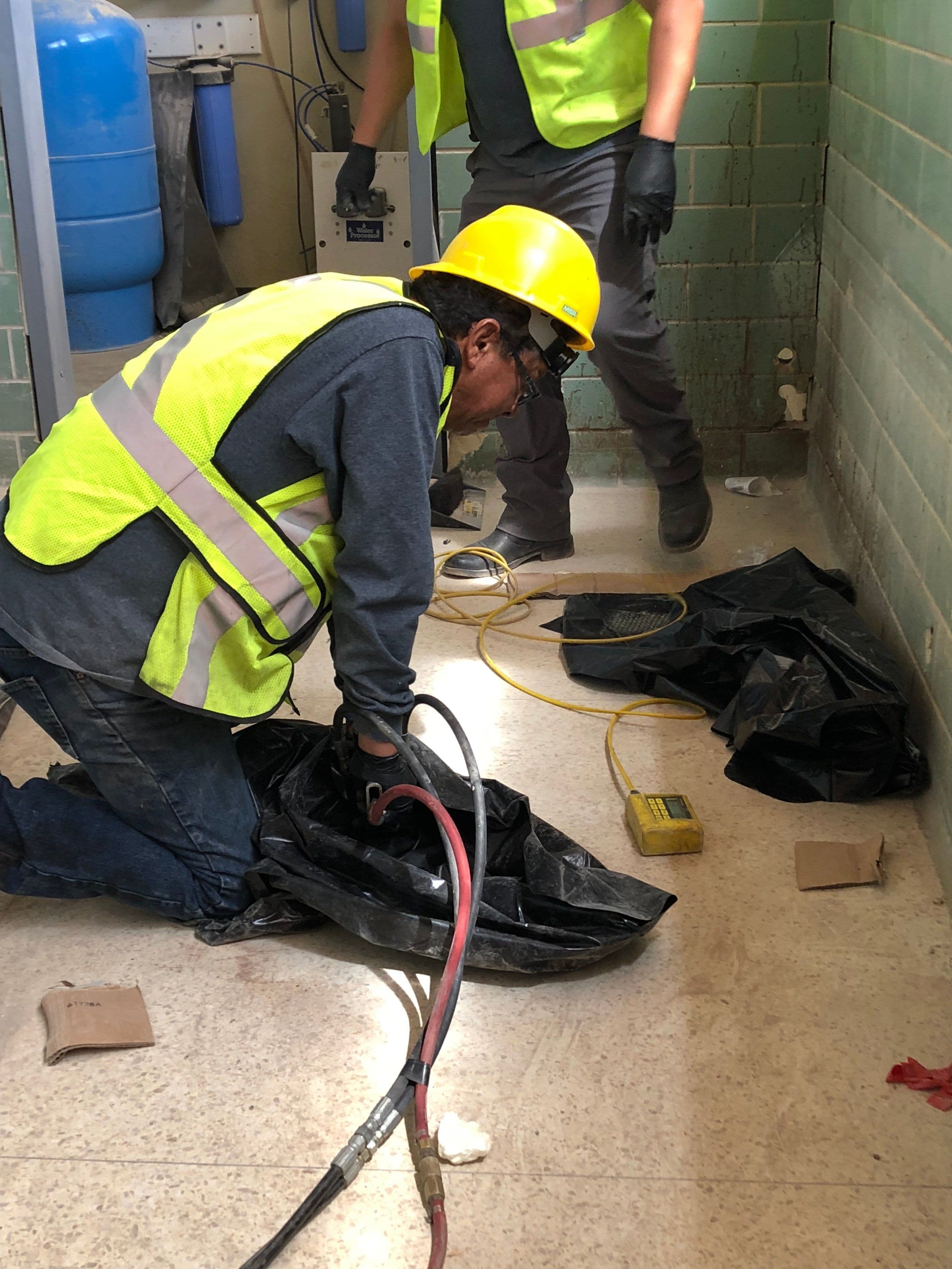
A foundation that has started to settle doesn't stop on its own. It needs support restored at depth, and sometimes the whole structure brought back to level.
Solutions for this Service
Foundation Settlement

Added Load on Existing Foundations
Building Out of Level
Weak Soils
Related Industries
Commercial and Institutional
Industrial Facilities
Need a Site Assessment?

800-240-7868

A foundation that has started to settle doesn't stop on its own. The soil beneath it has lost the strength it once had, and the structure above needs that strength restored at depth. Foundation Repair & Underpinning restores that support in place. Structural polymer is injected beneath the footing at designed depths. It fills voids, compacts and confines the weak soil, and forms stabilized support zones that restore bearing performance and reduce further settlement, with pressure and movement monitored in real time. Where a building has settled unevenly across its footprint, injection at multiple points lifts and realigns the structure as a whole rather than correcting a single slab or footing. Facility owners, engineers, and public agencies use it when a foundation is settling and needs support restored without taking the building offline.
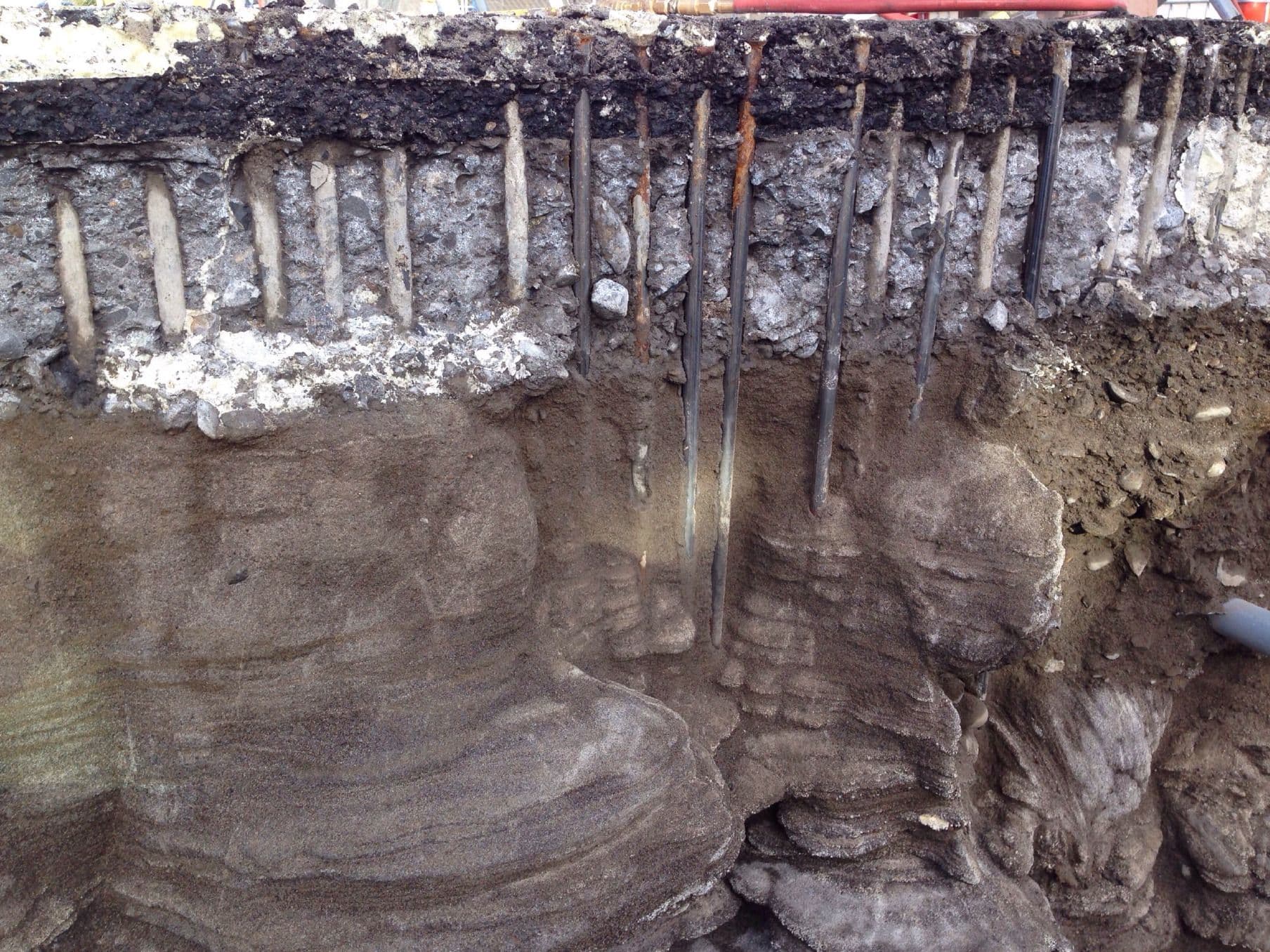
A settling foundation doesn't correct itself. Here's what it looks like before it becomes structural damage.

Differential settlement causing cracks in walls, floors, or foundation footings
Weak or compressible soil beneath a foundation that can no longer carry the building's full load
A structure settling unevenly across its footprint, with one side or corner sitting noticeably lower than the rest
Structures next to new excavation, where nearby digging risks disturbing an existing foundation's support
A foundation losing bearing capacity usually shows up above ground well before it becomes a structural emergency.
Floor slab cracking or joint faulting near columns and foundation walls
A visible tilt, dip, or uneven line along a slab, footing, or foundation wall
An elevation survey showing differential settlement across the building
New equipment, storage loads, or renovation plans that exceed the foundation's original design capacity
New construction or excavation planned or underway next to an existing structure
A foundation that has settled before and shows signs of settling again
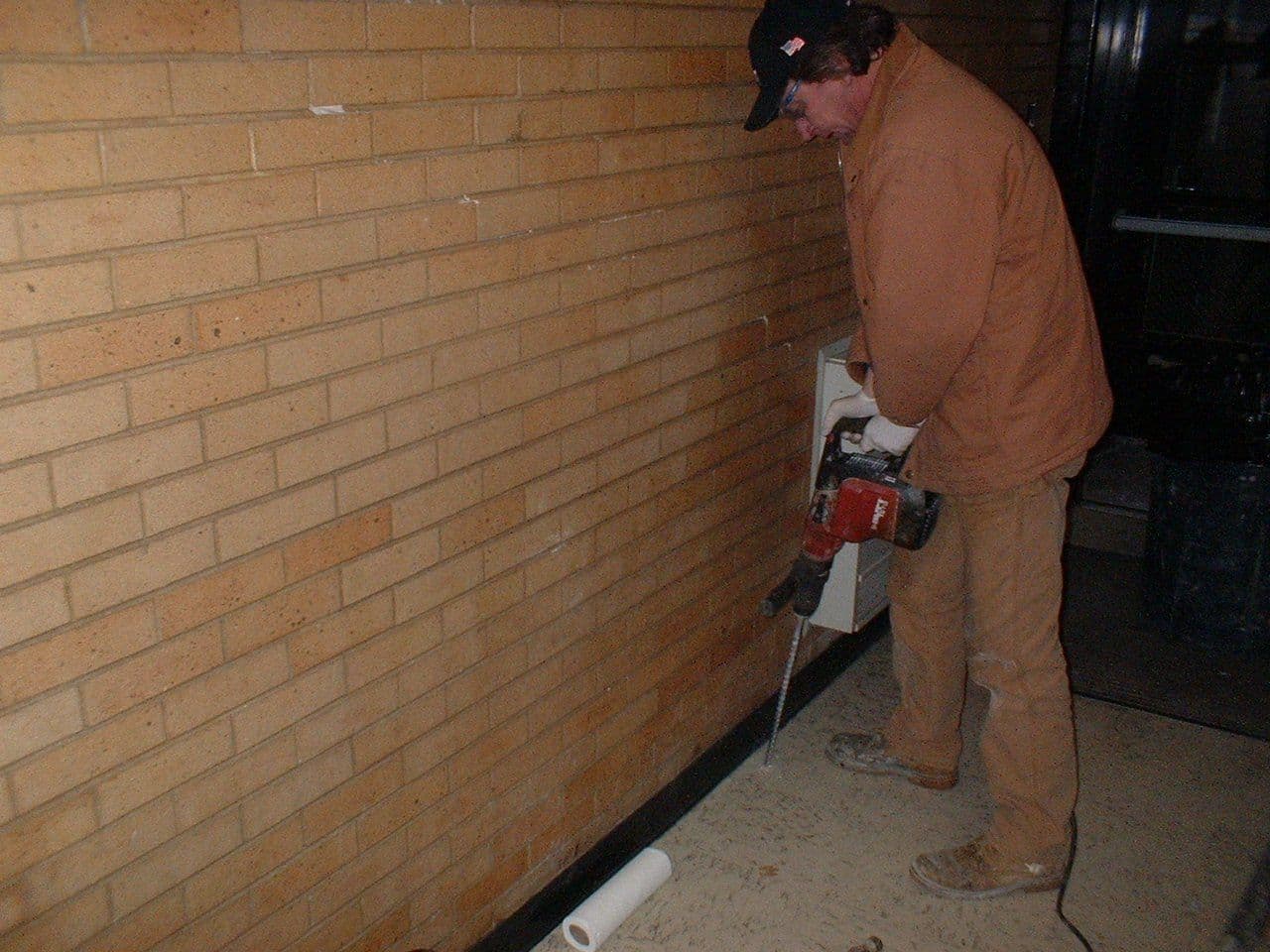
Why facility owners and engineers choose Foundation Repair & Underpinning over excavation-based repair.
Works at the source of the settlement. Structural polymer is injected beneath the footing at designed depths. It fills voids, compacts and confines the weak soil, and forms stabilized support zones that restore bearing performance and reduce further settlement.
Realigns the whole structure as one. Injection points are placed across the building's footprint based on a survey of how much each area has settled, addressing the tilt as one coordinated correction instead of a series of unrelated patches.
The building stays occupied and operating during the work. Injection reaches the foundation through small holes, so there's no need to clear out a facility or halt production while the soil beneath it is reinforced.
Most jobs finish in days, not the weeks excavation-based repair takes. At twin warehouses in South Dakota, URETEK stabilized and lifted 28,800 square feet of foundation across both sites in a matter of days per site.
Suited to historic and public buildings. With little or no excavation where conditions permit and no demolition, original foundations, floors, and finishes stay in place; at the Field Museum of Chicago, the ground floor was stabilized and re-leveled in three days using the UDI process, without a full closure.
Foundation Repair & Underpinning is the right call when an existing foundation has lost bearing capacity because the soil beneath it has weakened, and the goal is to reinforce that soil at depth without excavating or taking the structure offline. It fits settling foundations under heavy or constant loads, buildings taking on more load than they were built for, older and historic structures that can't come out of service, sites where new excavation nearby threatens an existing structure's support, and buildings that have settled unevenly and need to be brought back into alignment as a whole.
It isn't the right tool when the actual problem is an open, empty void rather than weak-but-present soil; Void Filling solves that directly. It also isn't the fix for a slab or pavement surface that's settled on its own, separate from the building's foundation; Concrete Lifting & Leveling addresses that directly.
It is often paired with Void Filling when a void beneath part of the foundation caused the settlement, and with Curtain Grouting when groundwater is also part of the problem, so both causes are addressed in the same job.
1
Evaluate
A URETEK project manager evaluates the site, the soils, and the failure mode, and designs the treatment around what the data shows. That includes the foundation's condition and how much each point across the structure has settled.
2
Deploy
Crews mobilize on the schedule the site needs, including nights, weekends, or holidays, in a self-contained unit.
3
Drill
Small holes are drilled through the foundation or nearby grade at locations set by a site-specific injection plan.
4
Inject
URETEK 486 Star polymer is injected into the weak soil, expanding and compacting it under controlled pressure to restore bearing capacity.
5
Monitor
Pressure and movement are tracked throughout injection, so the effect stays controlled and reaches the areas that actually need it.
6
Validate
We verify the result with a pre/post elevation survey, with monitoring where specified, and hand over the injection and test records.
URETEK has stabilized and re-leveled foundations at warehouses, convention centers, distribution facilities, universities, museums, and active treatment plants nationwide, backed by decades of engineering and execution experience.




URETEK 486 Star polymer densifies the weak soil beneath the foundation as it's injected, so the foundation ends up resting on stronger soil than it started with, not the same soil that caused the settlement. We verify the result with a pre/post elevation survey plus monitoring. Designed for long-term performance when properly selected and installed. Public projects carry a two-year warranty against settlement. Private projects carry a one-year performance warranty plus a 10-year material warranty. Project terms govern.
Polymer flows into voids and weak zones in the soil beneath the foundation, then expands and compacts that soil under controlled pressure. On a convention center project, that process increased bearing capacity by 50% across 55 existing footings, without removing or replacing them, which is a measurable capacity gain.
The injection plan targets multiple points across the structure's footprint at once, based on a survey of how much each point has settled. Pressure and elevation are tracked in real time at each location during injection, so the lift stays controlled and proportional, correcting the tilt rather than creating a new one in a different direction.
In most cases, yes, and sometimes by a wide margin. On an industrial support column stabilization project at the University of Tennessee, this process saved an estimated $380,000 compared to the excavation-and-helical-pier alternative that had originally been proposed.
Often, yes. At the Field Museum of Chicago, URETEK stabilized and re-leveled the ground floor in just three days using the UDI process, and at a U.S. Air Force Academy medical clinic, the entire foundation slab was stabilized in two days over a single scheduled weekend to avoid disrupting clinic operations.
Get a foundation evaluated before settlement becomes structural damage. URETEK crews respond fast, including emergencies.
Request an Assessment

 800-240-7868


