

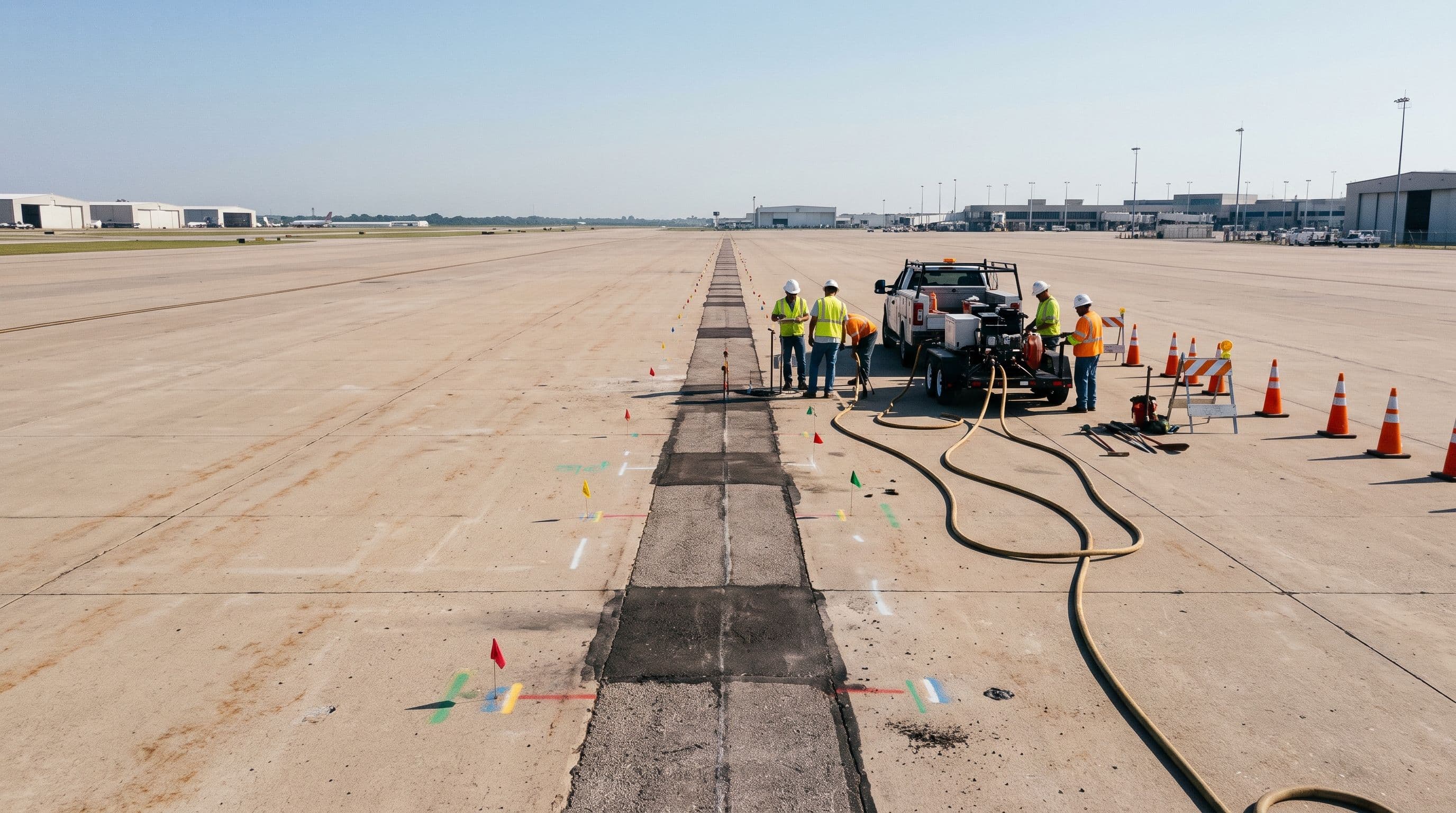
Trench backfill is looser than the ground around it, so water follows the trench and carries soil with it, until the pavement above gives way.
Solutions for this Service
Utility Void Filling

Pipeline Stabilization
Storm Washouts & Water-Main Breaks
Soil Loss & Erosion Voids
Related Industries
Municipal Infrastructure
Transportation
Need a Site Assessment?

800-240-7868

A utility trench never quite matches the undisturbed soil around it. Its backfill is looser and more permeable, so water from a leak, a storm, or a high water table finds the trench and follows it, washing soil along the line and opening voids under the pavement, slabs, and structures above.
Utility Trench Breakers interrupt that path. URETEK injects expanding structural polymer into the trench backfill through small holes in the surface, filling the voids and densifying the backfill into zones across the trench that break the path water has been using, with little or no excavation where conditions permit, without reopening the trench, and with the utility kept in service. Utilities, airports, cities, and transportation departments use it when a trench has become a channel for water and soil loss.
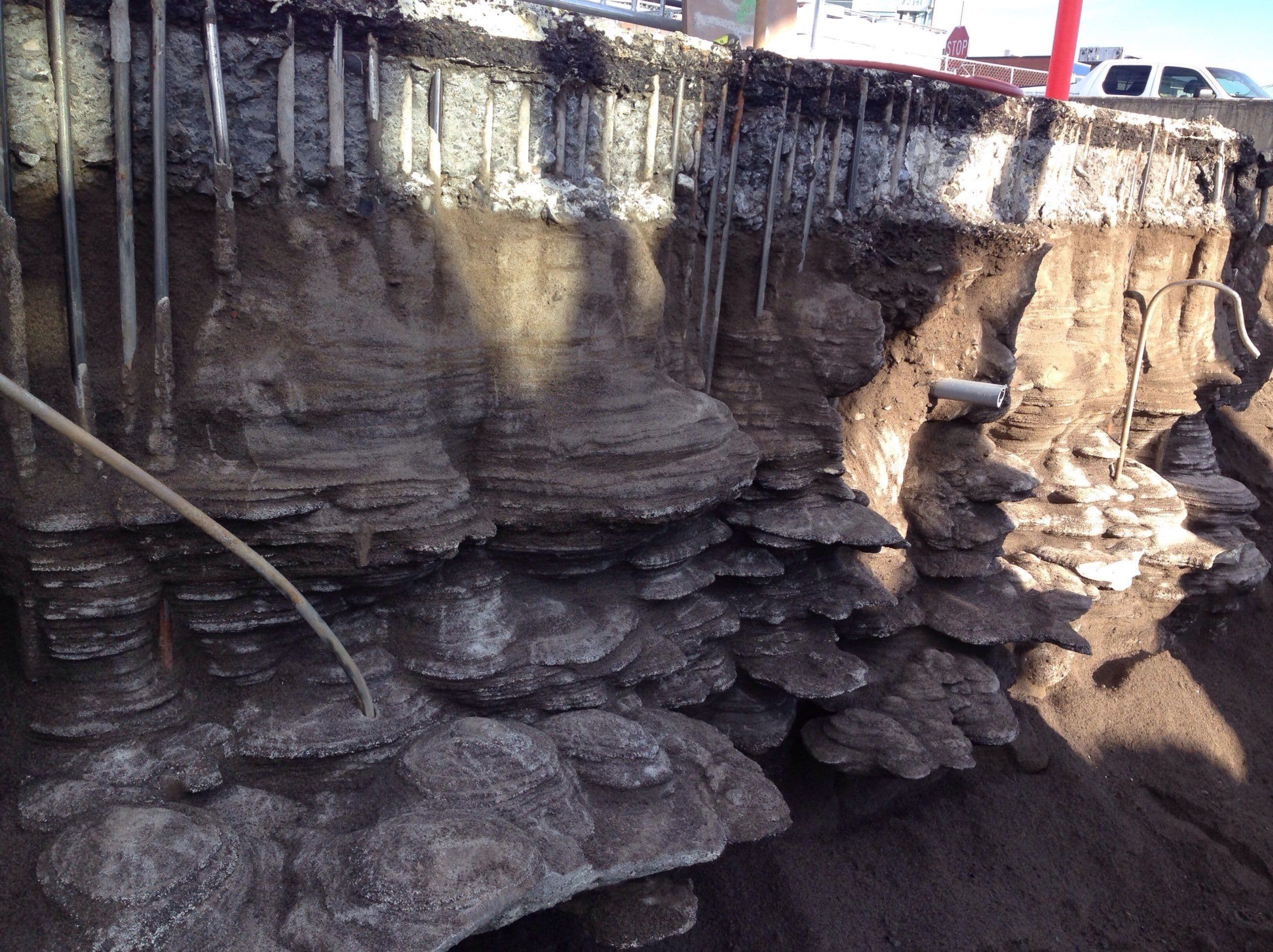
A utility trench that carries water doesn't stay stable. Here's what it leads to.

The trench acting as a water channel, since disturbed backfill is more permeable than the undisturbed soil around it, letting water travel along the trench and erode a void
Backfill that was never compacted to match the density of the surrounding native soil
A broken water or sewer line washing out the trench backfill under pavement or a slab
Loosely compacted backfill settling over time and leaving a gap between the trench and the surrounding ground
Water moving along a trench usually leaves a straight-line pattern at the surface. Watch for these.
A dip or depression forming directly along the path of a buried utility trench
Water pooling or draining unusually along the route of a known utility trench
Settlement appearing in a straight line consistent with an underground trench route
Pavement over a utility line settling again after a leak or break was repaired
A trench that has been reopened for repair more than once in the same general location
Soil testing revealing lower density along a trench path compared to the surrounding undisturbed ground
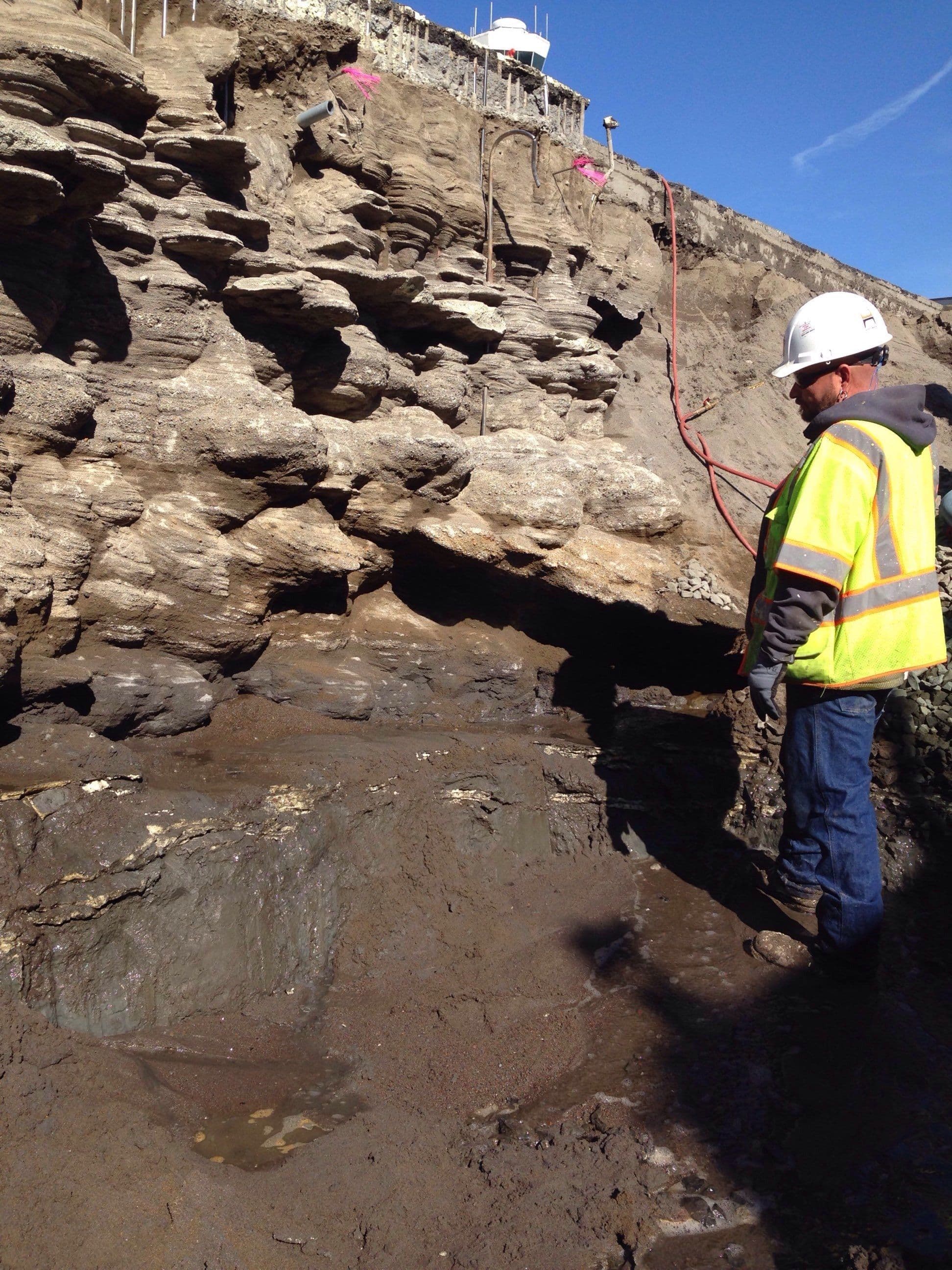
Why closing the water path inside the trench beats patching what settles above it.
Closes the path, not just the void. On an airport access ramp in the Dallas-Fort Worth region, after a ruptured 10-inch water main washed out the soil, URETEK filled and stabilized the utility trench the line ran in, eliminating the pathway that had let the soil wash out
Works fast in an emergency. That ramp was lifted back to grade and reopened within 12 hours of the first call, before the morning rush
Doesn't require reopening the trench. Work is done through small injection points, so the utility line stays in service and isn't excavated again
Treats the trench where testing shows the weakness, densifying the backfill along the affected length rather than patching one visible dip
Reduces the risk of a structure, roadway, or another utility above the trench settling suddenly into a void
Utility Trench Breakers is the right call when water is traveling along a utility trench's backfill, from a leak, a break, a storm, or a high water table, and carrying soil with it. It fits water, sewer, storm, and energy trenches beneath roads, ramps, airfields, and facilities, where reopening the trench would close what sits above it.
It isn't the right tool when the utility line itself is leaking; the line has to be repaired first, then the trench is treated. It also isn't the fix when the problem is the pipe's own bedding rather than the trench path; Pipeline Support & Pillows restores support beneath the pipe directly.
Utility Trench Breakers is often paired with Void Filling when a void has already opened along the trench, so the void is filled and the path that formed it is closed in the same visit.
1
Evaluate
A URETEK project manager evaluates the site, the soils, and the failure mode, tracing the trench route, the water source, and the extent of the voids with GPR or DCP testing.
2
Design
The injection plan sets where the backfill is densified and how deep, based on the trench depth and where water is moving.
3
Deploy
Crews mobilize on the schedule the site needs, including nights, weekends, or emergencies, with the utility kept in service.
4
Inject
URETEK 486 Star® structural polymer is injected into the trench backfill through small holes, filling voids and densifying the backfill across the trench.
5
Monitor
Surface elevation is tracked in real time during injection to keep the pavement and the utility from moving.
6
Validate
We verify the result with GPR or coring plus volume reconciliation, and hand over the injection and test records.
URETEK fills and stabilizes utility trench backfill for water, wastewater, energy, and transportation infrastructure nationwide.





It's a way to stop water from running along a utility trench. Backfill in a trench is naturally more permeable than the undisturbed native soil around it, so water finds it an easier path to travel, which is how erosion spreads along a trench. Densifying the backfill into zones across the trench breaks that path.
No. The work is performed from small access points along the trench rather than excavating it, so the utility line stays in service and isn't dug up again.
Yes. After a ruptured 10-inch water main washed out the soil under an airport access ramp in the Dallas-Fort Worth region over a holiday weekend, URETEK stabilized and filled the utility trench and lifted the ramp back to grade, reopening it within 12 hours of the first call.
Soil testing and investigation along the trench route identify how far the weak backfill and voids actually extend, and the injection plan is designed around those findings. We verify the result with GPR or coring plus volume reconciliation.
In most cases, yes, since there is little or no excavation, no removal of the original utility line, and no re-backfilling required.
Get the trench backfill filled and stabilized before it carries more soil away. URETEK crews respond fast, including emergencies.
Request an Assessment

 800-240-7868


