

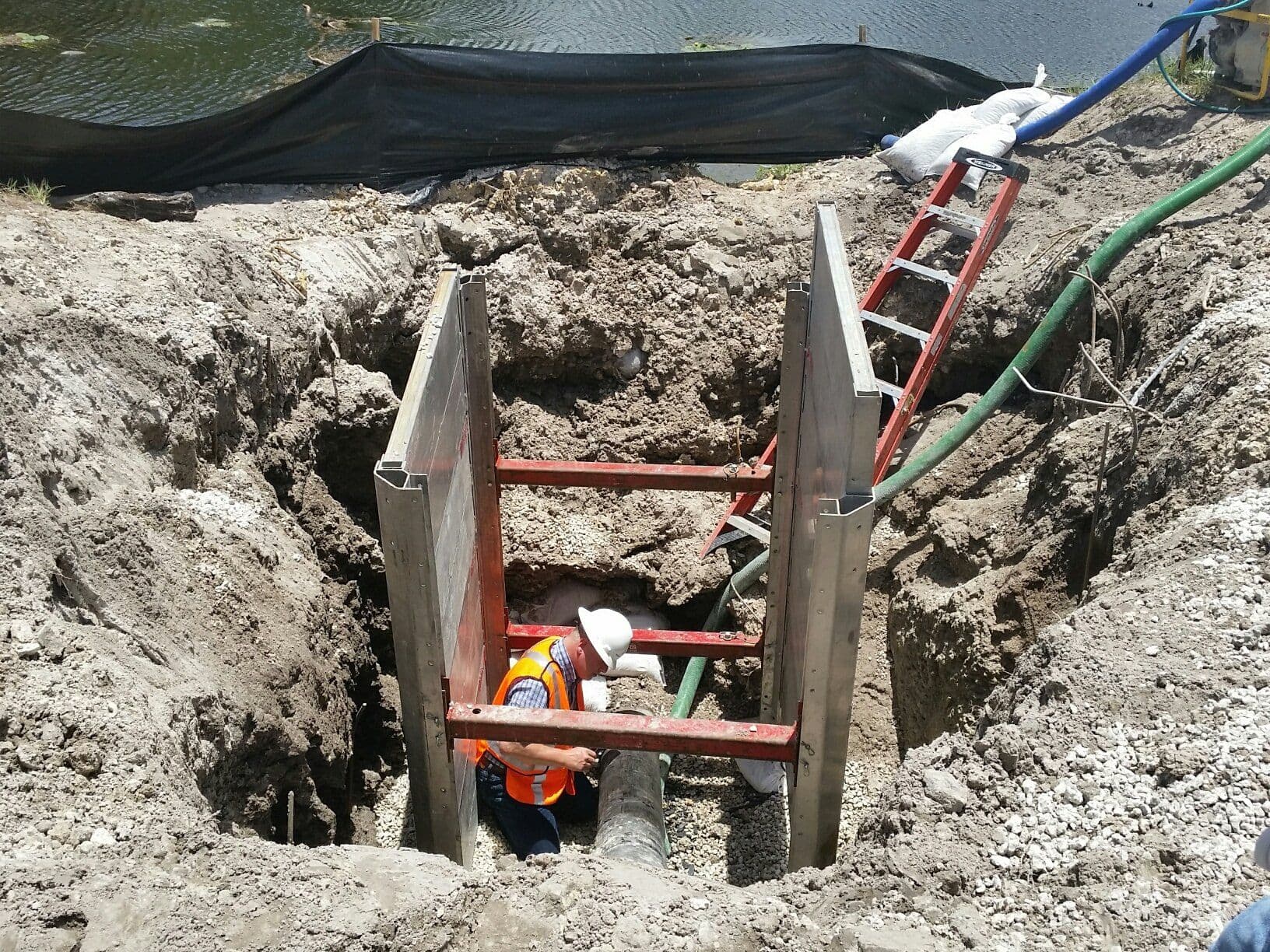
Some pipelines have to cross under something that can't be dug up: a highway, a rail line, a waterway, a building.
Solutions for this Service
Trenchless Utility Support

Pipeline Stabilization
Utility Void Filling
Related Industries
Municipal Infrastructure
Water and Wastewater
Need a Site Assessment?

800-240-7868

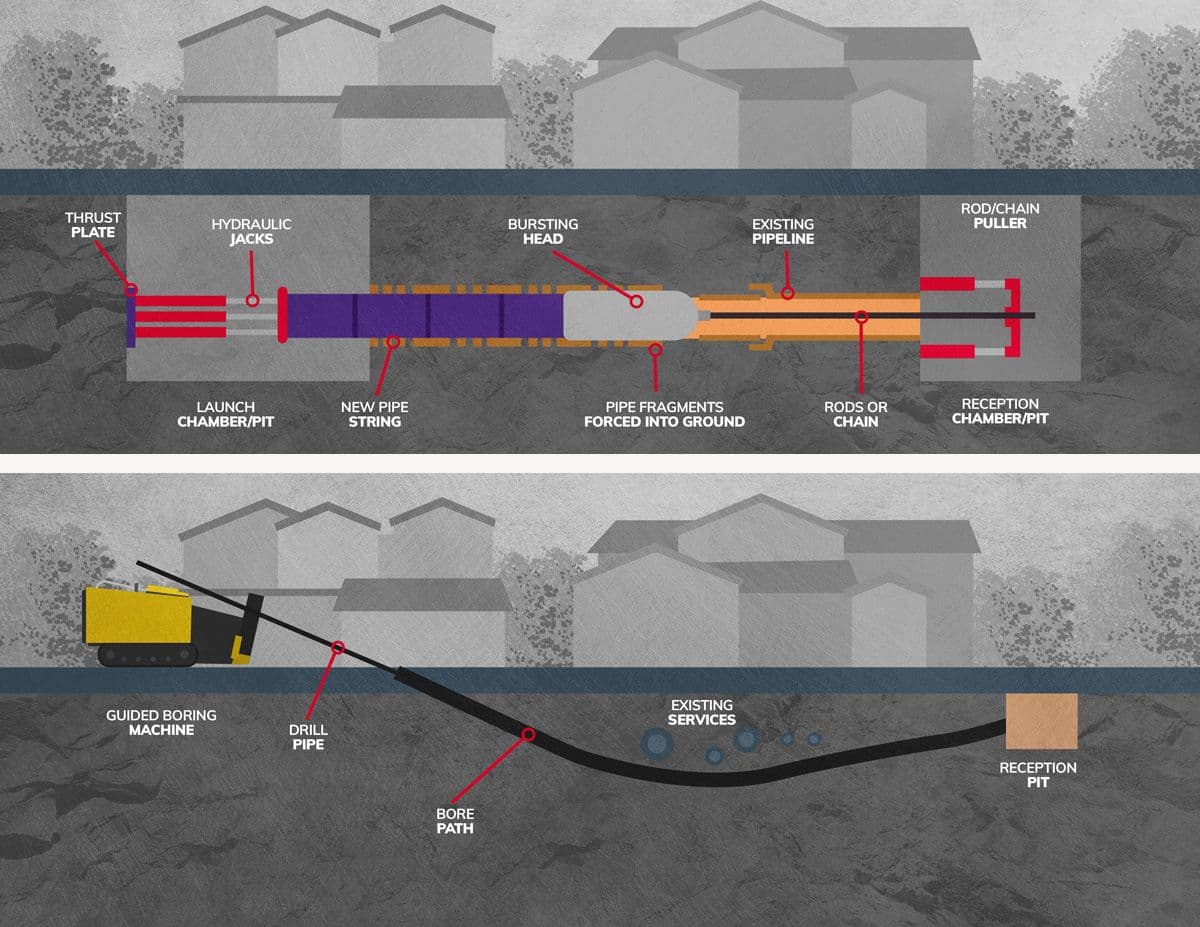
Some pipelines have to cross under something that can't be dug up: a highway, a rail line, a waterway, a building. Microtunneling and other trenchless methods make that crossing without an open trench, but they still depend on the ground around the bore. URETEK provides that ground support during trenchless installation by others: stabilizing soil along the bore path and around launch and reception shafts, controlling voids, and sealing joints and annular space once the pipe is in. Scope is defined per project with the trenchless contractor.
A trenchless crossing is only as stable as the ground it passes through. Here's what ground support guards against.

Loose or running soil at the bore face or along the alignment that can cause ground loss above the crossing
Settlement or disturbance of existing utilities, roadways, or track near the bore path
Unstable ground around launch and reception shafts, adding shoring cost and risk
Voids and open annular space left around the new pipe after installation
Ground support is usually a planning decision, made with the trenchless contractor before the bore starts. Consider it when a project involves these.
A trenchless crossing planned under a road, rail line, or waterway that can't be closed
A bore path running close to existing utilities or structures that can't be allowed to settle
Soil borings showing loose sands, soft soils, or high groundwater along the alignment
Launch or reception shafts planned in weak or water-bearing ground
Rising shoring costs or safety concerns around shafts and trenches
Voids or lost ground found around a pipe after installation
Why agencies and contractors add URETEK ground support to a trenchless crossing.
Protects the bore path before and during the crossing. Soil along the alignment and around the shafts is stabilized through small injection points, so the ground behaves more predictably as the bore advances.
Reduces reliance on conventional shoring. Stabilized ground supports shafts and trenches; at Portland International Airport, URETEK tested shoring wall variations to manage cost and disruption on active trenching projects.
Protects what's above and beside the crossing. Stabilizing the ground around the bore helps keep nearby roads, track, and utilities from settling while the work is underway.
Lets the planned method proceed. On a jack-and-bore project in Sun Valley, California, injection support allowed the planned method to proceed rather than defaulting to a slower, more disruptive alternative.
Closes out the crossing cleanly. After installation, voids are filled and joints and annular space are sealed, so the new pipe isn't left with lost ground around it.
URETEK's ground support is the right call when a microtunneling, jack-and-bore, or directional drilling crossing passes through soil that needs help to behave predictably, or near utilities and structures that can't be allowed to move. URETEK works alongside the trenchless contractor, who performs the bore itself.
It's not the right tool when the goal is repairing or sealing an existing pipe rather than supporting a new installation; Joint Sealing or Curtain Grouting address that directly. It's also not the fit when the underlying issue is soil settlement or a void around an existing structure rather than a new pipeline route; URETEK Deep Injection® (UDI) is the better starting point there.
Trenchless ground support is sometimes paired with Curtain Grouting where the new bore passes near an existing structure that needs its own seal verified after the crossing is complete.
1
Evaluate
A URETEK project manager evaluates the bore path and soils, including existing utilities and structures along the planned route.
2
Design
The injection plan is designed with the trenchless contractor, around the bore path, the shafts, and the installation schedule.
3
Pre-treat
Soils around the launch and reception shafts and along the alignment are pre-treated or stabilized before the bore reaches them.
4
Monitor
Ground conditions near the bore path are monitored during the bore, so support can be added where it's needed.
5
Fill and Seal
After installation, voids are filled and the annular space is sealed around the new pipe.
6
Document
We document the injection locations, quantities, and observations and hand over the records.
URETEK's soil support methods have backed trenchless utility crossings for municipal and county infrastructure projects nationwide.


The trenchless contractor runs the bore. URETEK stabilizes the ground it passes through: soil along the bore path and around launch and reception shafts is treated through small injection points, conditions are monitored during the bore, and voids and annular space are filled and sealed after installation. Scope is defined per project.
Before the bore starts, ideally while the alignment and shafts are being designed. Soil borings that show loose sands, soft soils, or high groundwater along the route, or utilities and structures close to the bore path, are the usual triggers.
It often is once shoring, closures, and delays are counted. Portland International Airport looked at this approach because of the rising cost of conventional shoring on active trenching projects. We'll compare total impact for your project.
In most cases, yes. Trenchless methods are chosen to keep the surface in service, and ground support is placed through small injection points from the surface or the shafts, so the road, track, or waterway above stays in use while the ground is treated.
It's most often used in loose or granular soils, soft ground, and voided zones along a bore path or around shafts. Ground conditions are evaluated on a site-specific basis with the trenchless contractor before the injection plan is set.
Get the ground along your next trenchless crossing evaluated before the bore starts. URETEK works with agencies and trenchless contractors to plan the support.
Request an Assessment

 800-240-7868


