

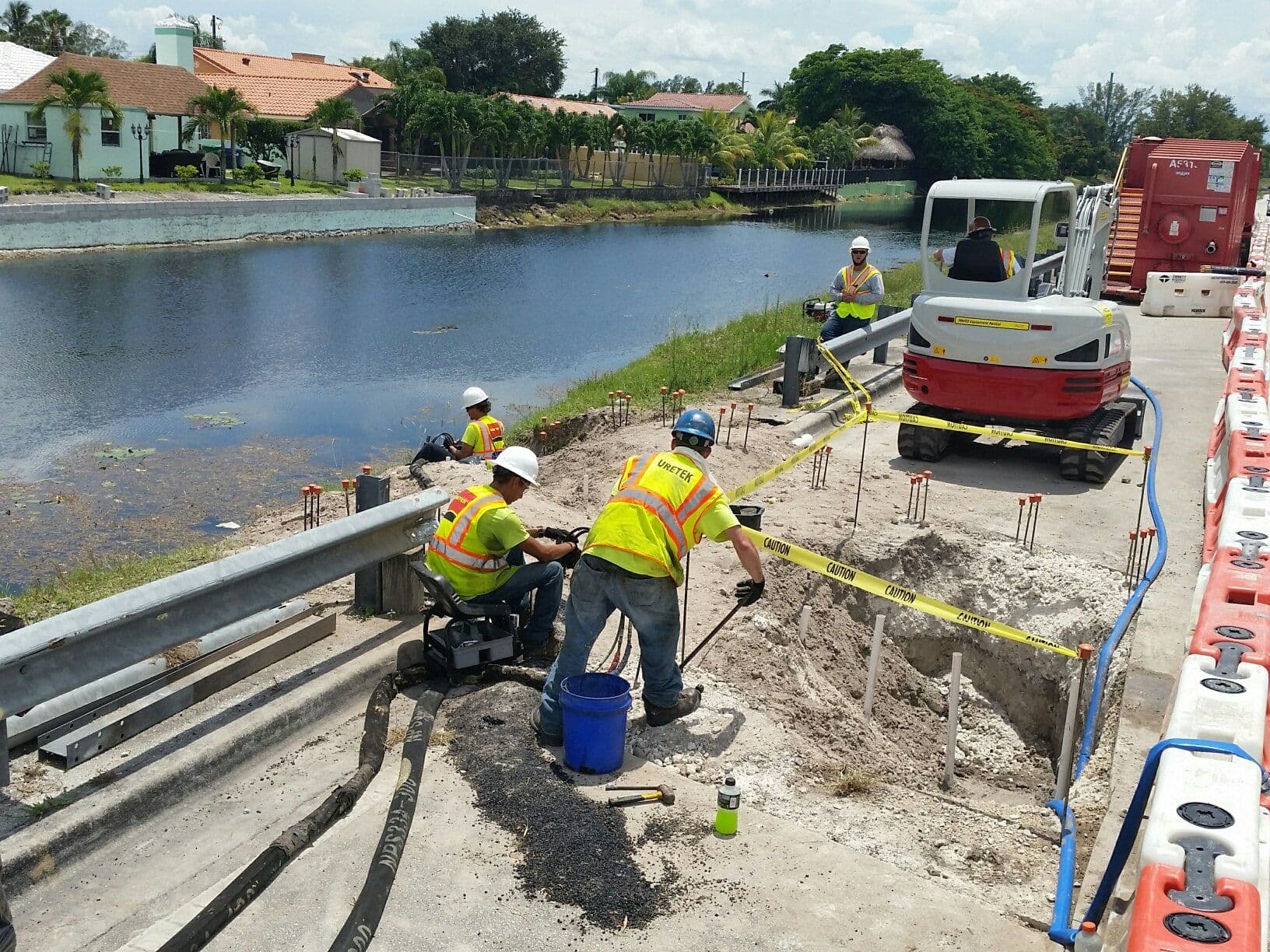
A deep excavation next to an occupied building or a working plant has two jobs: keep the water out of the cut, and keep everything beside it from moving.
Solutions for this Service
Active Water Intrusion

Trenchless Utility Support
Weak Soils
Loose Sands
Related Industries
Water and Wastewater
Commercial and Institutional
Need a Site Assessment?

800-240-7868

Digging below the water table next to an existing building, tank, or utility puts two risks in tension. Pump hard enough to keep the cut dry, and the drawdown can reach under the neighbors and settle them. Hold back, and the excavation stays wet and unsafe to work in.
Excavation Support handles both from the ground itself. A low-viscosity chemical grout curtain cuts groundwater flow toward the excavation so less pumping is needed, targeted injection strengthens the soil beneath adjacent structures and around trenches and shafts, and the result is verified in the field before the excavation relies on it. Contractors, engineers, and owners use it to keep a deep dig on schedule without putting the structures beside it at risk.
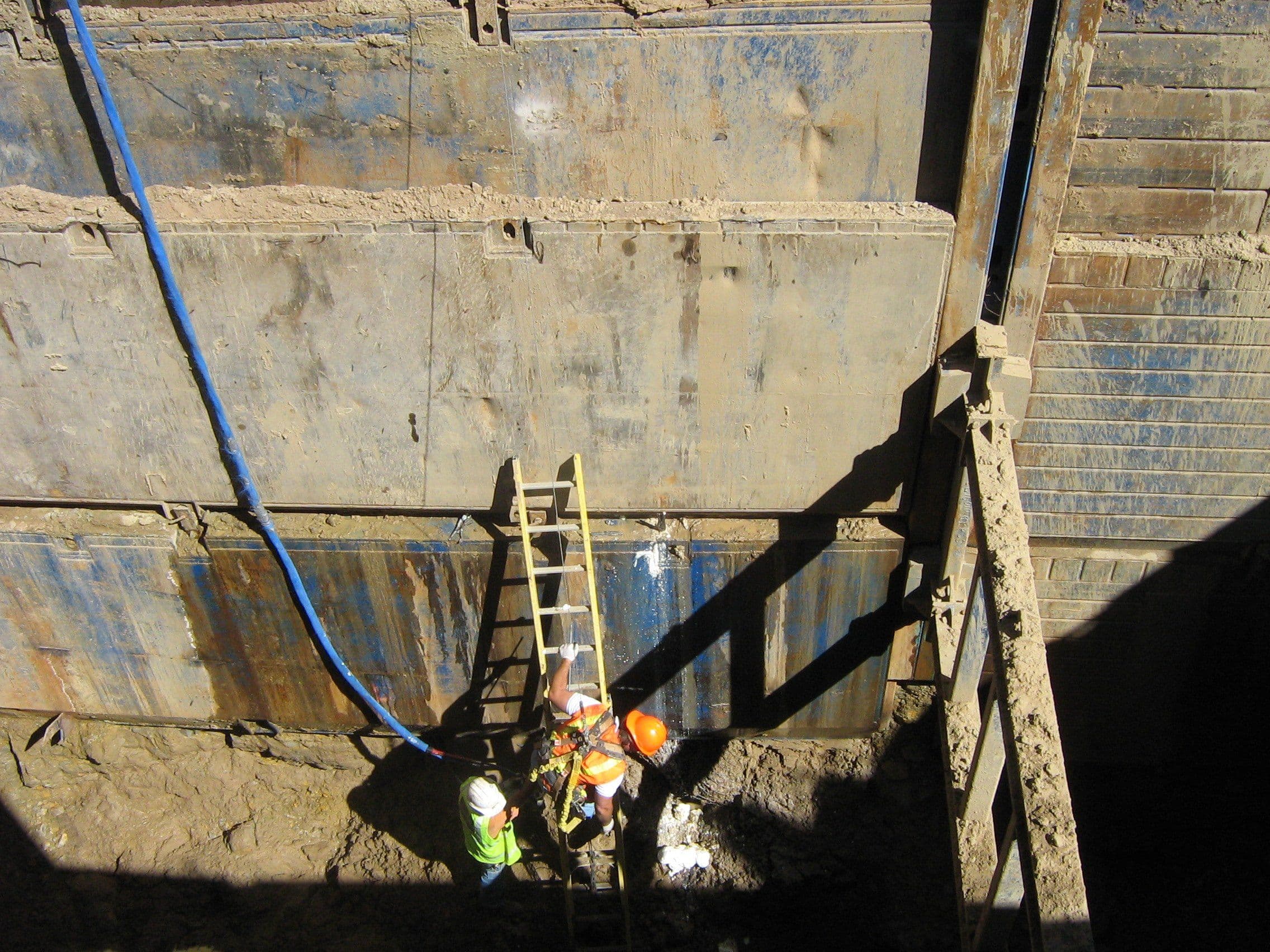
Most excavation problems near existing structures come from the water and soil just outside the cut. Here's what they look like.

Groundwater flowing into an excavation dug below the water table, slowing the work and destabilizing the subgrade
Dewatering drawdown reaching beneath an adjacent building, tank, or utility and inducing settlement
Confined or transmissive sands that heave or run under hydrostatic pressure once the excavation opens
Trench and shaft walls in loose or saturated soil that need support before crews can work safely inside them
These conditions usually show up in the geotechnical report or the first borings, before the excavation starts.
A planned excavation that extends below the groundwater table
An occupied building, process tank, or culvert within a few feet of the excavation line
A seepage analysis predicting groundwater drawdown beyond the excavation footprint
Heaving or running sands encountered during borings or test pits
Jet grouting, sheet piling, or heavy dewatering ruled out by access, vibration, or noise limits
Rising cost of conventional shoring on repeated trenching work
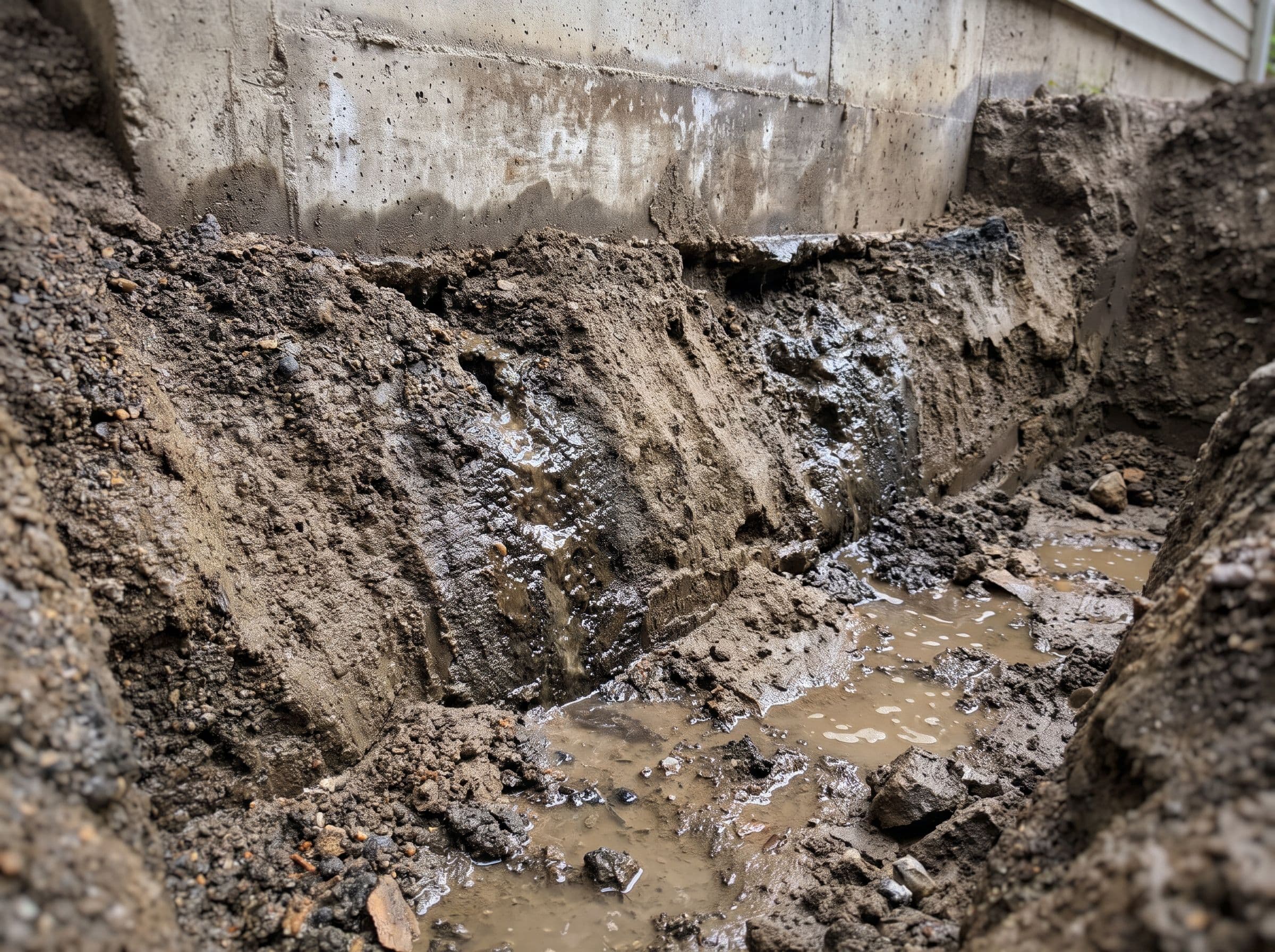
Why contractors and engineers bring URETEK in before the excavation opens.
Protects the structure next door. On a deep urban excavation in Pelham, New York, beside an occupied three-story building, groundwater outside the excavation stayed stable throughout dewatering and the adjacent building showed no recordable settlement.
Verified before the excavation relies on it. In Pelham, rising-head testing near the adjacent building showed zero water infiltration over one hour, so no secondary grouting was required.
Works hard against live structures. At a wastewater treatment plant near Lake Erie, a through-structure chemical grout curtain was placed along an approximately 244-foot alignment beside existing process tanks and met the project's independent falling-head acceptance test, allowing excavation to proceed.
Fits sites where jet grouting doesn't. At an active wastewater treatment plant where jet grouting was abandoned as impractical, a chemical grout curtain and targeted polyurethane underpinning of an adjacent outfall box culvert reduced excavation inflow, with zero observed settlement at the adjacent tanks and the contractor's schedule held.
Tested against real trench conditions. At Portland International Airport, URETEK tested two shoring wall variations, a 6-foot wall for shallow trench work and a 12-foot wall for deeper trenches, to manage the rising cost of conventional shoring on active trenching projects.
Excavation Support is the right call when a planned excavation goes below the water table next to something that can't move: an occupied building, an operating tank, a culvert, or a buried utility. It fits tight urban sites, active plants, and airports, where heavy dewatering, jet grouting, or large shoring spreads are ruled out by space, vibration, or the risk to the structures nearby.
It isn't the right tool when there's no excavation and the goal is a permanent barrier around a dam, pond, or structure; Curtain Grouting & Grout Curtain Barrier Systems covers that. It also isn't the fix for a building that is already settling on its own, unrelated to nearby digging; Foundation Repair & Underpinning addresses that directly. For pipe installed by boring rather than an open cut, see Trenchless Ground Support.
Excavation Support is often paired with Foundation Repair & Underpinning when an adjacent structure needs its own support strengthened before the dig begins, so the water control and the structural protection are designed as one package.
1
Evaluate
A URETEK project manager evaluates the site, the soils, and the failure mode with the project's geotechnical engineer, including groundwater levels, seepage analysis, and the structures next to the cut.
2
Design
The curtain alignment, injection pattern, and acceptance criteria are set before drilling, so everyone knows what passing performance looks like.
3
Deploy
Crews mobilize with compact injection equipment that fits tight urban sites and active facilities, on the schedule the contractor needs.
4
Inject
Low-viscosity chemical grout is injected in closely spaced, overlapping rows to form a continuous low-permeability zone, with targeted injection beneath adjacent structures where needed.
5
Monitor
Grout travel, pressure, and gel time are tracked during injection, and groundwater and adjacent structures are monitored as dewatering begins.
6
Validate
We verify the result with rising-head or falling-head permeability testing against the project's acceptance criteria, with secondary grouting where needed, and hand over the injection and test records.
URETEK has protected adjacent buildings, process tanks, and culverts during deep excavations for developers, municipal utilities, and airports, with results confirmed by field testing.



A grout curtain isn't dewatering. It reduces the permeability of the soil around the excavation so less water flows toward the cut, which reduces reliance on the high-rate pumping that creates drawdown and settlement risk near sensitive structures. Pumping still happens inside the excavation; the curtain limits how far its effect reaches.
Acceptance criteria are set in the design, then tested in the field. In Pelham, New York, rising-head testing near the adjacent building showed zero water infiltration over one hour, and monitoring wells showed groundwater outside the excavation holding steady while pumps drew it down inside. Where a test doesn't meet the criteria, secondary grouting is performed and the area is retested.
Yes, that's where it's used most. Injection equipment is compact, relatively quiet, and generates no spoils, so it fits tight urban sites and the inside of an active facility. In Pelham, the adjacent three-story building showed no recordable settlement; at an active wastewater treatment plant, the adjacent aeration tanks showed zero observed settlement while the plant kept operating.
That's a common starting point. At an active wastewater treatment plant, jet grouting was abandoned after a field review found it impractical, and a chemical grout curtain plus targeted polyurethane underpinning of an adjacent outfall box culvert took its place. Excavation began as soon as both were in place, with no secondary mobilization.
That's what it was tested for at Portland International Airport, where officials raised concerns about the rising cost of conventional shoring on active trenching projects. URETEK tested two variations, a 6-foot wall for shallow trench work and a 12-foot wall for deeper trenches, against actual project parameters before use on active projects.
Get your excavation's groundwater and adjacent structures evaluated before the cut opens. URETEK crews respond fast, including emergencies.
Request an Assessment

 800-240-7868


