

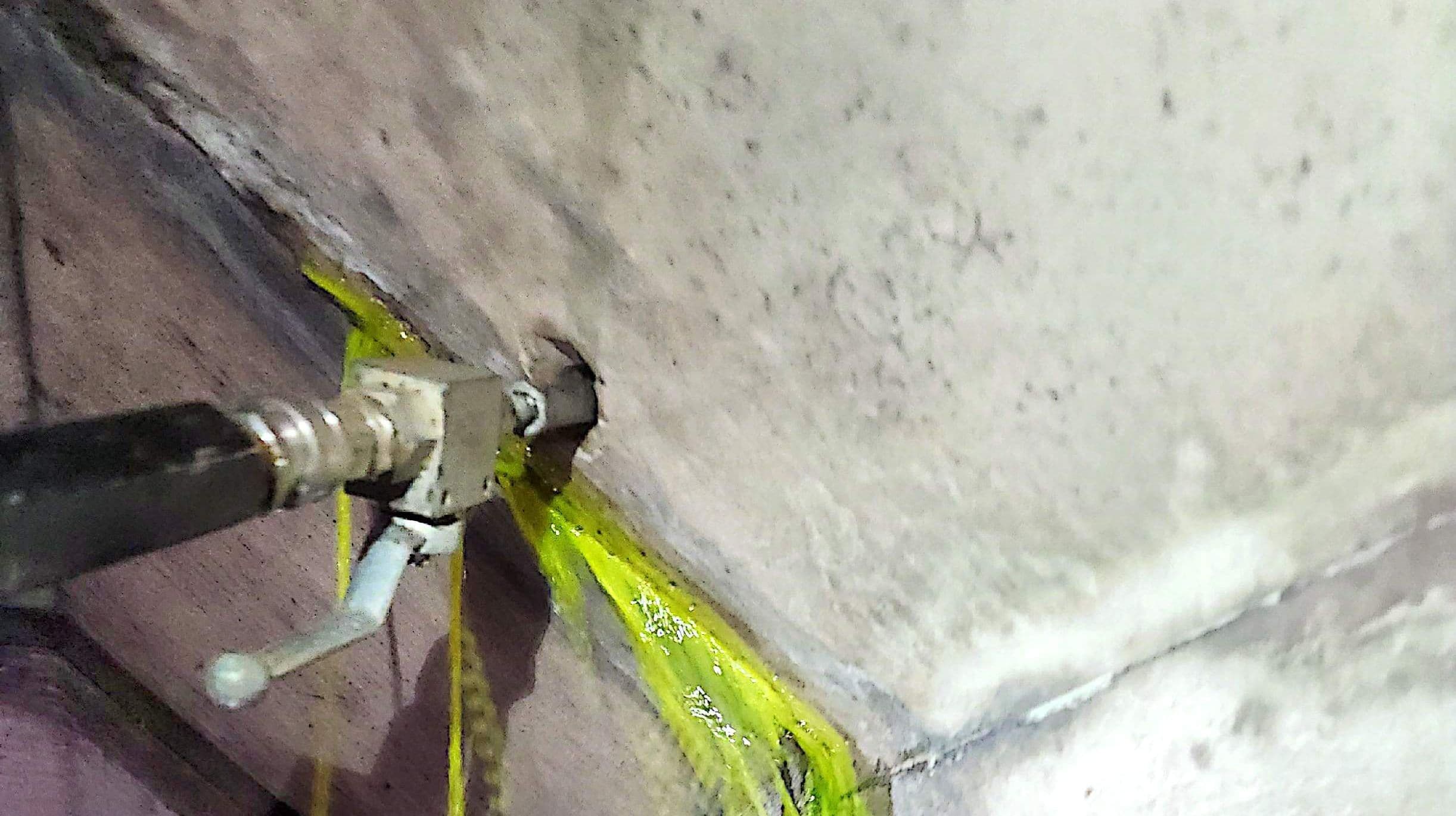
Single-component, water-reactive polyurethane grout for active leaks in joints, cracks, manholes, and tunnels.
Solutions for this Service
Active Water Intrusion

Joint Leaks
Tunnel Leaks
Manhole Infiltration
Related Industries
Transportation
Commercial and Institutional
Need a Site Assessment?

800-240-7868

In the grouting trade, polyurethane grouting means a single-component, water-reactive polyurethane grout injected to stop water that is actively coming through concrete. Hydrophobic and hydrophilic grades are available, and the grade is matched to the leak and the substrate. URETEK injects it through small ports drilled into the joint, crack, or wall, so the seal forms in the path the water is using. For the two-part structural polymer used to lift slabs and stabilize soil, see URETEK Deep Injection® (UDI).
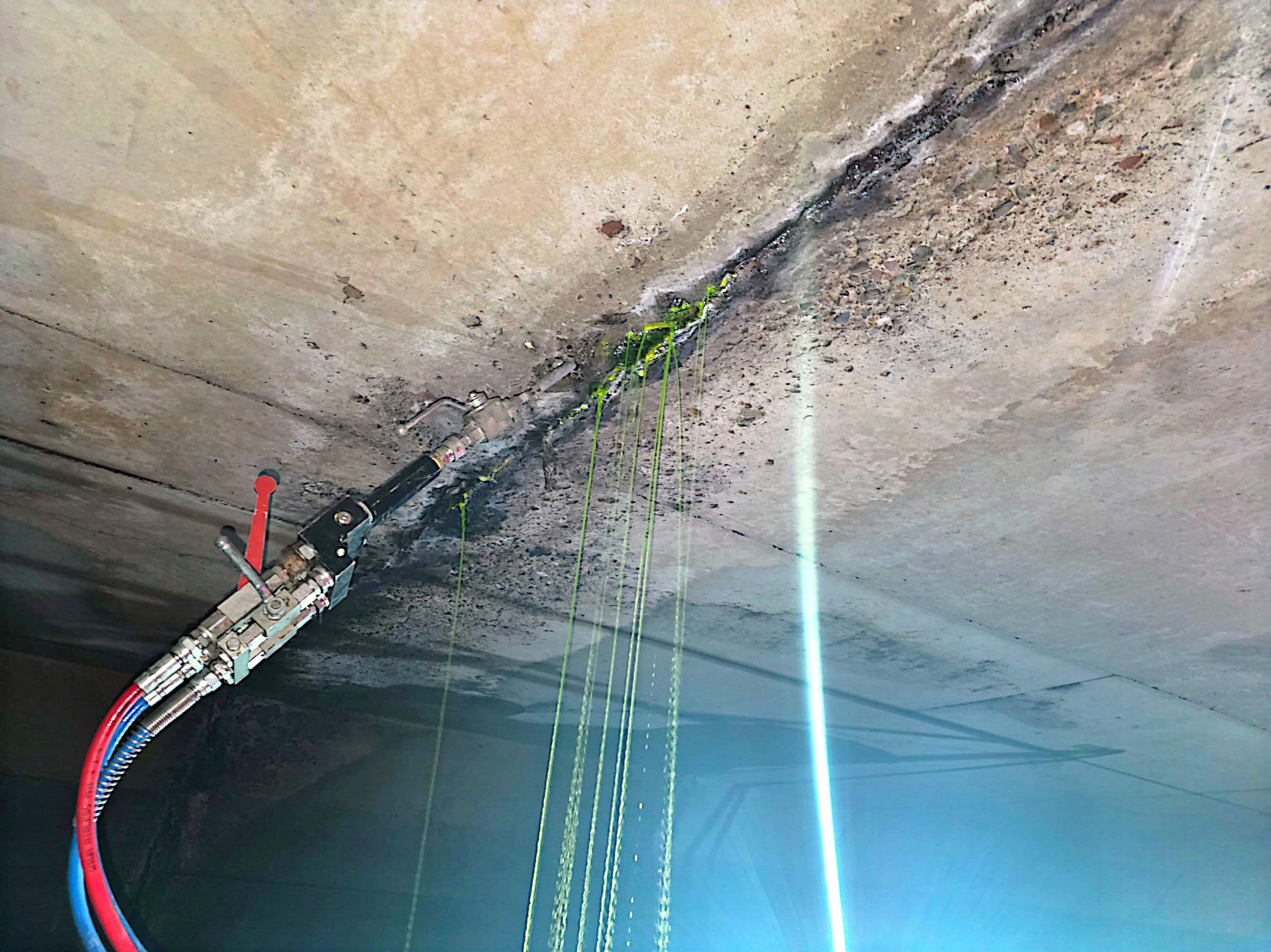
When water is actively coming through concrete, the repair has to work with the water. Here's what polyurethane leak-sealing grout is used for.

Active leaks through cracks in concrete walls, slabs, and tunnel linings
Leaking construction joints and panel seams in tunnels, culverts, vaults, and seawalls
Infiltration through manhole walls and pipe penetrations
Water entering below-grade structures that can't be taken out of service for an exterior repair
These are the conditions where a water-reactive polyurethane grout is the right material choice.
Water actively running or weeping through a crack or joint
Staining, mineral deposits, or wet patches along joints in a tunnel, vault, or culvert
Leaks that return after surface patches or sealants have been applied
Infiltration into a manhole or below-grade structure during wet weather
A repair that has to be made from inside the structure, without exterior excavation
A closure window that requires injection and patch-back to be finished in one shift
Why water-reactive polyurethane grout is chosen when the goal is stopping an active leak.
Reacts with the water it is stopping. Water in the crack or joint activates the grout, so active inflow helps form the seal.
Installed from inside the structure. Injection ports are drilled into the leaking crack or joint from the interior face, so the repair usually needs no exterior excavation.
Holds its form through wet and dry cycles. Hydrophobic grades cure into a closed-cell material that keeps its shape without shrinking as conditions change.
Fits short closure windows. Rapid-reacting grout lets crews inject, verify, and patch back within a planned closure.
Matched to the leak. Hydrophobic and hydrophilic grades are selected for the crack width, water flow, and substrate.
Polyurethane leak-sealing grout is the right choice when water is actively coming through a crack, joint, or penetration in concrete and the seal has to form while the water is still flowing. It's built for tunnels, culverts, vaults, manholes, and below-grade walls where the repair is made from inside the structure.
It's not the right tool for lifting a settled slab or stabilizing weak soil; that calls for the two-part structural polymer used in URETEK Deep Injection® (UDI). Polyurethane crack foams suit discrete cracks with tight confinement, so long or discontinuous joints with uncertain continuity are usually better served by acrylate gels through Chemical Grouting. A continuous groundwater barrier along a line calls for Curtain Grouting.
We verify the result with leakage observation or rising-head permeability testing.
1
Evaluate
A URETEK project manager evaluates the site, the soils, and the failure mode, and designs the treatment around what the data shows.
2
Deploy
Crews mobilize on the schedule the site needs, including nights, weekends, or holidays, in a self-contained unit.
3
Drill
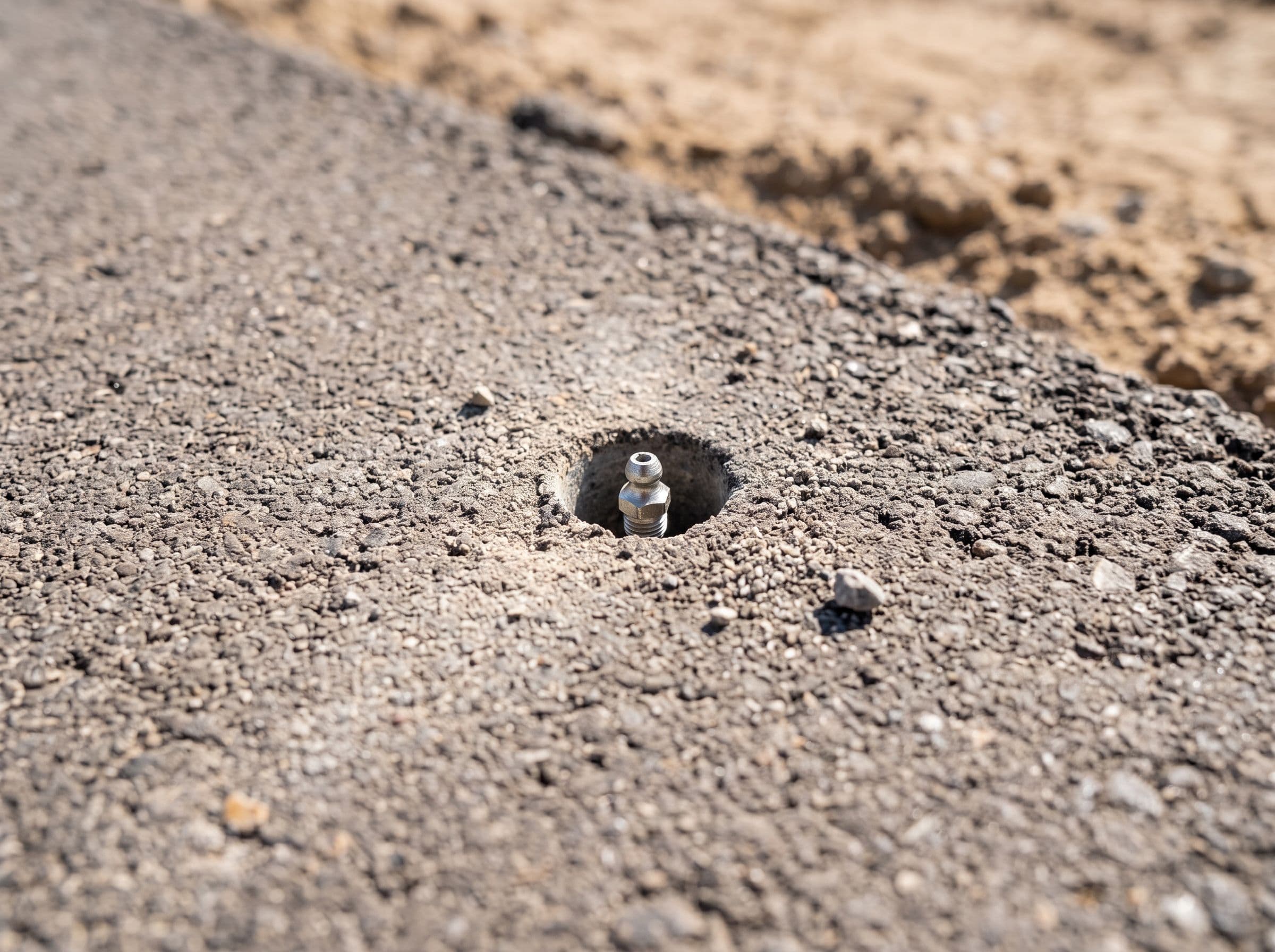
Injection ports are drilled to intersect the leaking crack or joint, placed to avoid reinforcement and embedded conduits.
4
Inject
Water-reactive polyurethane grout is injected under controlled pressure and reacts with the water in the crack or joint to form the seal.
5
Clean Up
Ports are removed and the injection points are patched, so the surface is finished before the area returns to service.
6
Validate
We verify the result with leakage observation or rising-head permeability testing and hand over the injection and test records.
URETEK seals active leaks with water-reactive polyurethane grout in tunnels, culverts, manholes, and below-grade structures.






We verify the result with leakage observation or rising-head permeability testing. Hydrophobic grades cure into a closed-cell material that holds its form through wet-dry cycles, and the grade is matched to the crack width, water flow, and substrate. Designed for long-term performance when properly selected and installed.
Water-reactive polyurethane grout expands as it reacts with water, which suits sealing active leaks in cracks and joints. Acrylate gels are low-viscosity and suit micro-infiltration and permeation, and urea-silicates are used for high-strength reinforcement in saturated zones. The choice depends on the leak, the water flow, and the soil or substrate.
Yes. Water-reactive polyurethane grout is designed for active inflow: the water in the crack or joint activates the grout and helps form the seal.
Usually. Injection is done from inside the structure through small ports, and on tunnel work crews have injected, verified, and patched back within planned overnight closures. In a New York City vehicular tunnel, active leaks were arrested at all treated locations and the tunnel returned to full service on schedule.
No. Polyurethane leak-sealing grout here means a single-component, water-reactive grout for sealing leaks. URETEK Deep Injection® uses URETEK 486 Star®, a two-component, high-density structural polymer, to fill voids, compact and confine soil, and lift settled structures. See the URETEK Deep Injection® (UDI) page for that work.
Get the leak evaluated for polyurethane leak-sealing grout. URETEK crews respond fast, including emergencies.
Request an Assessment

 800-240-7868


