

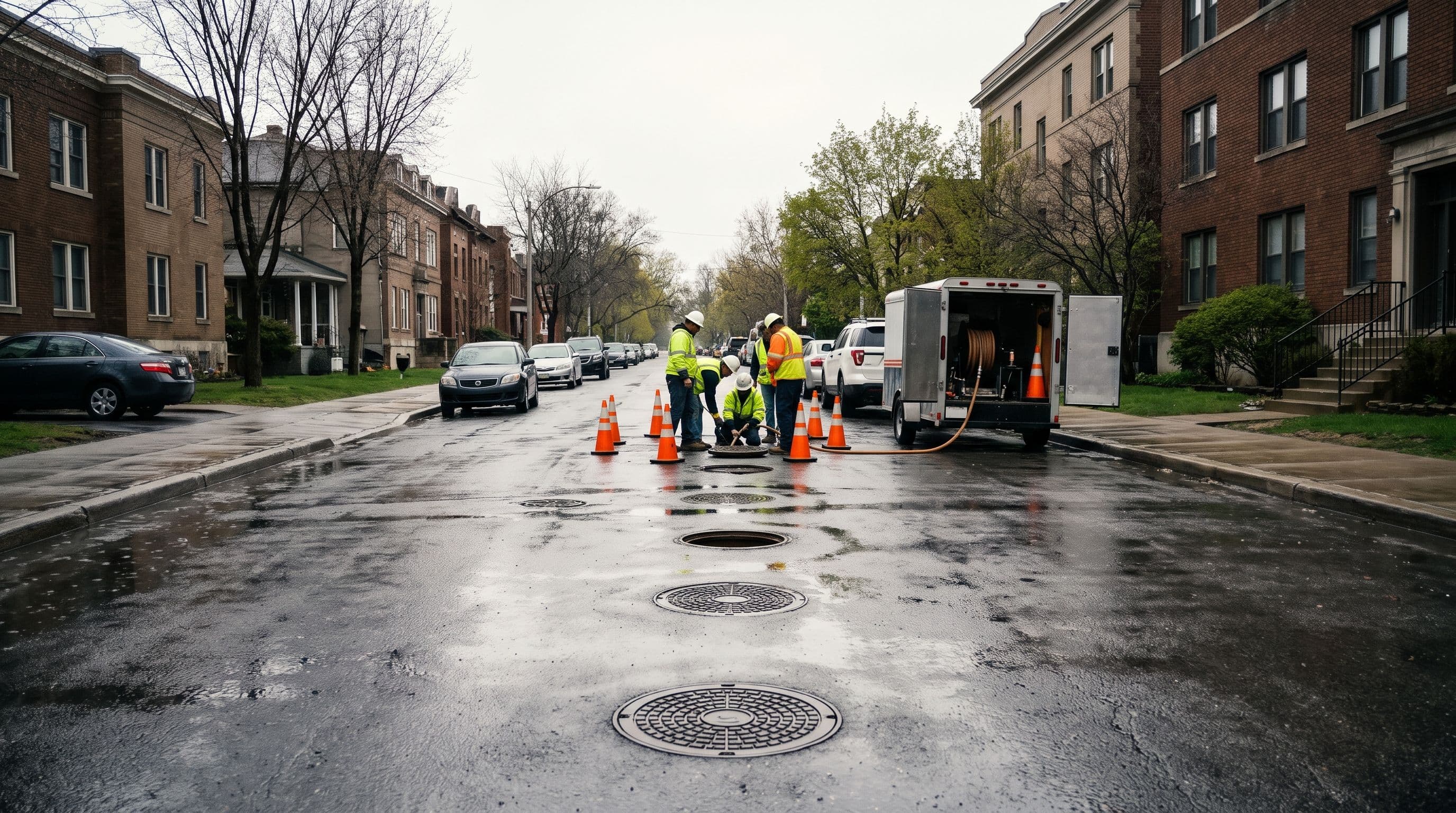
Every gallon of groundwater and stormwater in a sanitary sewer is a gallon the city pays to pump and treat.
Solutions for this Service
Manhole Infiltration

Pipe Penetration Leaks
Joint Leaks
Active Water Intrusion
Related Industries
Water and Wastewater
Municipal Infrastructure
Need a Site Assessment?

800-240-7868

Inflow and infiltration (I/I) is groundwater and stormwater getting into a sewer system built and permitted to carry sewage. Every gallon of it is pumped and treated at the city's cost, and in wet weather it can push a collection system toward overflows and backups and use up the capacity a growing city needs for new connections.
I/I Control Programs treat that as a system problem, not a single leak. Flow monitoring and inspection locate where water is entering, the structures are ranked by how much they contribute, and the manholes, pipe joints, and laterals at the top of the list are sealed from the existing structure with little or no excavation where conditions permit. Flow is then measured again, so the reduction is documented, not assumed. Municipal utilities, public works departments, and their engineers use it to reduce wet-weather flow across a collection system, one prioritized phase at a time.
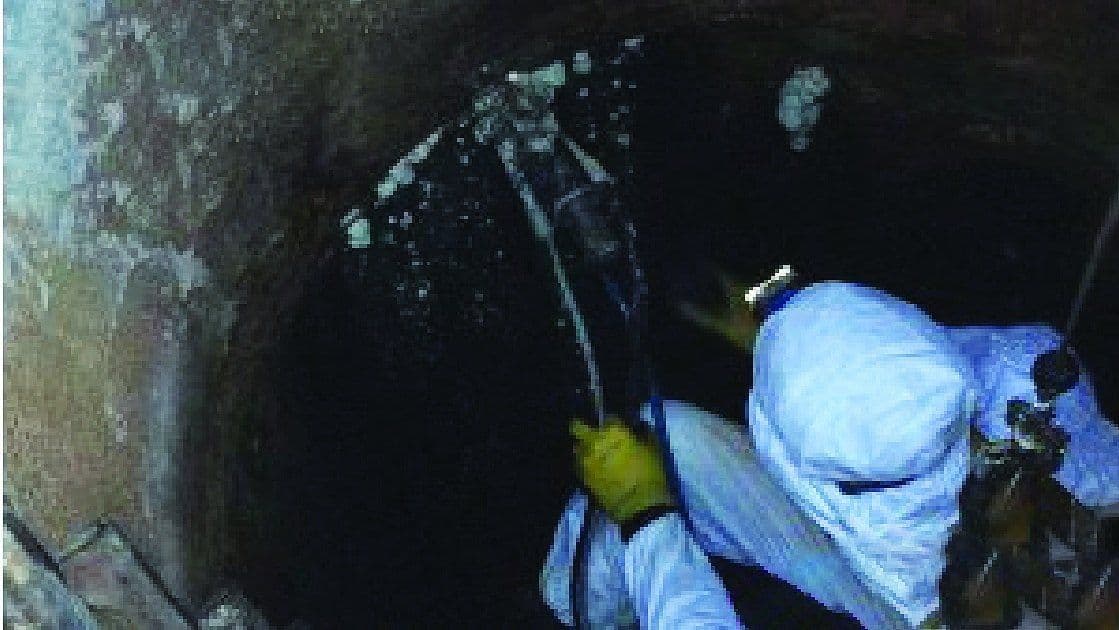
I/I rarely announces itself at one leak. Here's what it does to a collection system when it isn't controlled.

Wet-weather flow at pump stations and treatment plants far above what the system was designed to carry
Groundwater and stormwater entering through manhole walls, joints, and pipe connections in saturated ground
Treatment capacity used up by I/I that a growing city needs to approve new development
Leaking laterals and service connections adding flow that main-line repairs never reach
I/I usually shows up in the flow data before it shows up anywhere else.
Pump station flow or runtime that rises sharply during and after rain events
Treatment plant flow spiking in wet weather well above dry-weather levels
Active leaks or staining at manhole joints, walls, and pipe connections
Sewers that inspect as structurally sound on CCTV but still carry excess wet-weather flow
Settlement or voids developing around manholes and over sewer lines
Capacity concerns limiting new connections or development approvals
Why utilities treat I/I as a program rather than a series of one-off repairs.
Puts the budget where the water actually is. On an Indiana program, flow monitoring traced the source upstream from a pump station and CCTV showed the pipe itself was sound, so the work went to the joints, manholes, and connections instead of rebuilding pipe.
Reduction is measured, not assumed. On the same Indiana program, the city's own pump-runtime comparison across matched weeks showed an average of 26.91 fewer pump-runtime hours per week after seven manholes were sealed.
Seals from the structure that's already there. Small injection ports through the manhole wall or into the surrounding soil mean little or no excavation where conditions permit, and on the Indiana program no bypass pumping was required.
Fits crowded utility corridors. On a 30-inch sanitary trunk line on the Texas Gulf Coast, beneath power lines, six pipelines, and three storm sewers, two manholes were sealed in less than 4 hours, and the city reported savings of more than 75% against the cured-in-place lining option.
Lets a utility test before it commits. A Southeast Texas utility sealed one representative test manhole, had it back in service within hours, and awarded a maintenance contract; dozens of additional manholes have been rehabilitated since.
I/I Control Programs are the right call when a collection system is carrying more wet-weather flow than it should and the question is where the water is getting in and what to fix first. They fit municipal utilities facing pump and treatment costs, overflow and backup risk, or capacity limits on new development, where the leaks are spread across many manholes, joints, and service connections rather than one known point.
They aren't the right tool when the pipe itself has failed structurally, collapsed, or lost its shape; that calls for lining or replacement. A single, already-identified leak at one manhole or connection doesn't need a program either; Waterproofing & Leak Sealing seals it directly.
I/I Control Programs are often paired with Void Filling when water has already carried soil into the sewer and opened voids around manholes or under pavement, so the leak and the void are closed together.
1
Evaluate
A URETEK project manager evaluates the collection system, the soils, and the failure mode, using flow monitoring, CCTV, and manhole inspection to locate where water is entering.
2
Prioritize
Structures are ranked by how much water they contribute and by their condition, so each phase seals the biggest sources first.
3
Deploy
Crews mobilize on the schedule the system needs, including nights and weekends, in a self-contained unit, with the sewer kept in service.
4
Drill
Small ports, as narrow as 5/8 inch, are drilled through the manhole wall or into the soil around it, on a pattern set by the inspection.
5
Inject
The material is matched to the leak: URETEK 486 Star® structural polymer placed in the soil around manholes and pipe connections, or a hydrophobic polyurethane or acrylate grout injected through the wall, joint, or liner.
6
Validate
We verify the result with flow monitoring or pump-runtime comparison before and after the work, plus reinspection, and hand over the injection and test records.
URETEK has sealed manholes, pipe joints, and service connections for municipal wastewater utilities nationwide, with results confirmed by flow data and reinspection.





Because I/I is usually spread across a system, not sitting at one leak. A program starts with flow monitoring and inspection to find where the water enters, ranks the structures by impact, seals the top of the list, and measures flow again. On an Indiana program, that approach traced the source upstream from a pump station and kept the city from paying to reline a pipe that CCTV had already shown to be sound.
With the system's own data. On the Indiana program, the city compared pump runtime across matched weeks before and after the work and reported an average of 26.91 fewer pump-runtime hours per week. We verify the result with flow monitoring or pump-runtime comparison plus reinspection. Designed for long-term performance when properly selected and installed.
We seal leaking manholes and pipe joints from outside the structure, so nothing is dug up: either URETEK Deep Injection® structural polymer placed in the soil around the manhole and its joints, or a hydrophobic polyurethane or acrylate grout injected through the wall. Both stop the inflow and fill the voids the water created, cutting I&I to the treatment plant.
Often, yes. On a Texas Gulf Coast trunk line, the city reported savings of more than 75% against the cured-in-place lining option it had considered. On the Indiana program, the city priced lining, cured-in-place pipe, and relocating the line, and chose injection because it cost less and avoided the access problems.
Yes. A Southeast Texas utility started with one test manhole that fairly represented the rest. It was sealed and back in service within hours, the utility awarded a maintenance contract on the strength of it, and dozens of additional manholes have been rehabilitated since.
Get your collection system's I/I assessed and the biggest sources ranked. URETEK crews respond fast, including emergencies.
Request an Assessment

 800-240-7868


