

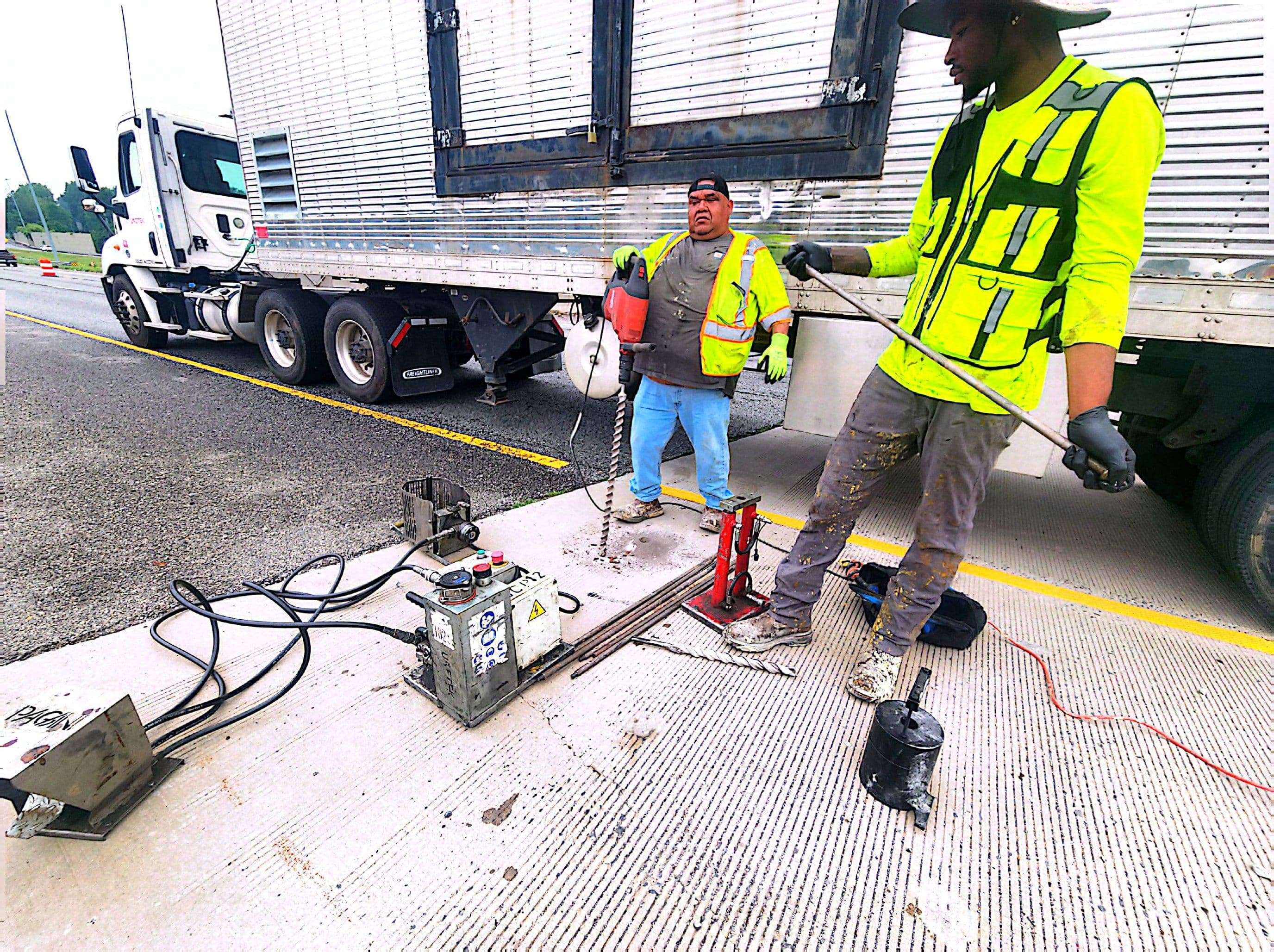
A structure that settles doesn't settle evenly. Settlement Mitigation corrects that differential settlement by stabilizing the weak soil beneath it and lifting the structure back toward grade.
Solutions for this Service
Foundation Settlement

Building Out of Level
Added Load on Existing Foundations
Pavement & Runway Settlement
Related Industries
Transportation
Commercial and Institutional
Need a Site Assessment?

800-240-7868

A structure that settles doesn't settle evenly. One section drops while another stays put, and the difference shows up as a dip in pavement, a crack in a slab, or a gap where a bridge deck meets the road. Settlement Mitigation corrects that differential settlement by stabilizing the weak soil beneath it and lifting the structure back toward grade. Engineers, private owners, and public agencies use it on bridges, pavement, and building foundations that have already started to settle unevenly.
Differential settlement doesn't stop on its own. Here's what it leads to if it's not corrected.

Uneven pavement or slabs that create trip hazards or unsafe driving conditions
A gap or step forming where a bridge deck, approach slab, or building meets the surrounding grade
Cracking in foundations, slabs, or pavement caused by one section settling faster than another
Drainage problems created by low spots where water used to flow evenly
Differential settlement usually shows itself gradually before it becomes a hazard. Watch for these.
A noticeable dip or step where a bridge approach meets the road
Cracks radiating from one section of a slab or pavement while the rest stays intact
Dock doors or racking going out of alignment in a building with a settled foundation
Water pooling in a low spot that used to drain evenly
A joint or seam that has visibly separated or become misaligned
One side of a structure sitting noticeably lower than the other
Why agencies and property owners choose Settlement Mitigation over full reconstruction.
Corrects settlement that has already happened. The injection both densifies the weak soil and lifts the structure above it back toward its original grade in the same process.
Reduces the safety risk of an uneven surface. Correcting a settled bridge approach, slab, or pavement section removes the trip and driving hazard before it causes an incident.
Keeps the structure in use during the work. At State Fair Community College in Missouri, URETEK corrected foundation settlement in just two days with minimal disruption for the building's occupants.
Works fast, even on major infrastructure. URETEK's repairs to the abutments of the Sault Ste. Marie International Bridge were completed on both sides of the bridge in two days.
The polymer both stabilizes and lifts in a single mechanism. URETEK 486 Star® expands once injected, densifying the soil that caused the settlement while applying enough controlled pressure to raise the structure above it.
Settlement Mitigation is the right call when a structure has already settled unevenly and needs to be corrected and lifted back toward grade, not just strengthened for the future. It's built for bridge approaches and abutments, highway and parking lot pavement, and building foundations that show a visible dip, step, or crack from differential settlement.
It's not the right tool when the soil hasn't settled yet and the goal is preventing future settlement in weak but currently stable ground; Soil Stabilization is the better starting point for that. It also isn't the fit when the issue is seismic risk to soil that could liquefy during an earthquake, which Liquefaction Mitigation addresses directly, or when there's a confirmed open void beneath the structure rather than general settlement, which Void Filling is built to handle.
Settlement Mitigation is often paired with Joint Sealing when the settlement has opened up a joint or crack that also needs to be sealed against water infiltration, since correcting the settlement alone won't stop water from continuing to erode the soil through an open joint.
1
Evaluate
A URETEK project manager evaluates the site, the soils, and the failure mode, and designs the treatment around what the data shows.
2
Deploy
Crews mobilize on the schedule the site needs, including nights, weekends, or holidays, in a self-contained unit.
3
Drill
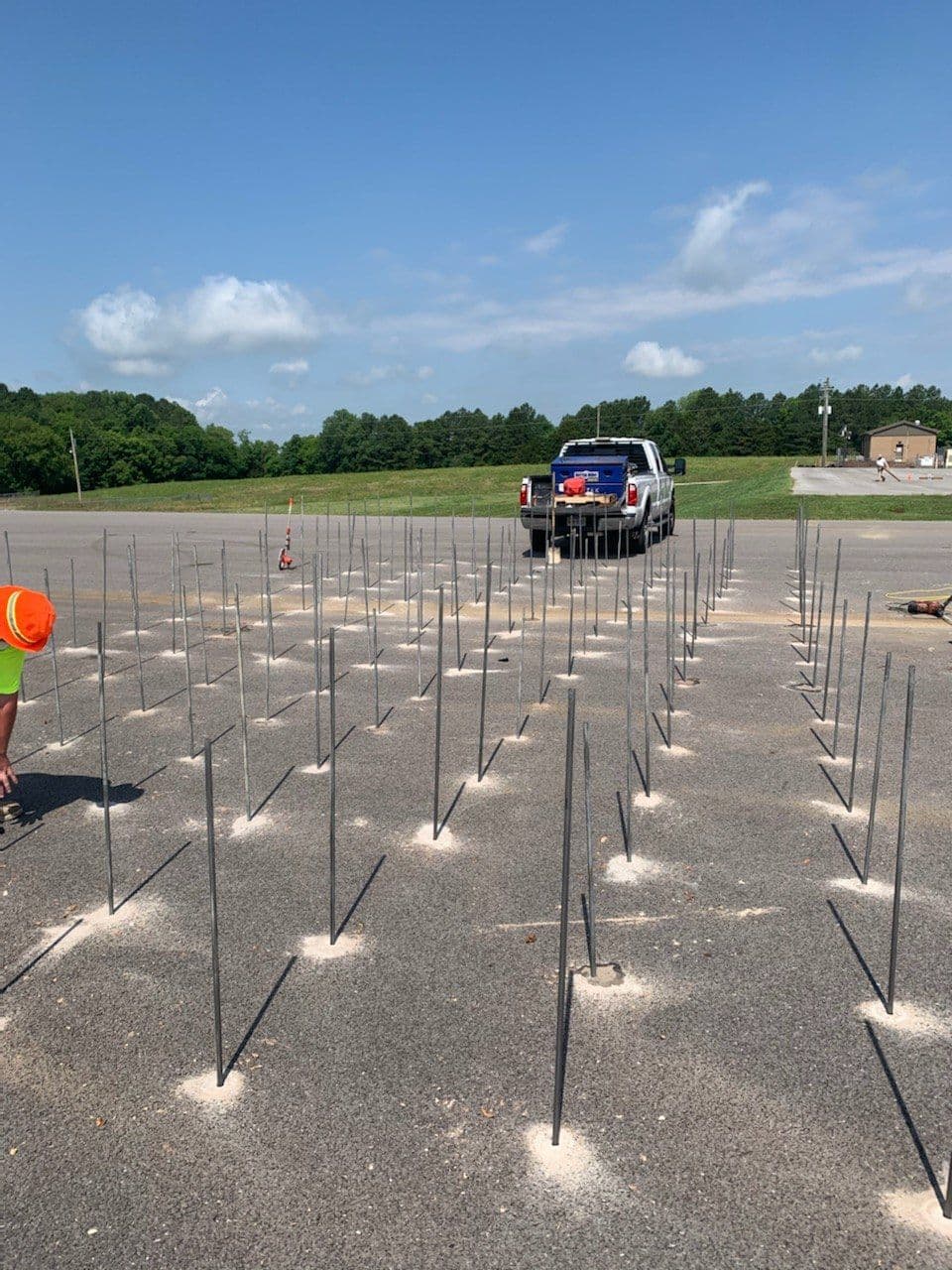
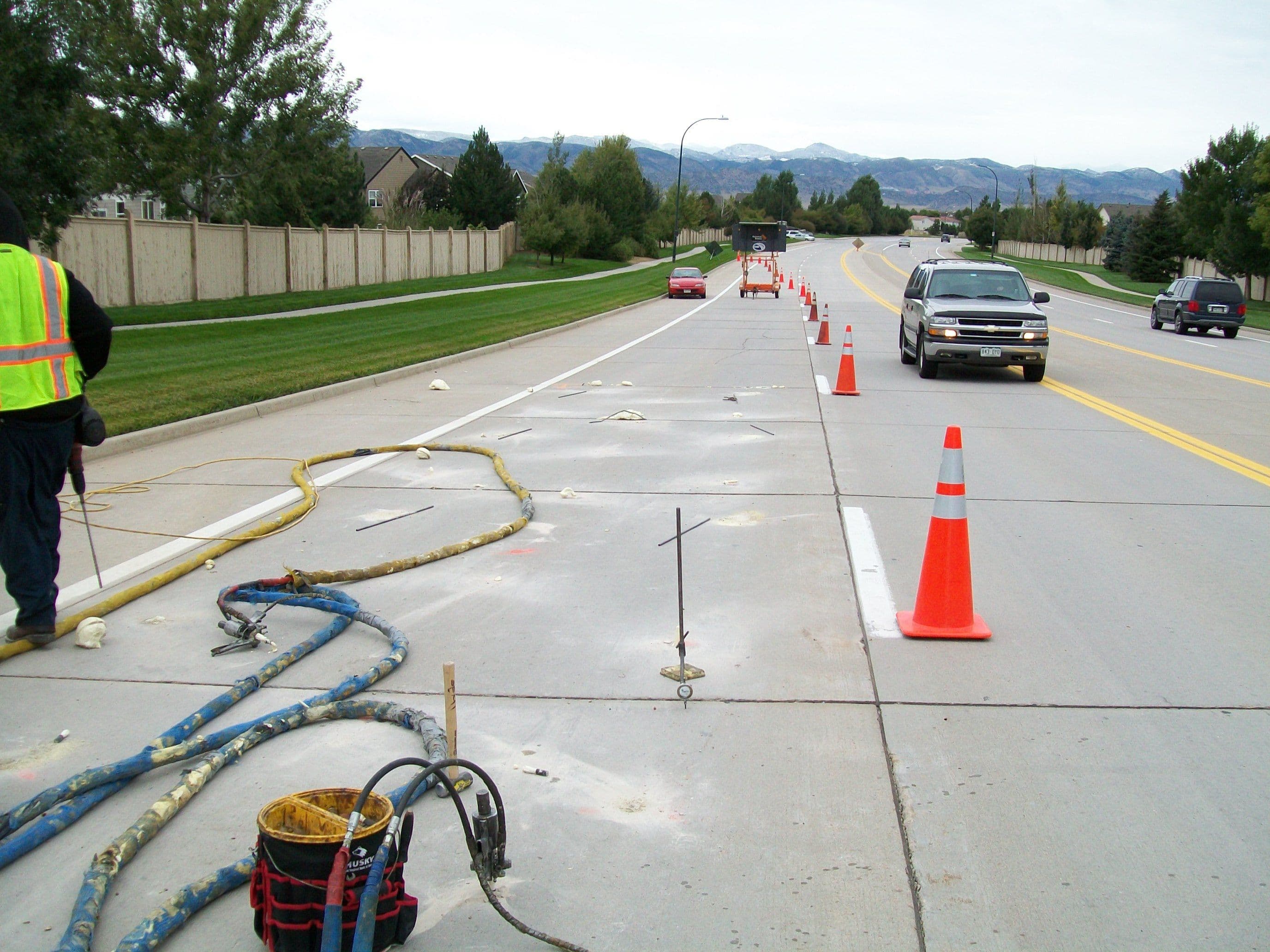
Small holes are drilled in a pattern designed around the structure's load and the extent of the settlement.
4
Inject
URETEK 486 Star® is injected and expands, densifying the soil and lifting the structure back toward grade.
5
Clean Up
There's little or no excavation to backfill and no trench to restore, so cleanup is minimal.
6
Validate
We verify the result with the test that fits the asset (DCP, FWD, plate load, elevation survey, GPR or coring) and hand over the injection and test records.
URETEK has corrected settlement for state departments of transportation, colleges, and international bridge authorities nationwide.


We verify the result with a pre/post elevation survey (and FWD or DCP testing for pavement). On the Sault Ste. Marie International Bridge, URETEK's repairs to the abutments cost approximately 1% of the estimated reconstruction cost. URETEK 486 Star® reaches about 90% of its strength within 15 minutes of injection. Designed for long-term performance when properly selected and installed. Public projects carry a two-year warranty against settlement. Private projects carry a one-year performance warranty plus a 10-year material warranty. Project terms govern.
URETEK 486 Star® is injected beneath the settled slab or structure and expands, both densifying the weak soil that caused the settlement and applying enough controlled lift to raise the structure back toward its original grade in the same process.
It often is once closures, demolition, hauling, and restoration are counted. On I-81 in Binghamton, New York, URETEK corrected up to three inches of settlement across a 122-foot by 60-foot section of highway and completed the project 60 percent under budget compared to a full reconstruction.
Yes. At State Fair Community College in Sedalia, Missouri, URETEK corrected foundation settlement in just two days with minimal disruption for the building's occupants. On highway and bridge projects, crews can work nights, weekends, or holidays to avoid closing the road during normal traffic hours.
Settlement Mitigation is used on bridge approaches and abutments, highway and parking lot pavement, building foundations and slabs, and other structures wherever differential settlement has created an uneven or unsafe surface.
Get a settled slab, pavement section, or foundation evaluated before the gap gets bigger. URETEK crews respond fast, including emergencies.
Request an Assessment

 800-240-7868


