

Location
Location withheld
Facility Type
Active municipal wastewater treatment plant undergoing a major capacity and process upgrade
Excavation Challenge
Deep excavation immediately adjacent to existing aeration tanks, critical process assets that could not tolerate unplanned movement
Subsurface Conditions
Shallow groundwater (9 to 13 feet below grade), confined sand units exhibiting heaving behavior under hydrostatic pressure, and a shoreline environment with variable groundwater influenced by nearby surface water
Original Plan
Jet grouting: abandoned after field review determined it was not practical for actual site conditions
URETEK Scope
Chemical grout curtain for groundwater control around the excavation, plus targeted polyurethane-based underpinning of an adjacent outfall box culvert
Result
Significant reduction in excavation inflow, zero observed settlement at adjacent tanks or structures, and contractor maintained schedule through project completion, all with less site disruption than the originally planned approach
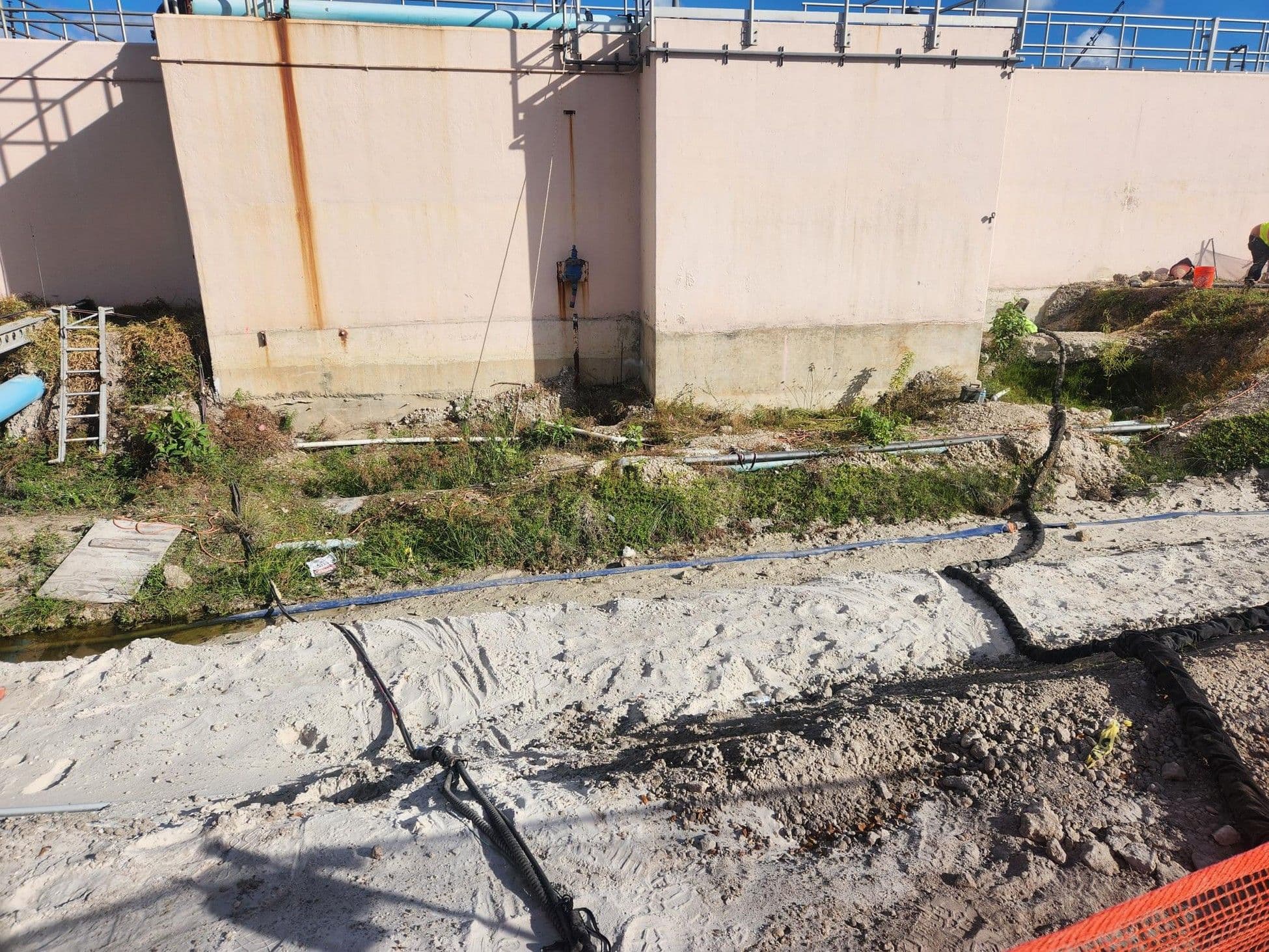
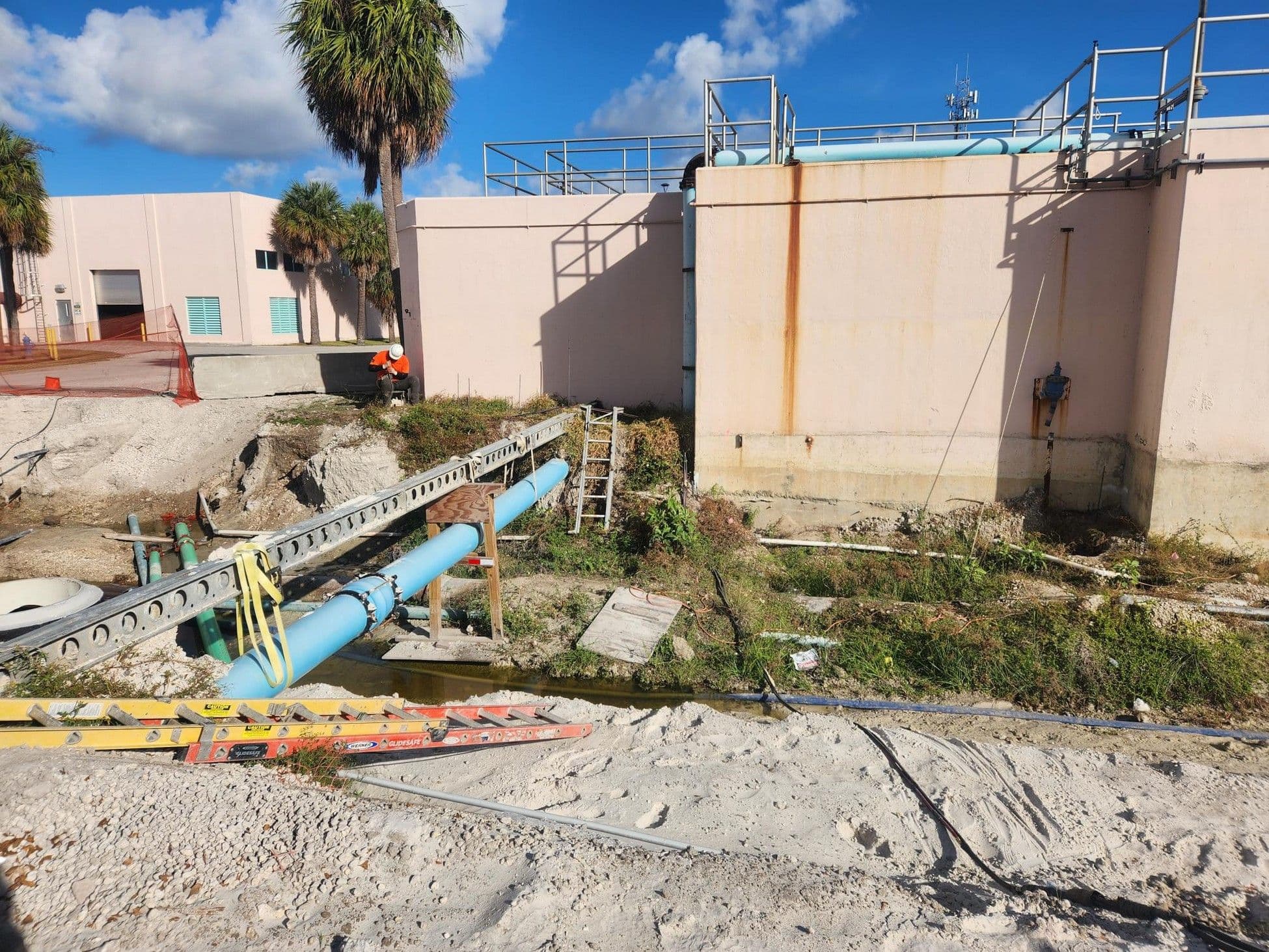
The active wastewater treatment plant site: existing aeration tanks dominate the background while ground improvement operations are underway in the foreground, with URETEK equipment visible at right; the proximity of new work to operating process infrastructure defined every constraint on this project
A major wastewater treatment plant was undergoing a significant capacity upgrade that required a deep excavation positioned immediately adjacent to existing aeration tanks. These were not idle assets. They were active process infrastructure that the plant depended on for daily operations. Any unplanned movement or settlement could compromise their function and trigger consequences far beyond the construction site.
The subsurface conditions made this excavation particularly high-risk. Groundwater was encountered at shallow depths, commonly between 9 and 13 feet below grade, and the nearby surface water environment meant that water levels were influenced by seasonal variation. During subsurface investigations, heaving sands entered drilling equipment in confined sand units, confirming what the project team suspected: the site contained groundwater under hydrostatic pressure in units capable of driving persistent, aggressive inflow into any open excavation.
The project team faced a linked pair of risks that could not be separated: controlling water entering the excavation, while simultaneously preventing the pumping required to manage that water from inducing drawdown and settlement beneath the adjacent aeration tanks. Solve the water problem aggressively with high-rate pumping, and you risk settling the tanks. Solve it too conservatively, and the excavation becomes unsafe and unworkable. The two objectives were in direct tension, and any viable approach had to address both.
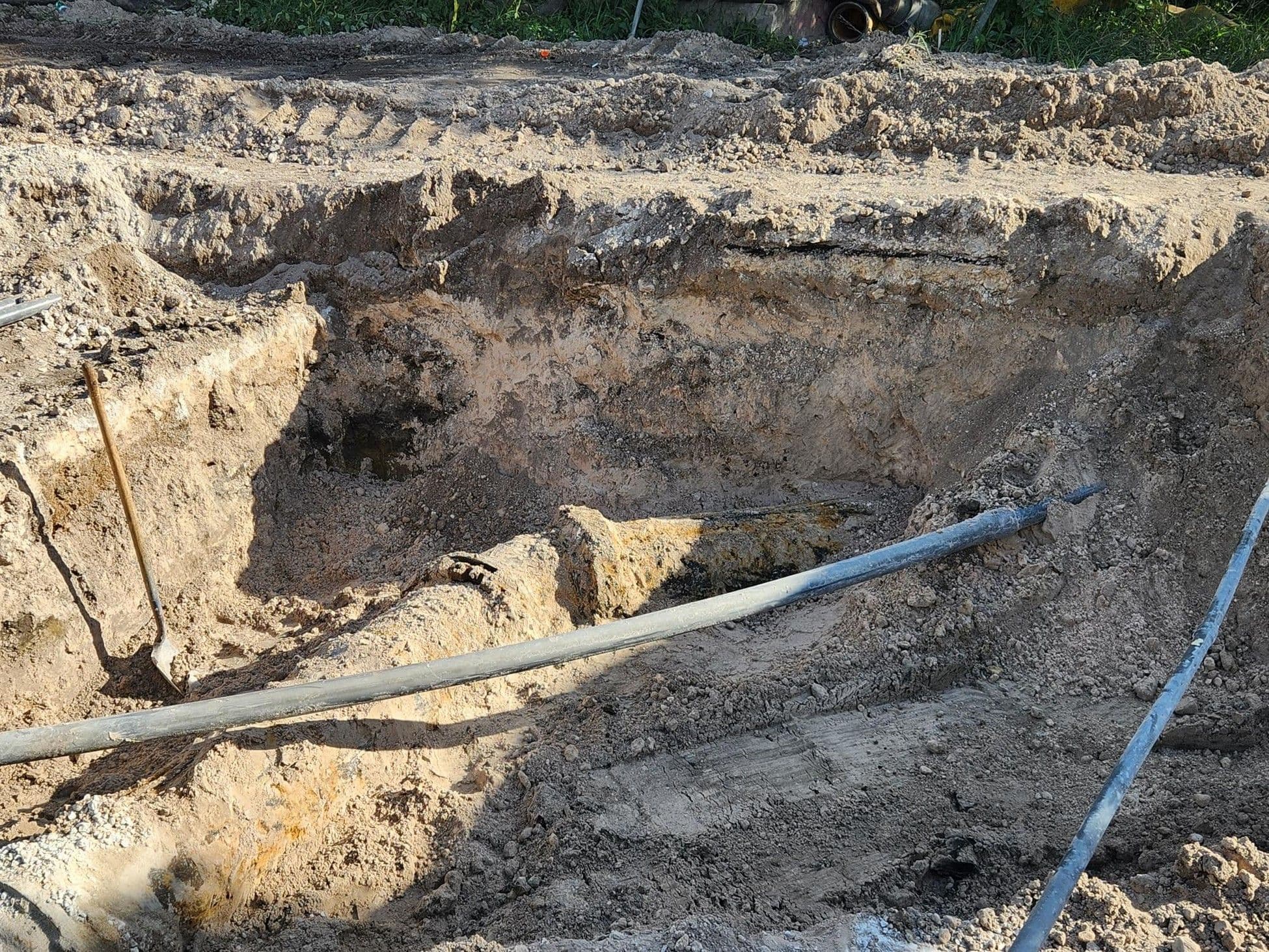
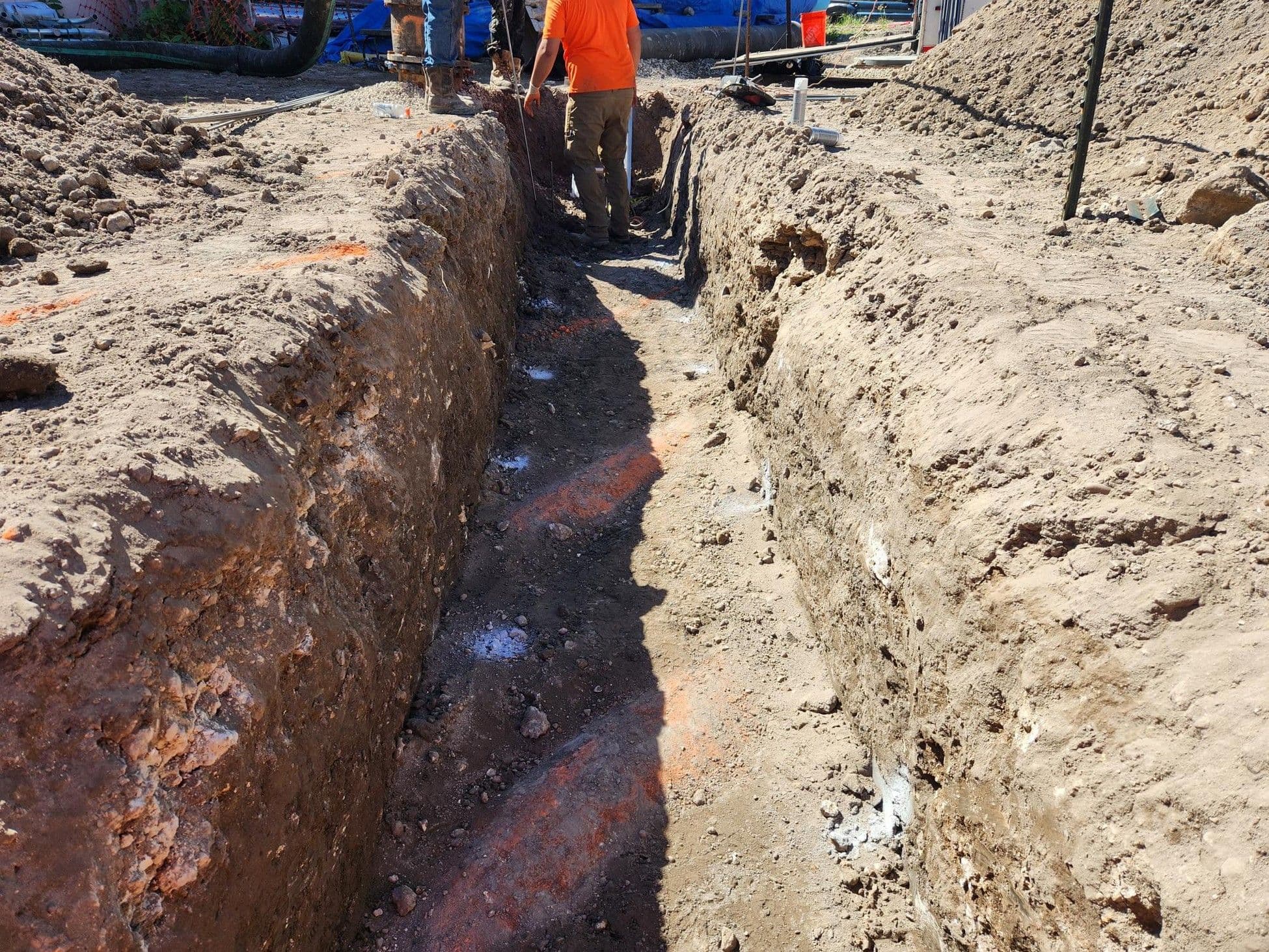
The excavation zone prior to groundwater control: saturated, dark soils and standing water at the base of the cut illustrate the persistent inflow conditions that made uncontrolled dewatering a direct threat to the adjacent tanks
Jet grouting had been the original ground improvement strategy for this project. But when the contractor conducted a field review of actual site conditions, jet grouting was determined to be impractical. The reasons are familiar to engineers and contractors who have worked on similar sites: jet grouting requires heavy equipment with a significant footprint, generates substantial spoils that must be managed in real time, introduces vibration and disruption that can be problematic next to sensitive structures, and demands site access and staging conditions that a constrained, active treatment plant may not be able to provide.
The contractor needed an alternative that could accomplish the same objectives, groundwater control and adjacent-structure protection, without the access demands, disruption, and risk profile that made jet grouting unworkable. That is exactly the scenario URETEK was brought in to solve.
URETEK designed and delivered a two-part program that addressed both the groundwater and settlement risks as an integrated scope, not as separate, potentially conflicting work packages. On projects where water control and structural protection are both in play, treating them independently often means one solution undermines the other. URETEK's approach ensured they reinforced each other.
URETEK installed a chemical grout curtain around the excavation to reduce groundwater movement toward the work zone. The curtain was designed as a permeation-based barrier, a continuous zone of treated, low-permeability soil created by injecting chemical grout into the pore spaces of the native material, reducing its ability to transmit water.
An important distinction for engineers and owners: a grout curtain is not dewatering. It is a subsurface seepage-control measure. By reducing the permeability and continuity of flow paths around an excavation, a grout curtain can reduce inflow enough to improve excavation conditions and, critically, reduce reliance on the high-rate pumping that creates drawdown and settlement risk near sensitive structures.
URETEK crew installing the chemical grout curtain along the base of the existing aeration tank wall: injection rods are placed at close spacing to ensure overlapping treatment zones; the tank structure that had to remain stationary throughout the excavation program is visible throughout the full frame
The grout system used was an acrylate chemical resin, acrylamide-free, with an extremely low viscosity in the range of 1 to 3 centipoise. That water-like viscosity is what allows the material to permeate into fine soil pore spaces and travel along extended flow paths at low injection pressures, reaching zones that thicker grouts simply cannot enter.
Gel time was field-controllable, ranging from seconds to tens of minutes depending on formulation and temperature. This adjustability allowed URETEK's crew to match the grout's set time to actual groundwater conditions at each injection point: faster gel times where flowing water would carry material away from the treatment zone, and longer working times where deeper penetration was needed to build curtain continuity. In an environment with variable groundwater conditions, this adaptability is not a convenience; it is a necessity.
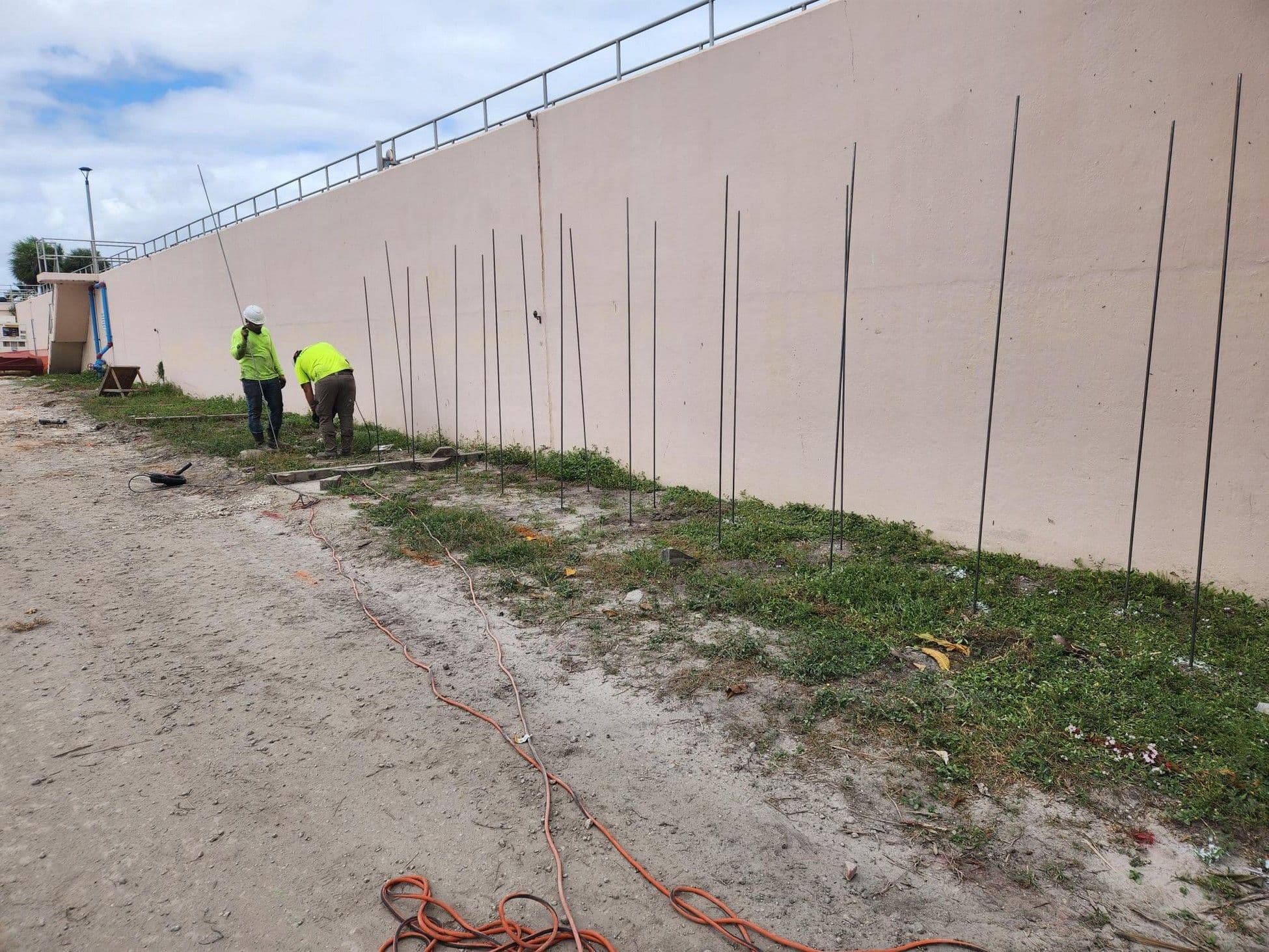
The systematic injection point layout across the treatment area: orange-capped rods mark completed injection locations in a planned grid pattern, with URETEK crew managing connections in the background; the geometry of the layout is what produces a continuous, gap-free seepage barrier rather than a collection of isolated treatment points
In addition to the grout curtain, URETEK provided targeted underpinning for an outfall box culvert located adjacent to the excavation. This work used a controlled, polyurethane-based stabilization method to strengthen the supporting soils beneath and alongside the culvert, protecting it from settlement risk associated with the deeper dig.
The underpinning was precisely scoped: applied along a defined segment adjacent to the excavation, with injections extending to depths on the order of ten feet. This was not a broad, high-disruption ground treatment program. It was a surgical intervention at the locations where the risk was concentrated, designed to complement the grout curtain's water control function by providing direct structural support where the culvert was most vulnerable.
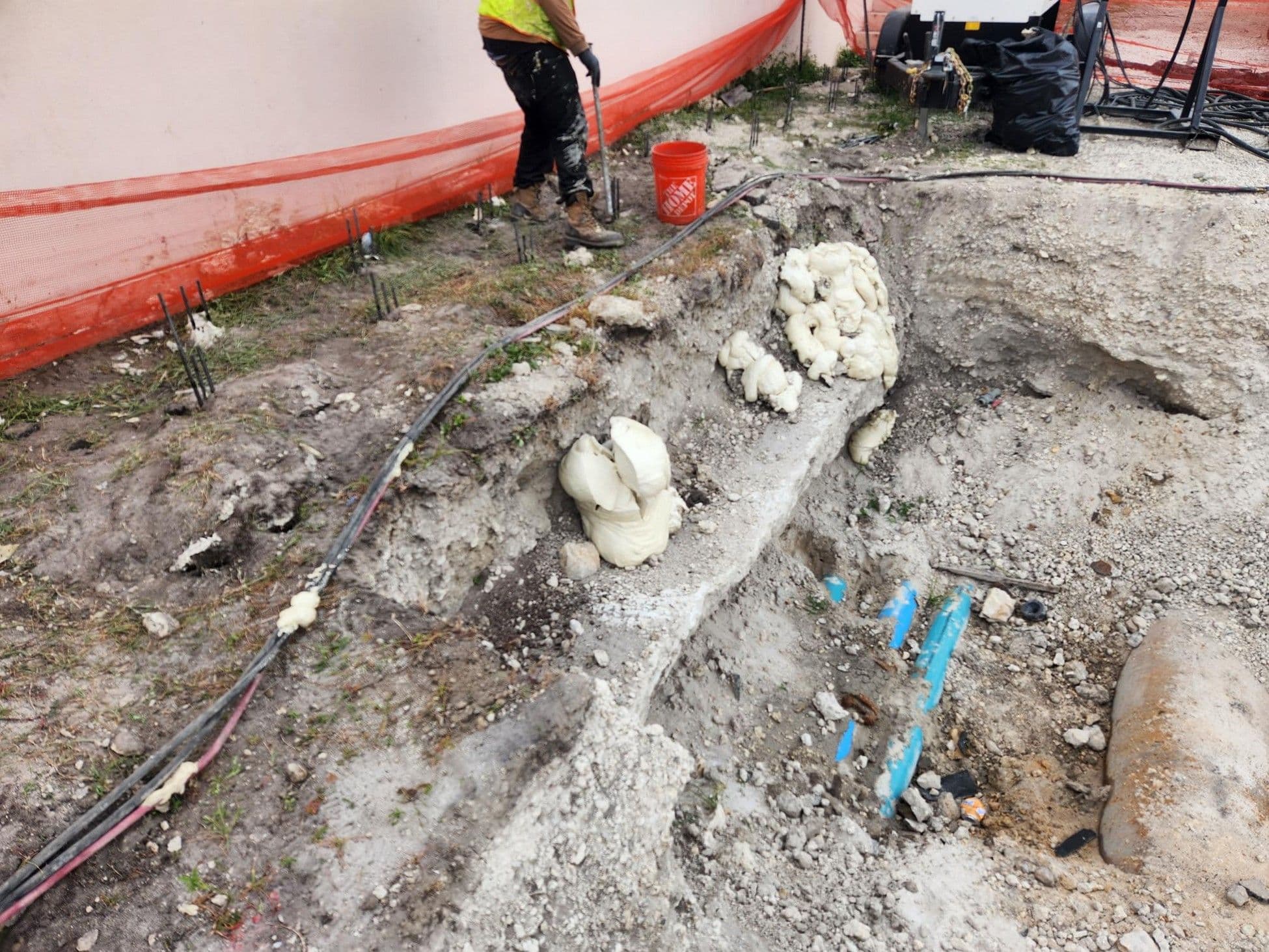
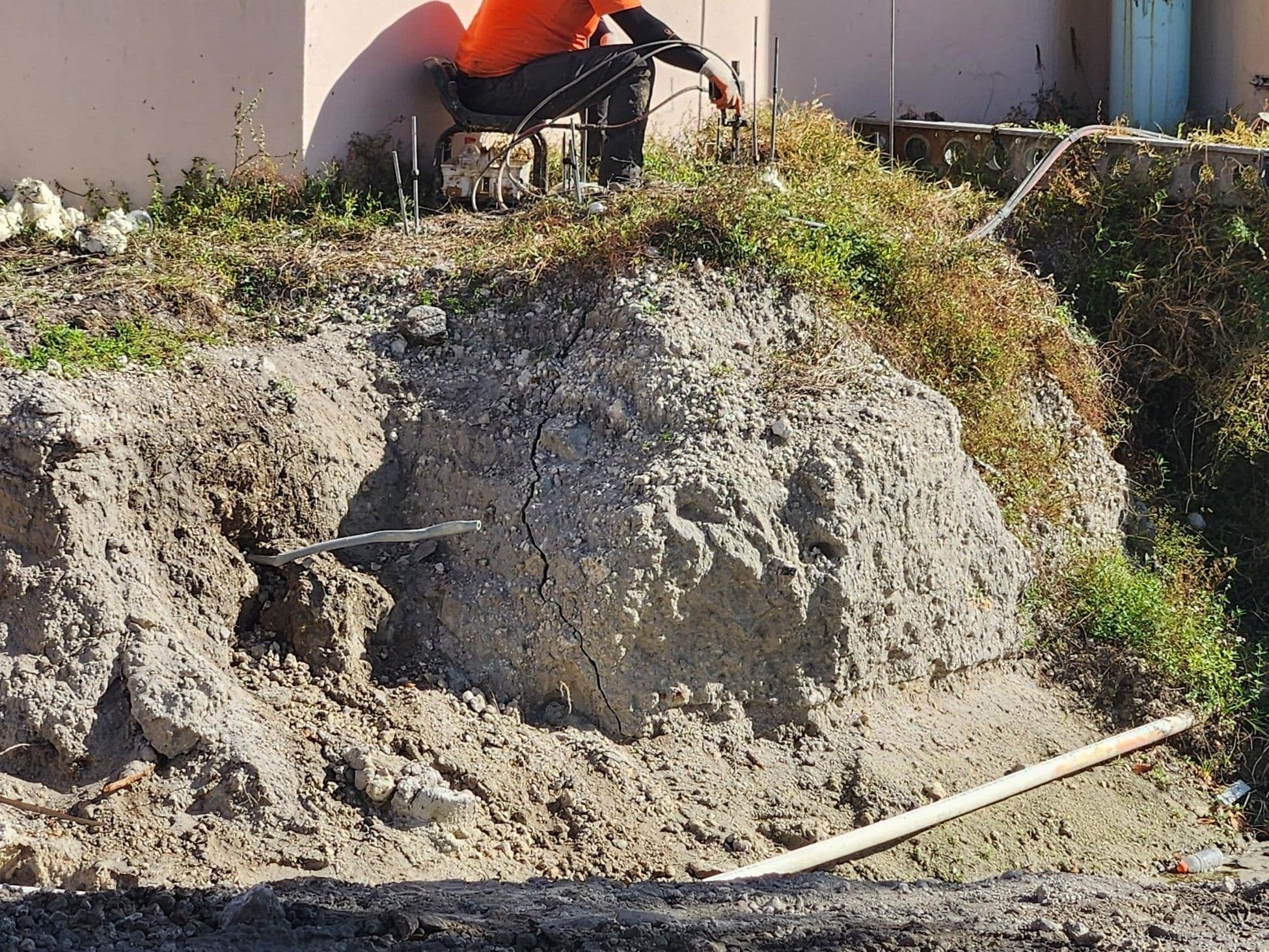
Cured polyurethane material visible in the excavated zone at the base of the adjacent structure: the expanded foam has permeated the surrounding soil and filled subsurface voids, creating a stabilized mass that provides direct bearing support beneath the culvert footprint
One of the most important aspects of this project is how URETEK's scope was sequenced and integrated with the broader construction program. URETEK's installation was completed in a sequence that allowed the contractor to begin excavation immediately after the groundwater-control and underpinning systems were in place. There was no gap, no waiting period, and no secondary mobilization required. The ground treatment was engineered from the start as a construction-enabling package, not as a standalone scope that the contractor would then have to work around.
This integration matters because it directly protects the schedule. On projects where ground improvement is treated as a separate, siloed scope, the handoff between the grouting contractor and the excavation contractor often introduces delays, coordination friction, and uncertainty about when conditions will be "ready." URETEK's approach eliminated that gap by designing the treatment sequence to deliver excavation-ready conditions on a predictable timeline.
The smaller equipment footprint also mattered in this environment. An active wastewater treatment plant has limited space, ongoing operations, and regulatory constraints that heavy equipment campaigns can conflict with. Chemical grout injection equipment is compact, quiet relative to jet grouting rigs, and generates no spoils, all significant advantages when working inside the fence of a live facility.
The dual-system approach delivered measurable performance across every project objective.

Groundwater inflow significantly reduced. The grout curtain transformed an aggressive inflow condition into a manageable one, allowing excavation to proceed without the high-rate pumping that would have threatened adjacent structures.
Zero observed settlement at adjacent tanks or structures. The integrated water-control and underpinning program protected active process infrastructure throughout the entire excavation duration.
Schedule maintained through project completion. URETEK's construction- enabling sequencing eliminated the coordination gap that typically introduces delays between grouting and excavation scopes.
Less site disruption than the original jet grouting plan. Chemical grout injection required a fraction of the footprint, generated no spoils, and operated without the vibration and noise of heavy ground improvement equipment.
A cured grout mass at the base of the tank wall, revealed during excavation: the material has migrated into the surrounding soil and expanded to fill the treatment zone, creating the stabilized subgrade that protected the adjacent structure throughout the dig
The chemical grouting approach provided an effective, lower-impact alternative to the originally planned jet grouting, delivering the required groundwater control and structural protection with reduced site disruption, a smaller equipment footprint, and better compatibility with the active treatment plant environment. For the project owner, the outcome was straightforward: the excavation was completed safely, the adjacent process infrastructure was protected, and the upgrade project stayed on schedule.
Excavation in progress adjacent to the aeration tank wall: the contractor's equipment and crew work safely at depth, with the existing tanks immediately behind; the ability to excavate to this depth without water control failures or settlement events confirmed that the grout curtain and underpinning program performed as designed
Water control and structural protection must be solved together. When a deep excavation sits next to settlement-sensitive infrastructure, aggressive dewatering can be as dangerous as the water it removes. A chemical grout curtain reduces inflow without the drawdown risk that high-rate pumping creates, solving both halves of the problem simultaneously.
When the original plan fails, URETEK is the alternative that works. Jet grouting is often specified on paper but proves impractical in the field when site conditions, access, or equipment constraints do not match the assumptions. Chemical permeation grouting achieves the same groundwater-control objectives with a fraction of the footprint, disruption, and spoils management.
Ground treatment should enable construction, not delay it. URETEK's scope was sequenced so the contractor could begin excavation immediately after installation: no gap, no waiting, no secondary mobilization. Designing ground improvement as a construction-enabling package rather than a standalone scope is what keeps projects on schedule.
Active facilities demand low-disturbance methods. Chemical grout injection is compact, quiet, and generates no spoils, making it inherently more compatible with live treatment plants, hospitals, data centers, and other facilities that cannot tolerate the disruption of heavy ground improvement equipment.
If you are planning a deep excavation in high-groundwater conditions adjacent to settlement-sensitive structures, whether aeration tanks, process piping, utilities, buildings, or other critical infrastructure, and you need a groundwater control and structural protection strategy that works without heavy equipment, excessive disruption, or risk to what's already there, URETEK can help.
We evaluate site conditions, design integrated grout curtain and underpinning programs, and deliver construction-enabling ground treatment on a timeline that protects your schedule. If your original ground improvement plan has proven impractical, we are often the solution that replaces it.

 800-240-7868


