

Location
Ohio
Structure Type
Divided six-lane, full-depth asphalt interstate highway; roadway settlement traced to a corrugated metal pipe roughly 50 feet below grade
Core Challenge
A two- to six-inch dip developed across six lanes as supporting soils migrated into a compromised buried pipe, undermining pavement support on a high- traffic corridor that had to stay open by day
Verification
Dynamic Cone Penetrometer (DCP) testing before and after treatment to locate weak zones and set injection depths, with pavement profiles, string lines, and laser monitoring throughout each lift
URETEK Scope
Multi-depth URETEK Deep Injection (UDI) at roughly 5, 8, and locally 11 feet to stabilize the soils and raise the pavement to grade, performed entirely in overnight lane closures with no excavation
Result
Up to six inches of settlement corrected across the affected lanes and shoulder in 12 night shifts, with no daytime lane closures and no post-injection milling required
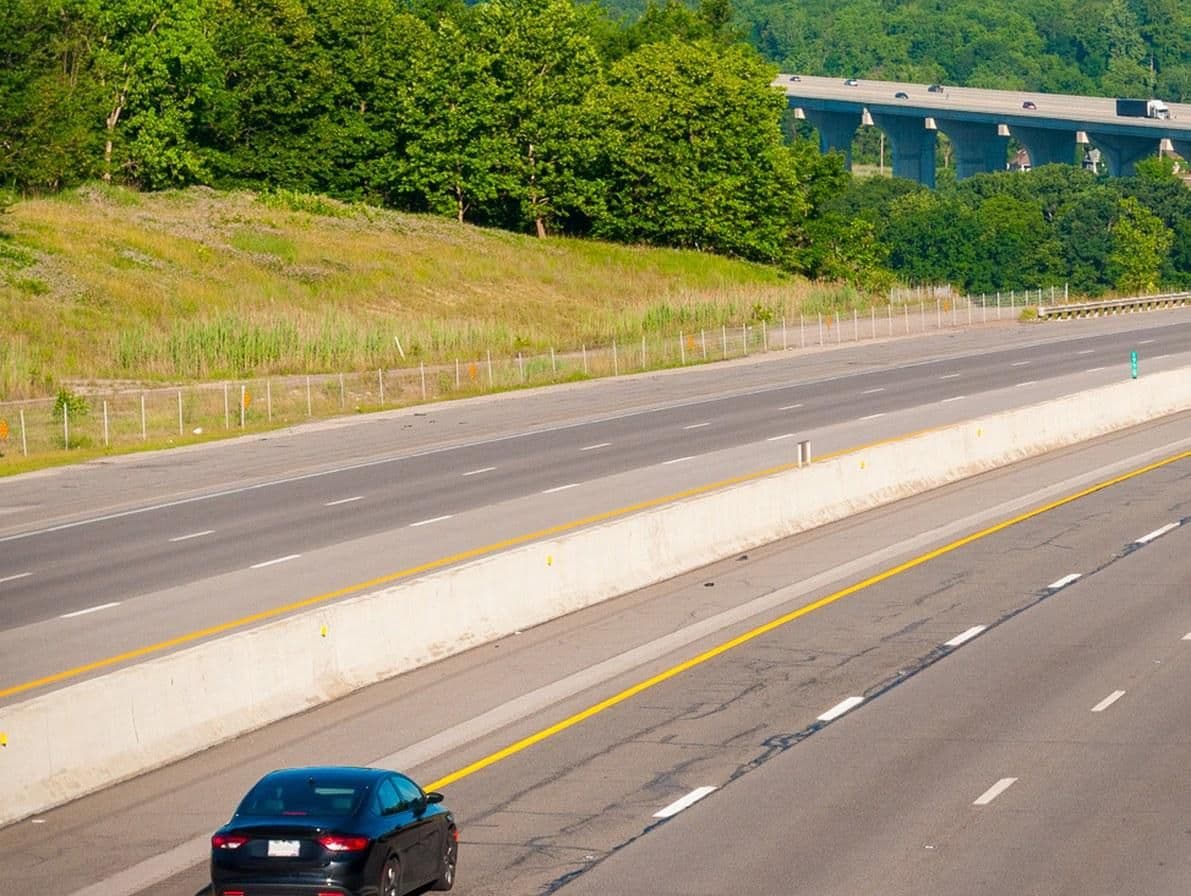
The affected six-lane interstate corridor in Ohio: URETEK restored the settled pavement from below and kept the roadway open to daytime traffic throughout the project
A divided, six-lane, full-depth asphalt interstate in Ohio developed a broad depression across all lanes of traffic. The settlement varied by location, from roughly two inches to as much as six inches. Project records traced the movement to a compromised corrugated metal pipe about 50 feet below grade: as the pipe deteriorated, it drew supporting soils down and away from beneath the roadway, leaving voids that showed up at the surface as a growing dip.
The corridor carried very high traffic volumes, so the state department of transportation needed the roadway profile restored quickly without closing lanes during the day. The conventional fix, excavating all six lanes down roughly 50 feet to reach and replace the pipe and then rebuilding the interstate, would have meant major reconstruction in both directions, at high cost and with significant downtime.
The schedule was tight in every direction. Falling temperatures and approaching winter weather compressed the working window to an estimated 30 days at most, and every shift had to run at night so the lanes could reopen before daytime traffic returned. State transportation officials, who had worked with URETEK on similar projects, called the company for a rapid, low-disruption repair.
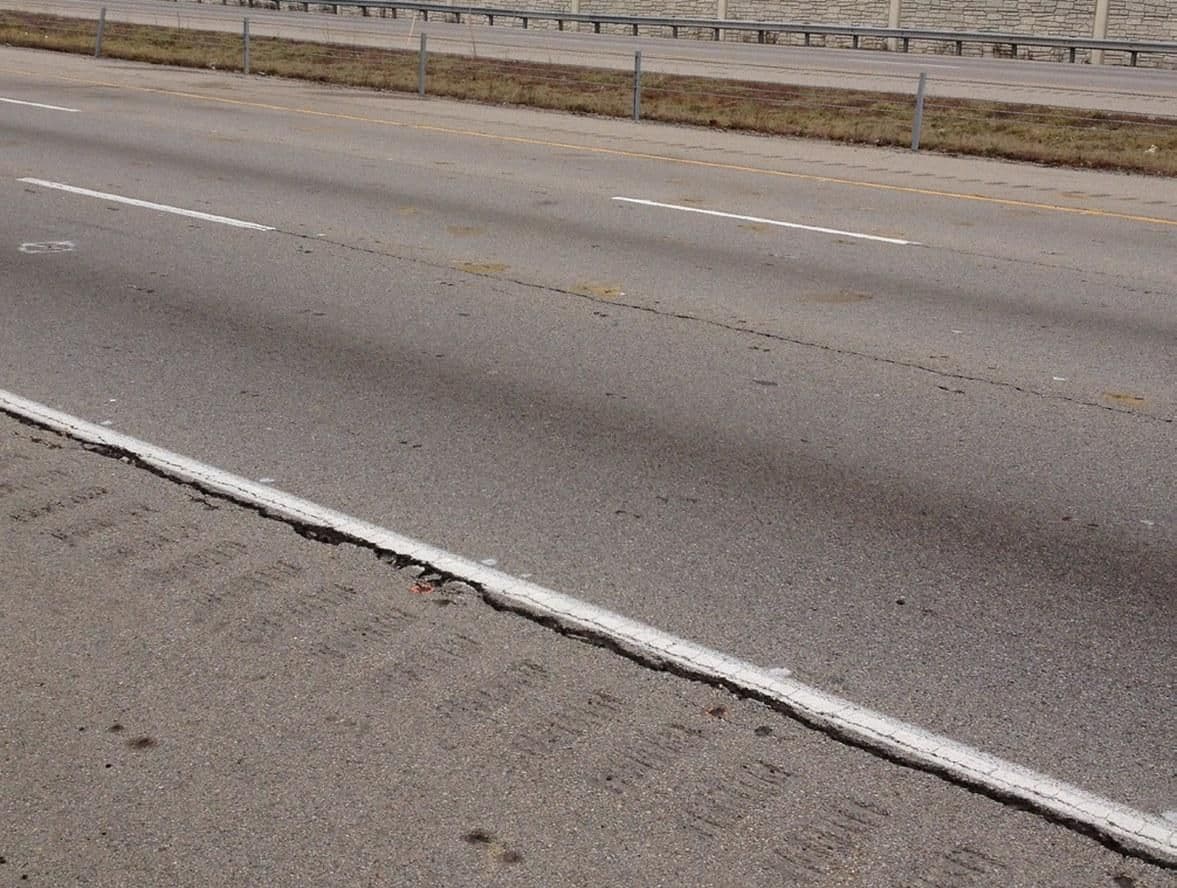
The dip spread across six lanes of the interstate: settlement of up to six inches at the pavement edge marked where soils had been drawn into the failing pipe below
The textbook remedy for a failed pipe 50 feet down is to dig to it: excavate the pavement and soil across all six lanes, replace the pipe, backfill, and rebuild the roadway. On a high-volume divided interstate, that path carries enormous cost, long full-directional closures, and weeks of downtime that the traveling public absorbs.
With winter closing in and a 30-day window, full reconstruction was not realistic on the schedule the corridor demanded. It also addressed the pavement by removing it, when the immediate problem, from the driver's seat and from the pavement's, was loss of support in the soils directly beneath the surface.
What the project needed was a way to rebuild that support in place, raise the pavement back to grade, and do it in short overnight windows without excavation. That is what URETEK Deep Injection was designed to deliver. By the project team's comparison, the stabilization approach was completed at about ten percent of the estimated cost of full reconstruction.
Guided by DCP testing, URETEK crews performed URETEK Deep Injection (UDI), placing an expanding structural polymer into the weak soils through small holes drilled directly through the pavement. Most of the treatment concentrated in the upper soils that directly support the pavement rather than reaching down to the pipe itself: the goal was to restore bearing support and raise the surface, not to excavate the defect.
Testing set the depths. Crews injected primarily at about five feet, where the majority of the required lift was achieved, then treated at about eight feet to fill remaining voids, stabilize deeper zones, and make final elevation adjustments. Where DCP testing found very loose soil deeper down, the plan was adjusted: at one shoulder location, seven injection points were added at about eleven feet along a roughly 30-foot section to bridge the weak zone. Treatment followed the measured conditions rather than a uniform depth across the site.
Work areas were treated lane by lane, typically about 100 feet long: 12-foot-wide lane sections carrying three- and four-inch dips, and a 24-foot-wide lane-and-shoulder area where settlement reached about six inches. Material quantities were logged separately by injection depth for every area.
The lift was closely controlled. Before injecting, crews established the pavement profile with string lines and lasers to set the required lift at each point. Flow meters were zeroed with the agency inspector present, and rather than raising any single point to final grade at once, crews worked back and forth across the treatment area, checking the pavement against the established profile and feathering the asphalt to a smooth transition. When a section reached grade, the injection holes were cleaned and patched, and final profiles and elevations were recorded.
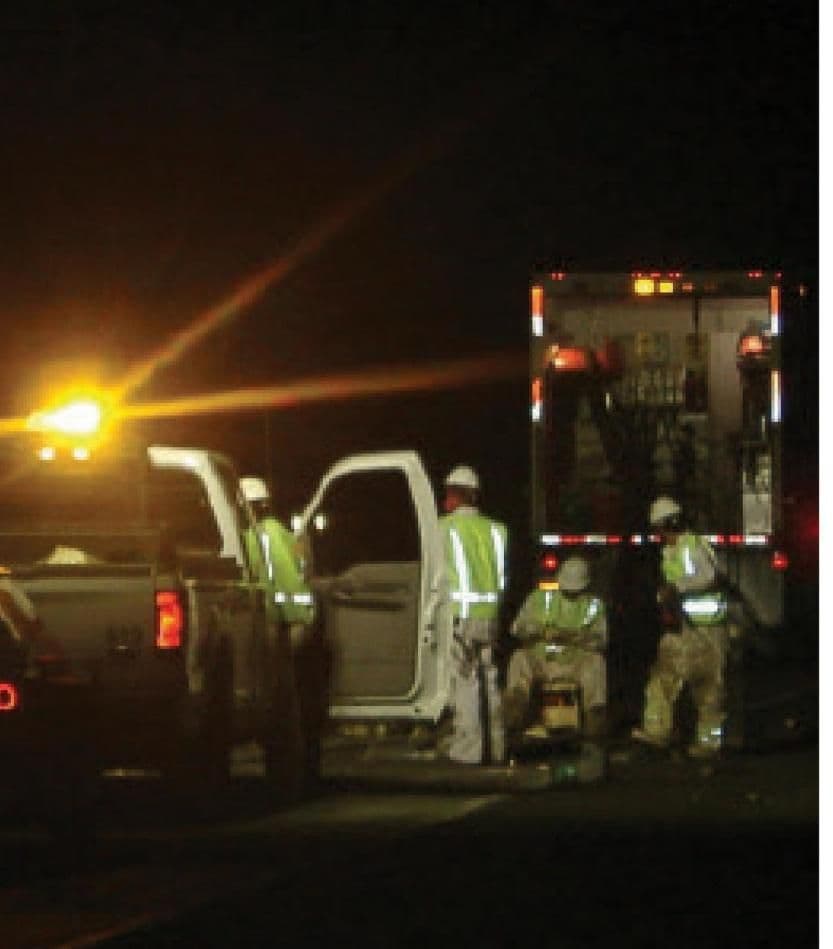
All work was performed at night: crews entered the lane closure in the evening and cleared it before morning, so the interstate stayed open to daytime traffic throughout the project
The measures that defined this repair came from the project's DCP testing, the nightly field logs, and the profile and elevation records, not from injection volume alone.
The problem measured up as a broad, deep-seated dip: two to six inches of settlement across six lanes of full-depth asphalt, above a corrugated metal pipe roughly 50 feet below grade. Individual work areas ran about 100 feet long, from 12-foot lane sections with three- and four-inch dips to a 24-foot lane-and- shoulder area settled about six inches.
Treatment was directed by depth: most lift came from injection at about five feet, with about eight feet used for void filling and final grade, and a localized zone at about eleven feet, seven probes over roughly 30 feet, where testing found very loose soil beneath a shoulder. Material was metered and recorded separately at each depth, with an agency inspector present and flow meters zeroed at the start of injection.
Control came from continuous measurement. String lines, lasers, and repeated profile checks governed the lift so the pavement returned to grade with minimal undulation. Post-injection DCP testing was performed across the repaired lanes to document the completed subsurface work.
The program restored the roadway on a compressed winter schedule, without daytime disruption to a heavily traveled corridor.

Up to six inches of settlement corrected. The affected travel lanes and shoulder were raised back to the required roadway profile, correcting dips that reached about six inches at the worst location.
Completed in 12 night shifts. All work was finished over 12 nightly closures, well inside the estimated 30-day weather window, with the roadway reopened to traffic before each morning.
No daytime lane closures. Every shift ran at night and cleared before daytime traffic resumed, avoiding closures on a high-volume six-lane corridor.
No milling or asphalt replacement needed. Because the pavement was lifted with minimal surface undulation, the project record reports that post-injection milling and asphalt replacement were not required.
About one-tenth the cost of reconstruction. By the project team's comparison, the stabilization work was completed at roughly ten percent of the estimated cost of excavating all six lanes and rebuilding the interstate.
Backed by URETEK’s two-year warranty against settlement. URETEK stands behind the completed work with its two-year warranty against settlement.
Treat the support, not just the surface. The dip at the surface came from soils lost into a failing pipe 50 feet down. Rebuilding support in the upper soils raised the pavement back to grade without excavating to the pipe.
Let testing set the depths. DCP testing before and during the work located the weak zones and drove the injection depths, including a localized eleven-foot treatment that a uniform plan would have missed.
Lift under continuous control. String lines, lasers, and material metered by depth let crews raise the pavement incrementally and evenly, returning it to grade with minimal undulation and no milling.
Night work keeps critical corridors open. Performing every shift in overnight closures corrected six inches of settlement across six lanes while leaving daytime traffic undisturbed, on a schedule reconstruction could not have met.
If settlement is opening dips in a pavement you cannot afford to close or reconstruct, especially over failing culverts or utilities, URETEK can help. We stabilize the soils that support the roadway and raise the surface back to grade, in place and under traffic. We will evaluate your subsurface conditions, set injection depths with in-situ testing, and lift the pavement under continuous grade monitoring, giving your team a fast, low-disruption repair without tearing out the road.

 800-240-7868


