

Location
Virginia
Structure Type
Structural columns framing a shipbuilding facility built in the 1890s, carried on timber piles driven at the time of original construction
Core Challenge
Deterioration within the timber pile system had reduced bearing and lateral support beneath the columns, and settlement was developing. The facility could not stop work, access around the column bases was tight, and the surrounding soils were contaminated
Verification
Dynamic Cone Penetrometer (DCP) testing before injection to characterize the soils and set the treatment plan, repeat DCP testing afterward to compare in-situ response at the same locations, and a spot excavation at a test column to inspect the treated zone directly
URETEK Scope
URETEK Deep Injection (UDI) around the affected columns: DCP investigation, injection probe installation, and a program of static and dynamic load injections, selected after a field demonstration at the facility
Result
Post-injection DCP measurements indicated improved soil response at the tested locations, the excavated test column showed injected polymer through the intended treatment zone, and the facility engineers accepted the stabilization work. Shipbuilding continued throughout
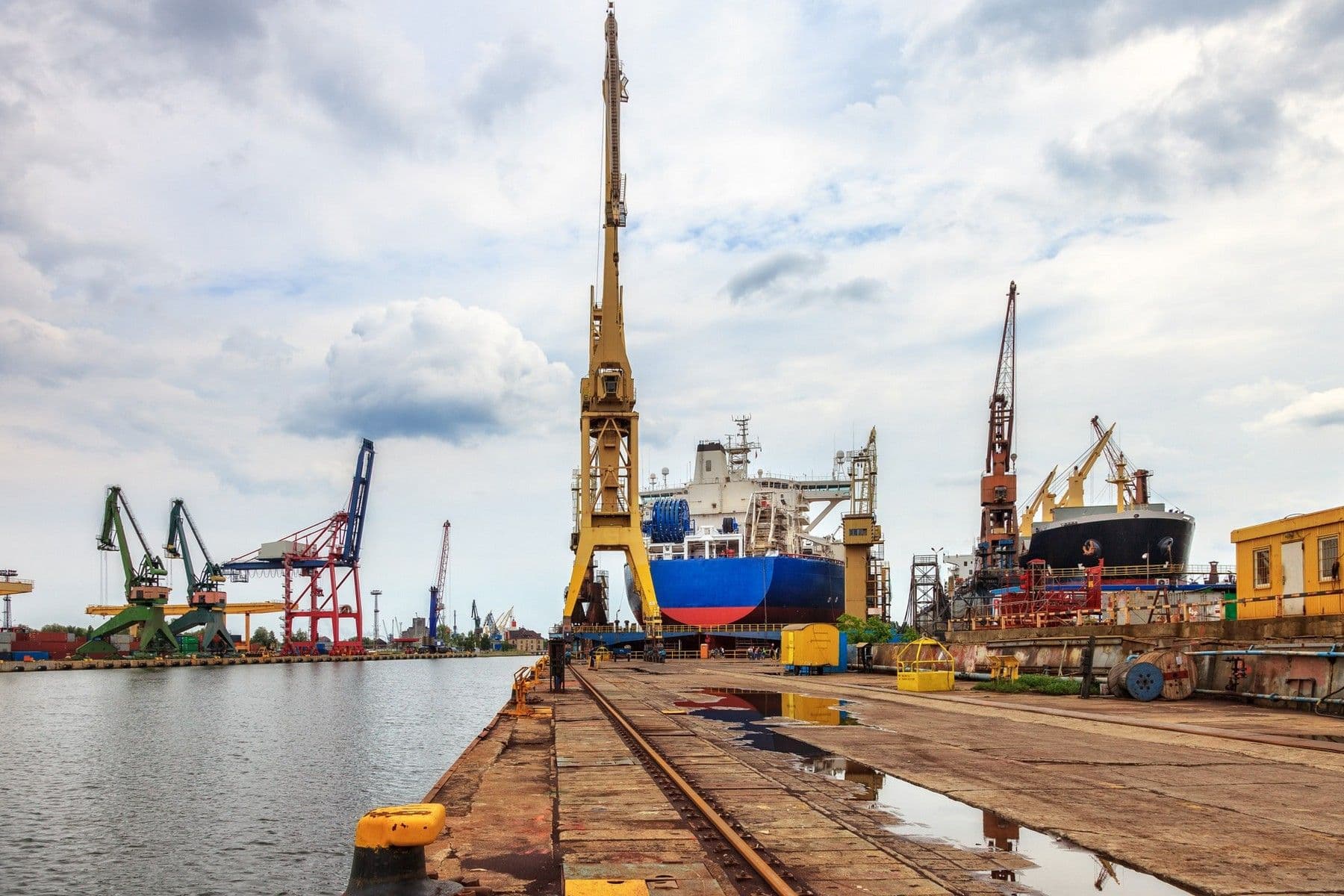
Shipbuilding and ship repair facilities are long-lived assets built on soft, water-influenced ground, and the oldest of them still stand on foundations installed more than a century ago.
When this shipbuilding facility was built in the 1890s, its structural columns were carried on timber piles driven into the ground beneath them. That was sound practice for the era, and it can last: untreated timber kept below the water table can last for a very long time, because the decay organisms that attack wood need oxygen. The trouble at this facility was that the water table did not hold still. Over more than a century, portions of the pile system deteriorated, and the columns above began losing both bearing capacity and lateral support.
The engineering assessment identified three contributors working together. Groundwater fluctuated, which cycled the upper portions of the piles between wet and dry, the condition under which timber decays fastest. The piles were aged and untreated. And the surrounding soils carried environmental contamination. Settlement beneath the columns followed from the loss of support, and the settlement is what made the condition visible.
The constraints on the repair were as demanding as the engineering. This facility is a piece of national security infrastructure with continuous production, so shutting down a bay while a foundation was rebuilt was not on the table. The columns stand inside a working building, which left very little room to bring equipment to a column base. And the contaminated ground meant that anything bringing spoil or slurry back to the surface carried containment and disposal obligations with it.
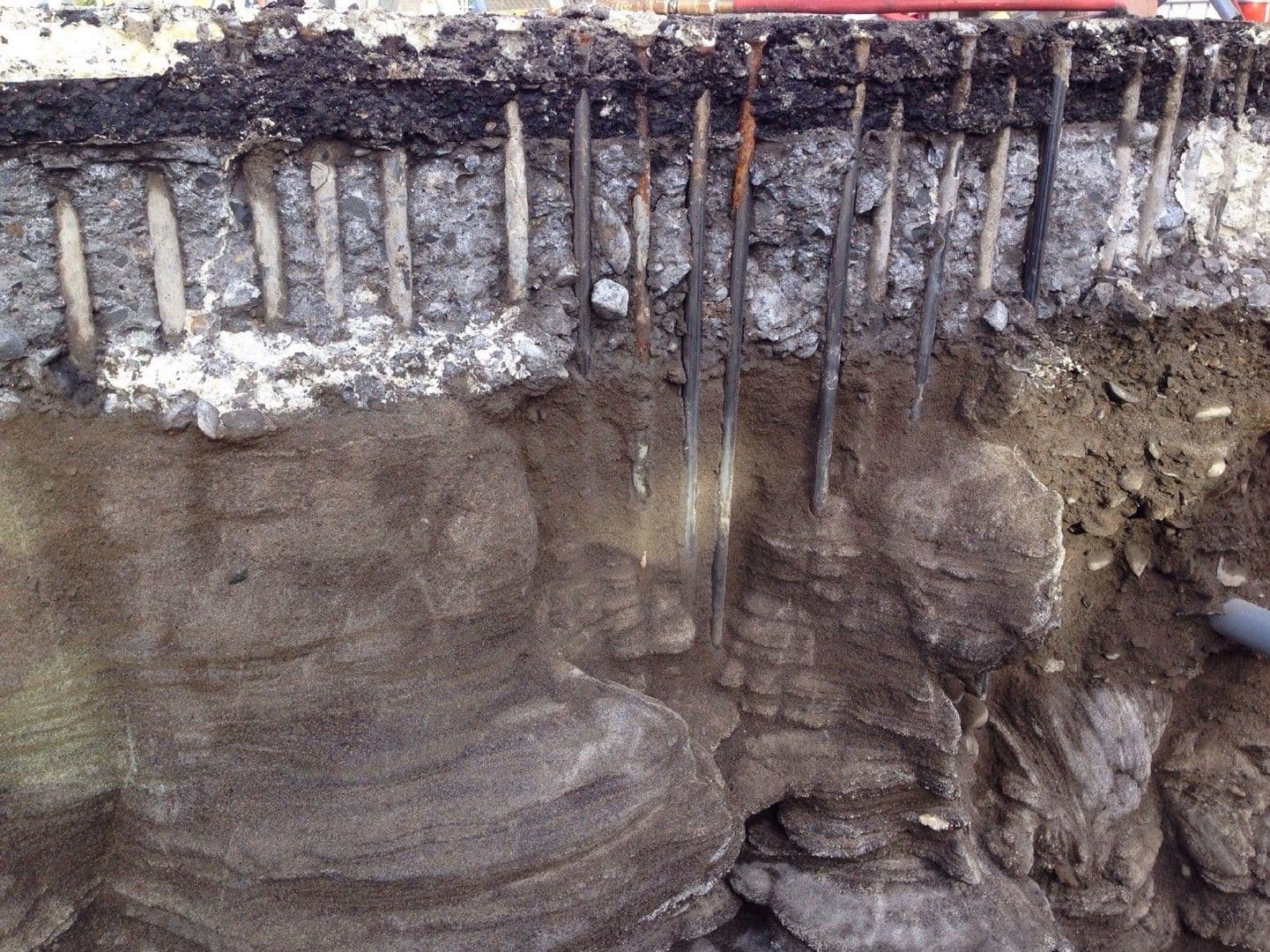
Timber piles exposed during excavation on a URETEK project. Untreated timber kept below the water table can last a very long time. Timber that cycles between wet and dry deteriorates from the top down, taking bearing and lateral capacity with it.
The project team put the realistic methods side by side and compared them: jet grouting, helical anchors, cementitious compaction grouting, and deep polymer injection. Any of the first three is a proven way to restore support beneath a settling foundation. On an open site with equipment access and no environmental restrictions, any of them could have been the right answer here.
Inside a working shipbuilding facility, the site did the choosing. Methods that circulate grout or slurry return material to the surface, and on contaminated ground that becomes a containment and disposal problem rather than a side effect. Methods that need drilling or driving equipment at the column base need working room the building did not have to give. And every option that occupies the area around a column for an extended period costs the facility production time it could not spare.
Deep polymer injection was selected on three grounds the project record documents: it could be sequenced without interrupting shipyard operations, the injected material holds up against the contaminants present in the ground, and it carried a significant cost advantage over the alternatives as the team evaluated them. A field demonstration by URETEK, run in the facility's own conditions before the method was chosen, is what moved the decision.
URETEK put measurement ahead of production. Crews mobilized and began with extensive Dynamic Cone Penetrometer testing to characterize the soils around the affected columns, and the injection plan was built from that data rather than from a standard pattern. Injection probes were then installed around each affected column, and the treatment was carried out as a series of static and dynamic load injections.
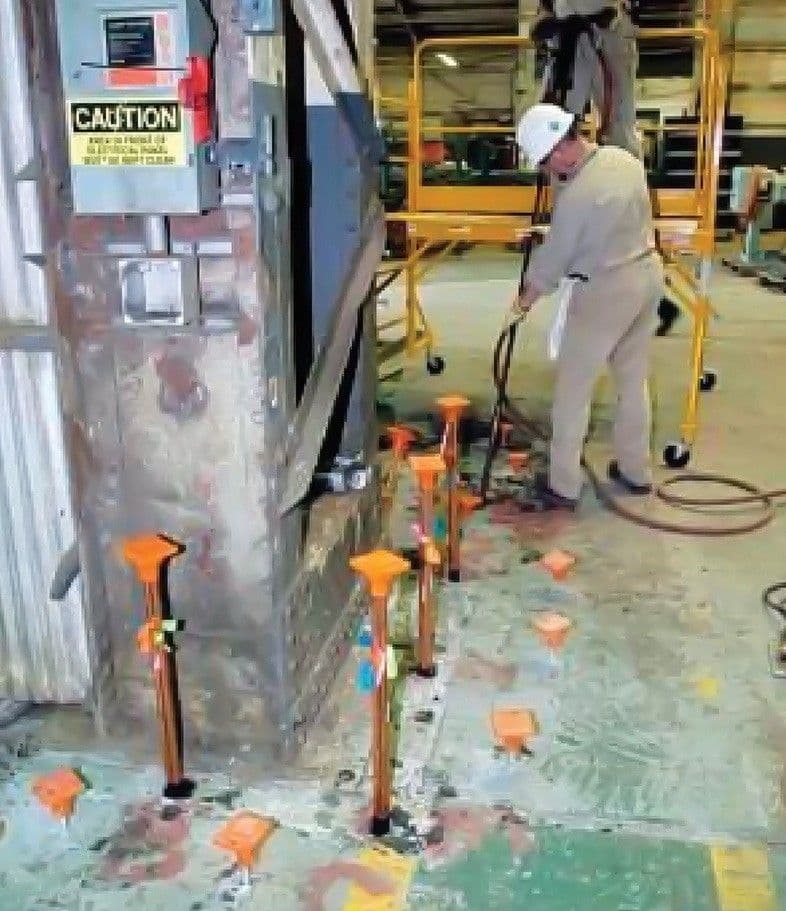
Injection probes installed around a structural column base inside the working facility. The treatment footprint stayed tight to the column, which is what allowed shipbuilding to continue around it.
The DCP investigation gave the design its depths. The test measures how far a standard cone advances under a standard blow, so a profile taken around a column shows where the soil resistance falls off and how deep the treatment has to reach to do any good. Those profiles set the probe layout and the injection depths column by column, which matters on a foundation where deterioration is uneven along the pile system.
With the probes in place, crews injected expanding structural polymer in stages under both static and dynamic loading conditions. The material fills accessible voids and weak zones in the soil mass, compacts and confines the soil around it, and forms stabilized support zones that pick up load the deteriorated piles could no longer carry. Nothing was excavated, no piles were removed, spliced, or replaced, and the work stayed inside the footprint immediately around each column base.
Post-injection DCP testing was run at the treated locations and compared against the pre-injection profiles. The comparison indicated improved in-situ soil response where the treatment had been placed. It is worth being precise about what that measurement is: DCP results are point-specific index values interpreted through correlations, so they carry weight as a before-and-after comparison at the same locations, not as a direct reading of bearing capacity.
The project team then did the harder and more convincing thing. They excavated a test column and looked. The inspection showed the injected polymer present through the intended treatment zone around the foundation, which confirmed the material had gone where the design put it. On the strength of the testing and that direct observation, the facility engineers accepted the stabilization work.
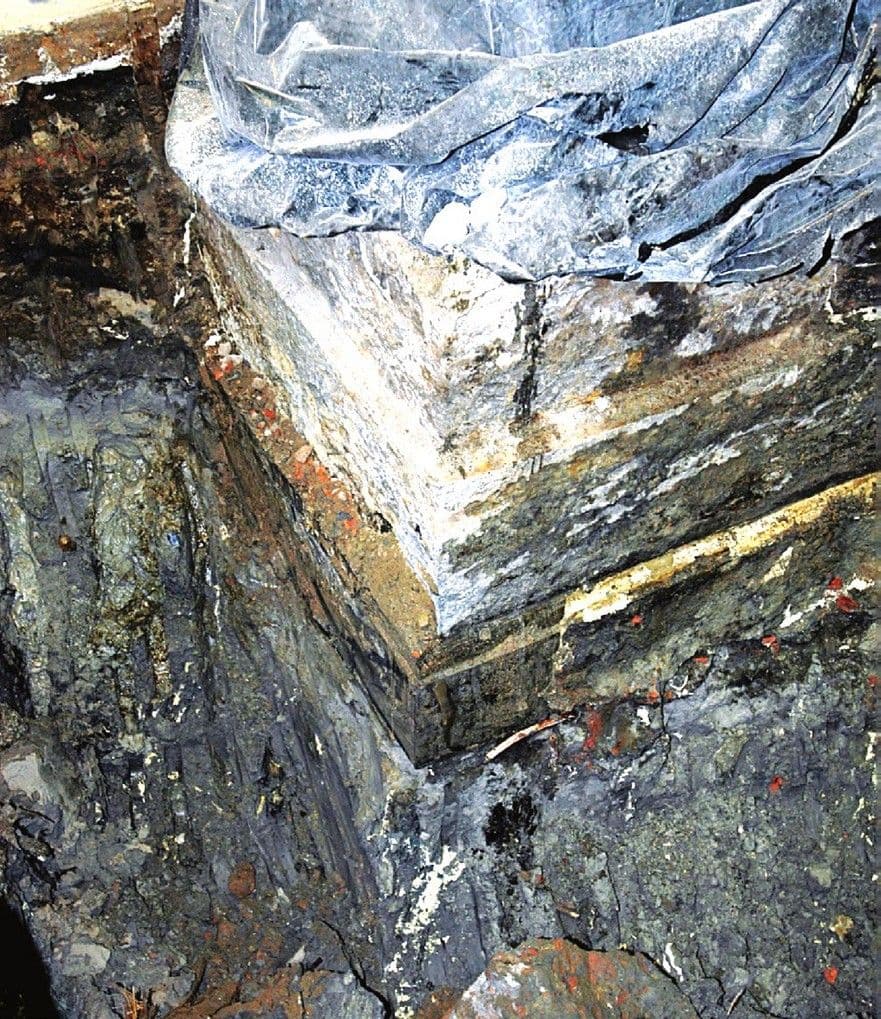
The spot excavation at the test column. Exposing the foundation showed injected polymer through the intended treatment zone in the dark, saturated soils around the footing.
This project's record is qualitative, and that is worth stating plainly rather than dressing up. The original documentation does not carry injection quantities, treatment depths, DCP blow counts, schedule durations, or cost figures. What it carries is the sequence of engineering decisions and two verification results, and those are the substance of the case.
On investigation and treatment, the record is clear on method. DCP testing was performed before design to characterize the soils around the affected columns and to formulate a specific injection plan. Probes were then installed around those columns and injected as a series of static and dynamic load injections.
On verification, the record carries two independent results. Post-injection DCP testing at the tested locations indicated improved soil response relative to the initial testing. A spot excavation at a test column showed the injected polymer distributed through the intended zone around the foundation. The facility engineers accepted the work on that basis.
What is absent is equally worth naming. There are no long-term monitoring results here, no measured settlement readings before or after, and no documented cost comparison beyond the team's own evaluation at selection. An engineer weighing this method for a similar asset should plan to generate that data on their own project rather than inherit it from this one.
URETEK restored support beneath century-old pile-supported columns without excavating them, without touching the piles, and without stopping shipbuilding, and the treatment was confirmed both by repeat testing and by digging one column up to look.
 Support restored without touching the piles. Expanding structural polymer was injected around the affected column bases to fill voids and stiffen the surrounding soil mass, restoring support without removing, splicing, or replacing the original timber piles.Shipbuilding never stopped. The work was sequenced around facility operations. Small injection probes and a footprint limited to each column base let the treatment proceed while production continued elsewhere in the building.Improvement measured at the same points, before and after. DCP profiles taken before injection defined the treatment depths, and repeat profiles at the tested locations afterward indicated improved soil response.Treatment zone confirmed by excavation. A spot excavation at a test column exposed the foundation and showed injected polymer through the intended treatment zone, direct physical confirmation rather than an inference drawn from the injection log.Selected after a field demonstration. URETEK ran a demonstration in the facility's own conditions before the method was chosen over jet grouting, helical anchors, and cementitious compaction grouting.Backed by URETEK's two-year warranty against settlement. URETEK stands behind ground stabilization work with its two-year warranty against settlement.
Ask what the water table has been doing, not just where it sits. Untreated timber kept below the water table can carry load for a century or more. Timber that cycles between wet and dry often does not. On any pile-supported historic structure, the groundwater history is a foundation question before it is a drainage question.
Contaminated ground narrows the method list before the engineering does. Techniques that return spoil or slurry to the surface bring containment, testing, and disposal obligations with them. A method that goes into the ground and stays there can be the one that fits inside the environmental controls already on the site.
Let the investigation set the depths. Profiles taken around each column, rather than one uniform pattern applied everywhere, are what tie the treatment to the zone actually losing support. Read them for what they are: comparative index measurements at fixed points, strongest as a before-and-after pair.
Dig one up. On a project with no long-term monitoring program, an excavation at a single test location is the most convincing verification available, and it costs very little against the value of knowing what is actually in the ground.
If settlement is developing above a timber or deteriorating deep foundation, and excavation, spoil handling, or downtime are not options you have, URETEK can help. We restore support from small probes around the existing foundation, with the facility still running. We will investigate the soils around your foundations, design an injection program to the depths the data calls for, verify the result with before-and-after testing, and where it is warranted, expose a test location so you can see the treatment for yourself.

 800-240-7868


