

Location
Southern California coastal community
Structure at Risk
Active public roadway and pedestrian promenade on an urban coastal bluff in a high-traffic tourist area
Core Challenge
A growing fissure and expanding oceanic void beneath the roadway threatened catastrophic collapse: nearby sections of bluff had already failed
Treatment Area
Approximately 70 ft × 56 ft (3,920 SF)
Injection Grid
4-foot spacing across the full treatment area, with injection pipes installed to five target depths: 4, 8, 12, 16, and 20 feet below the surface
Subsurface Conditions
Saturated coastal bluff soils with seawater intrusion, active void expansion, and reduced bearing capacity
Timeline
Seven working days under full road closure, 8:00 AM – 9:00 PM daily operations
Result
Collapse risk eliminated, bearing capacity restored, void pathways sealed, and the site stabilized for permanent concrete fill operations, confirmed stable through the full warranty period with no additional intervention required
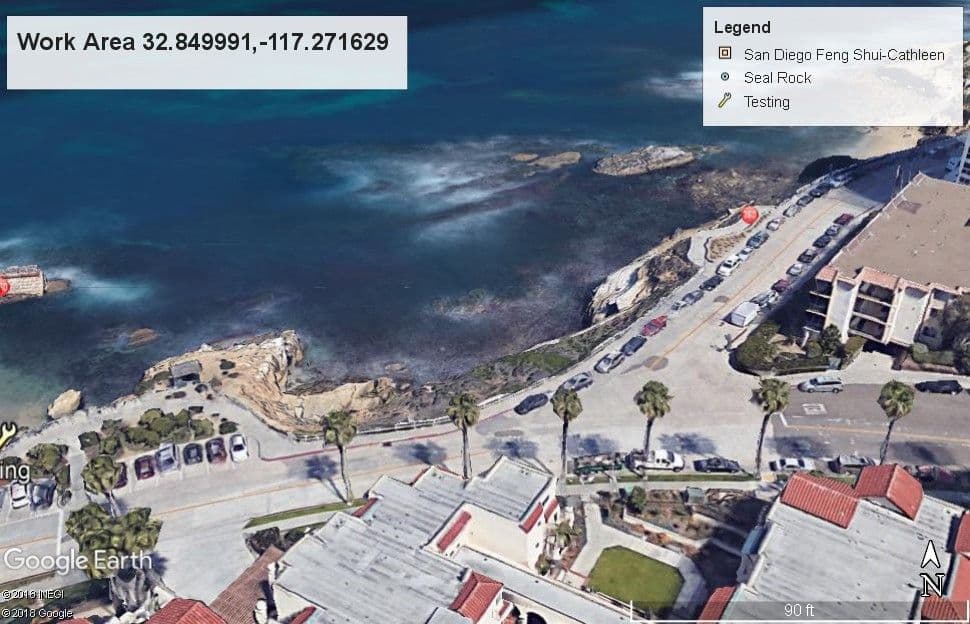
Aerial view of the coastal bluff work area: the roadway and parking area sit directly above the sea cave system, with the Pacific Ocean immediately to the left and dense residential development on the right
In the summer of 2019, a growing fissure appeared in the pavement of a busy coastal roadway perched on an urban bluff above the Pacific Ocean. The crack was not just a surface defect. It was the visible symptom of an expanding oceanic void beneath the road, a sea cave that had been growing as wave action and seawater intrusion eroded the bluff from below, hollowing out the ground that supported the roadway and a popular pedestrian promenade above it.
The situation was urgent and the consequences of inaction were clear: nearby sections of bluff had recently failed. This was not a theoretical risk assessment. The geotechnical evidence, the widening crack in the cliff face, and the visible precedent of adjacent collapses all pointed to the same conclusion: the ground beneath this roadway was failing, and it was going to fail completely if it was not stabilized immediately.
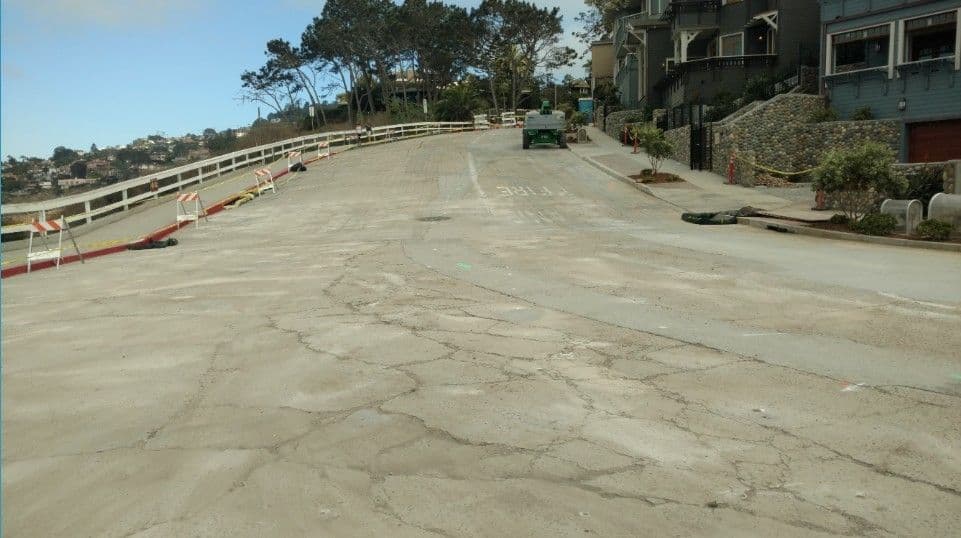
The cracked and distressed roadway surface above the expanding void: the network of pavement failures reflects the progressive loss of soil support beneath the bluff, with the coastal guardrail and residential buildings visible in the background
The city's goal was threefold: secure the ground quickly to prevent collapse, stabilize the soils sufficiently for follow-on crews to safely pour permanent concrete fill into the voided cave below, and accomplish both without the extended closures and massive costs that a traditional excavation-and-rebuild approach would have demanded in a high-profile urban tourist corridor.
This was not a routine maintenance project. It was an emergency stabilization on a site that was actively deteriorating, with public safety consequences measured in lives, not dollars.
The subsurface conditions at the site represented a worst-case combination for any geotechnical engineer.

Active void expansion. An oceanic cave beneath the bluff was growing as wave energy and seawater intrusion eroded material from below. The void was not static. It was expanding with every tidal cycle, progressively removing the ground that supported the structures above.
Saturated, weakened soils. Seawater intrusion had left the bluff soils wet and weak. Saturated coastal clays and silts had lost density and bearing capacity, meaning the remaining soil between the void and the surface was not only thinner than it should have been. It was weaker than it should have been.
Active surface distress. Cracking pavement and a widening fissure in the cliff face were visible evidence that the subsurface deterioration had already reached the surface. The ground was telling everyone who would look that it was running out of time.
Urban public-safety context. The roadway and promenade served a high- traffic tourist area. Public safety, traffic management, and community-relations pressure all demanded that the stabilization be fast, effective, and as minimally disruptive as the emergency allowed.
URETEK's geotechnical team designed and executed a multi-depth soil injection program to densify the compromised bluff soils, fill void pathways, displace the seawater that was weakening the ground, and create a stabilized mass that could safely support both the roadway and the heavy equipment that would follow to permanently fill the cave below.
Before any material entered the ground, the team surveyed pavement elevations and performed Dynamic Cone Penetrometer (DCP) testing to establish the depth and extent of the weak zones. This front-end characterization confirmed the original injection design and provided the baseline measurements that would be used to verify treatment effectiveness as the work progressed.
In emergency stabilization, this step is tempting to skip. URETEK did not skip it. Knowing exactly where the weak zones are, and having quantified baseline measurements to compare against, is what separates a controlled stabilization from a material dump.
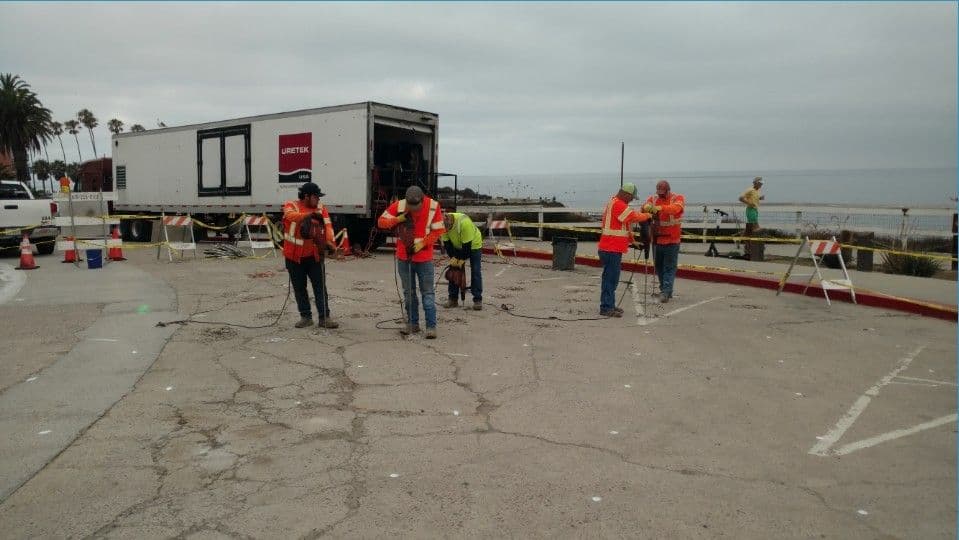
URETEK crew mobilized at the coastal bluff site: the injection equipment truck is staged at the edge of the treatment area as technicians drill and install injection tubes across the full grid; the Pacific Ocean is visible immediately behind the work zone
Technicians drilled a grid of small-diameter holes across the full 70-by-56-foot treatment area at approximately 4-foot spacing. At each location, injection pipes were installed to reach five target depths: 4, 8, 12, 16, and 20 feet below the surface.
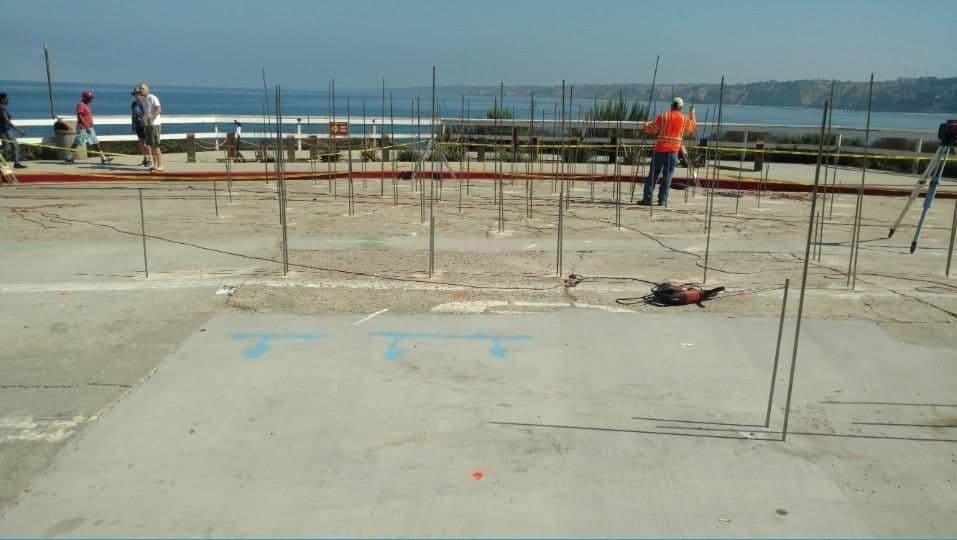
The completed injection tube grid across the treatment area: each tube extending to one of five target depths, with the ocean and bluff guardrail visible in the background; the density of the grid reflects the aggressive, full-depth treatment approach required by site conditions
Five depth targets in a single grid is an aggressive treatment program, and it was designed that way deliberately. The void was deep, the weakened soil zone extended from the surface to well below the roadway subgrade, and the seawater intrusion had compromised material across the full bluff profile. A shallow treatment would have stabilized the surface while leaving the deeper failure planes untreated. A deep-only treatment would have missed the saturated, loose soils closer to the surface. The five- depth approach ensured the entire compromised column was treated, from the pavement down to the competent material below the void influence zone.
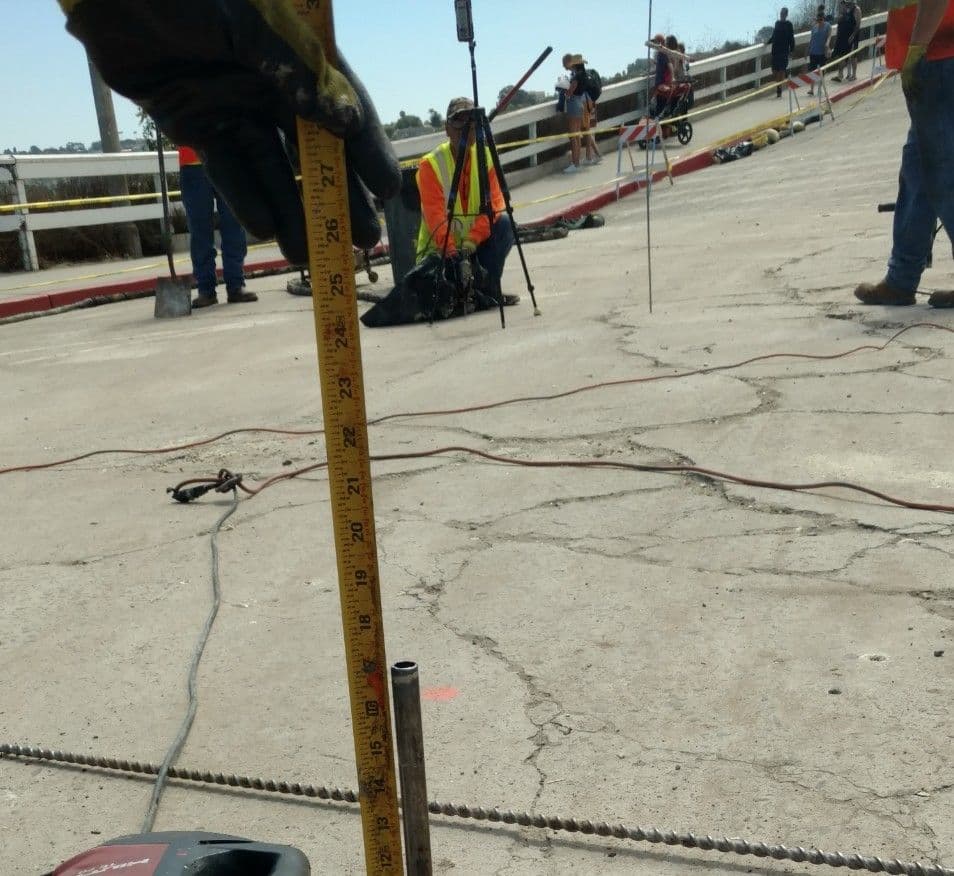
Field verification of injection tube depth: a tape measure confirms installation depth at a representative grid location; the pavement cracks extending across the treatment area are visible throughout the background
A hydrophobic polymer resin was pumped through the injection tubes into the soils at each depth. The material is water-insensitive, meaning it expands and cures reliably in the saturated, seawater-infiltrated conditions present throughout the bluff. As the resin expanded, it displaced pore water, filled void space, and compacted the surrounding soils into a denser, stiffer configuration.
Injections at each depth continued until surface movement measurements confirmed the soil was responding, typically when additional injection caused less than one millimeter of rise, indicating that the treated zone had reached the target density. This heave-based termination criterion gave the crew real-time, measurable feedback at every injection point, ensuring consistent treatment across the entire grid without over- injection.
The expanding resin effectively dewatered the bluff soils from the inside out. By displacing the seawater that had been saturating the clays and silts, the treatment simultaneously removed the water that was weakening the ground and replaced it with a structural material that locked the soil grains into a tighter, stronger matrix. The result was ground that was not just denser. It was drier and more resistant to the continued seawater exposure that had caused the problem in the first place.
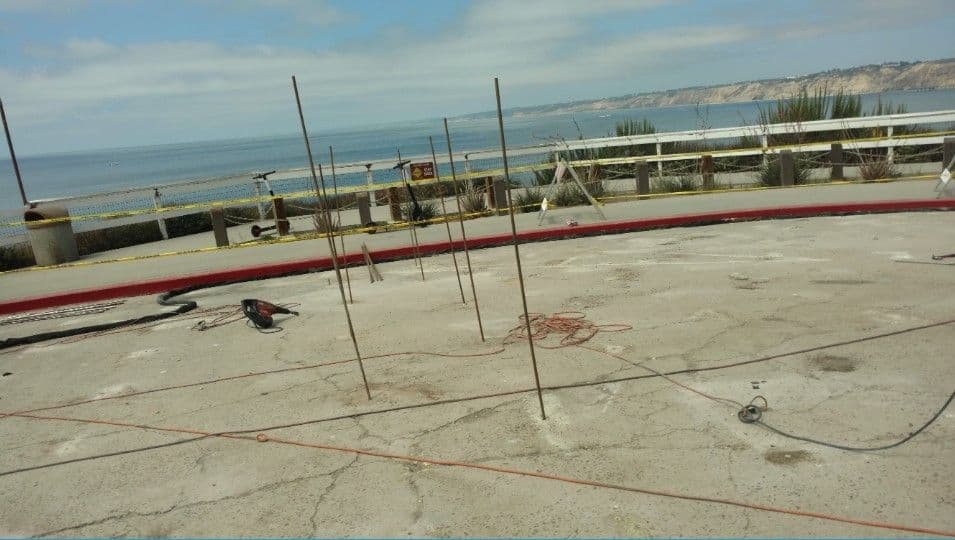
Injection tubes installed at the bluff perimeter zone: this area, closest to the cliff edge and most exposed to wave-driven void growth, required the most intensive treatment; the coastal bluffs extending along the Southern California shoreline are visible in the distance
After injection, crews removed the top few inches of grout from each borehole and patch-filled them with non-shrink cementitious grout. The roadway pavement was repaired, and a final profilometer scan verified that the surface had returned to true grade with no remaining differential settlement.
URETEK mobilized rapidly once approvals were in place. The work was performed under a full road closure, with crews operating from 8:00 AM to 9:00 PM daily. Despite the emergency nature of the project, the team maintained strict safety protocols for dust control, material handling, and site management throughout.
Over the course of seven working days, URETEK completed the full injection program as scheduled. At every stage, field measurements confirmed that the soil was consolidating as designed. By project end, the entire 70-by-56-foot treatment area showed a uniform profile with no significant differential movement.
Seven days. For a 3,920-square-foot treatment area with five injection depths in saturated coastal bluff soils over an active oceanic void. That timeline is a direct result of the methodology: small-diameter access points, portable equipment, staged injection with real-time monitoring, and a material that cures in minutes rather than days.
The emergency injection program achieved every objective the city required.
Collapse risk eliminated. All signs of active soil failure were arrested. The expanding void was stabilized, the fissure stopped progressing, and the immediate threat of catastrophic collapse was removed.
Bearing capacity restored. Post-treatment testing and inspections confirmed that the bluff soils had gained significant bearing capacity. The once-loose, saturated material was now compacted and stabilized.
Groundwater pathways sealed. The expanding resin displaced seawater and sealed void pathways, greatly reducing the risk of future washouts or water- related erosion along the fissure, addressing not just the structural failure but the hydraulic mechanism that caused it.
Safe platform for permanent repair. With the soils stabilized, heavy equipment was able to safely resume work on the site. Follow-on crews poured concrete fill into the voided cave, permanently restoring the cliff and roadbed. URETEK's injection program did not just fix the ground. It created the conditions that made the permanent repair possible.
Long-term performance confirmed. Follow-up surveys confirmed that the stabilized area remained level and secure through the full warranty period, with no additional intervention required.
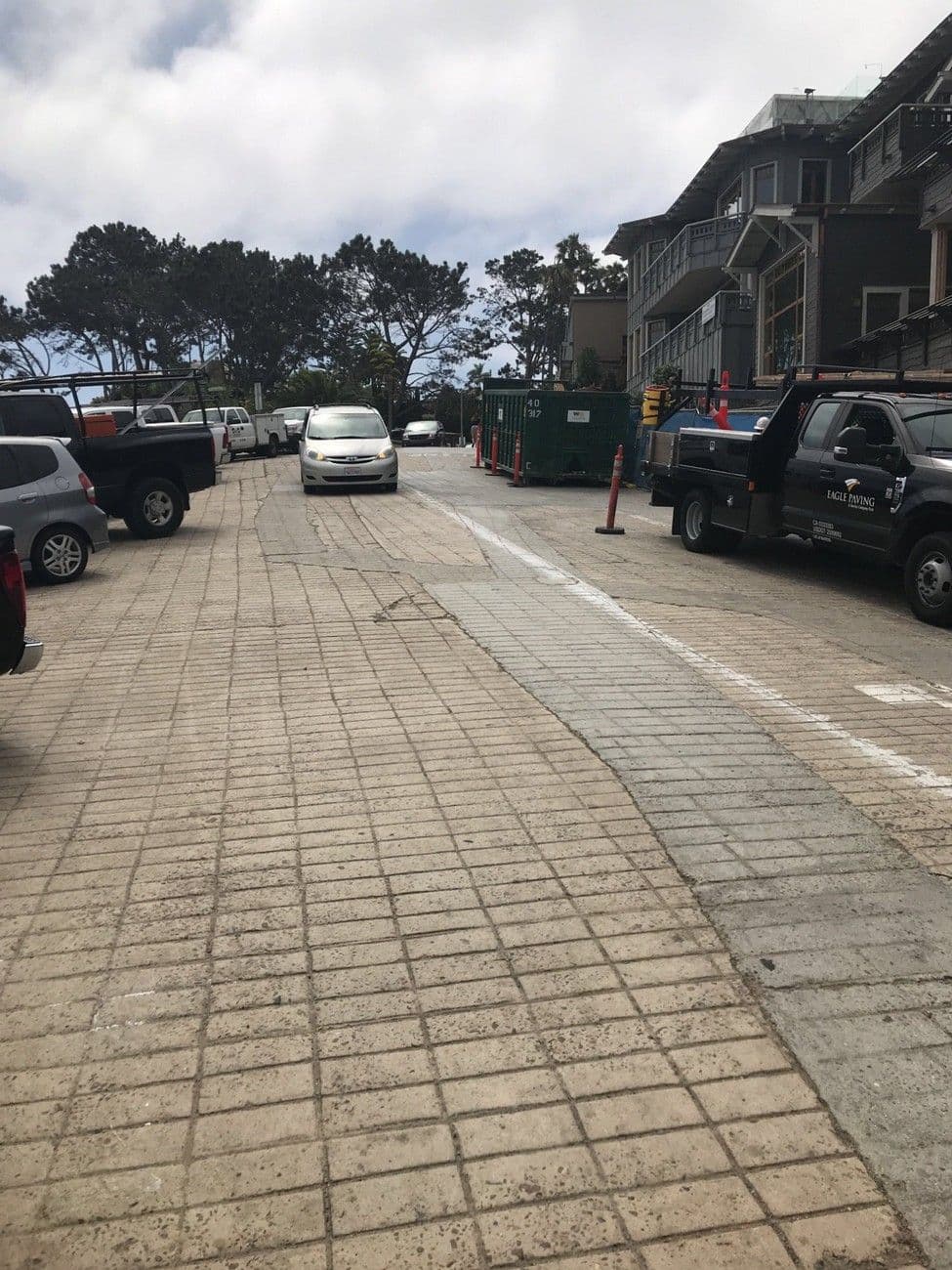
The restored roadway and parking area returned to full public use: the completed surface, now stabilized beneath with polymer injection, has been repaved and reopened to traffic; the tourist corridor and adjacent residential development are fully operational
Emergency stabilization demands front-loaded engineering, not shortcuts. Even under emergency conditions, URETEK performed DCP testing and elevation surveys before injecting. Knowing where the weak zones are and having baseline measurements to verify against is what makes a seven-day emergency program deliver a reliable result, rather than a fast one that fails.
Multi-depth treatment addresses the full failure profile. Coastal bluff failures are not surface problems. The compromised zone extends from the pavement through the full depth of the weakened soil column. Five injection depths, from 4 to 20 feet, ensured the entire profile was treated, not just the layers closest to the surface.
Polymer injection can serve as the enabling step for permanent repair. On this project, the injection program was not the final repair. It was the stabilization that made the final repair possible. By securing the ground, URETEK gave follow-on crews a safe, stable platform to pour the concrete fill that permanently closed the void. This phased approach, emergency injection followed by permanent structural repair, is a powerful model for other coastal collapse and void emergencies.
Hydrophobic chemistry turns saturated conditions from a problem into a feature. The resin displaces the seawater that is weakening the ground and replaces it with a structural material that is inherently water-resistant. The treatment does not just stabilize the soil. It removes the water that was causing the instability in the first place.
If you are managing a roadway, promenade, building, or any structure on a coastal bluff or shoreline where voids, fissures, or erosion are threatening stability, especially in emergency conditions where time is measured in days, not months, URETEK has the methodology, the materials, and the mobilization speed to stabilize the ground and prevent collapse. We will assess your subsurface conditions, design a multi-depth injection program matched to the actual failure profile, and execute an emergency stabilization that restores bearing capacity and creates the conditions for permanent repair, with little or no excavation where conditions permit, without extended closures, and within the timeline the emergency demands.

 800-240-7868


