

Location
Southern Arizona
Structure Type
An at-grade railroad crossing carrying active rail and roadway traffic, above a leaking culvert about 20 feet below grade.
Core Challenge
Water from the culvert washed fines out of the soil, leaving voids and weak layers that rail vibration made worse. The crossing settled at least 6 inches at its center and deflected further under every train.
Verification
DCP profiling at multiple locations found weak soils to 20 feet, and laser level and manometer surveys measured the settlement. The project account reports the crossing returned to grade; no post-injection DCP results are on record.
URETEK Scope
URETEK Deep Injection (UDI) at 4-foot centers from 20 feet up to 4 feet: the culvert filled first for abandonment in place, the soil column stabilized from the bottom up, then shallow injections to underseal and lift the crossing back to grade.
Result
Crossing back to grade and soils stabilized to 20 feet in 7 days, with zero rail downtime and the roadway worked one lane at a time.
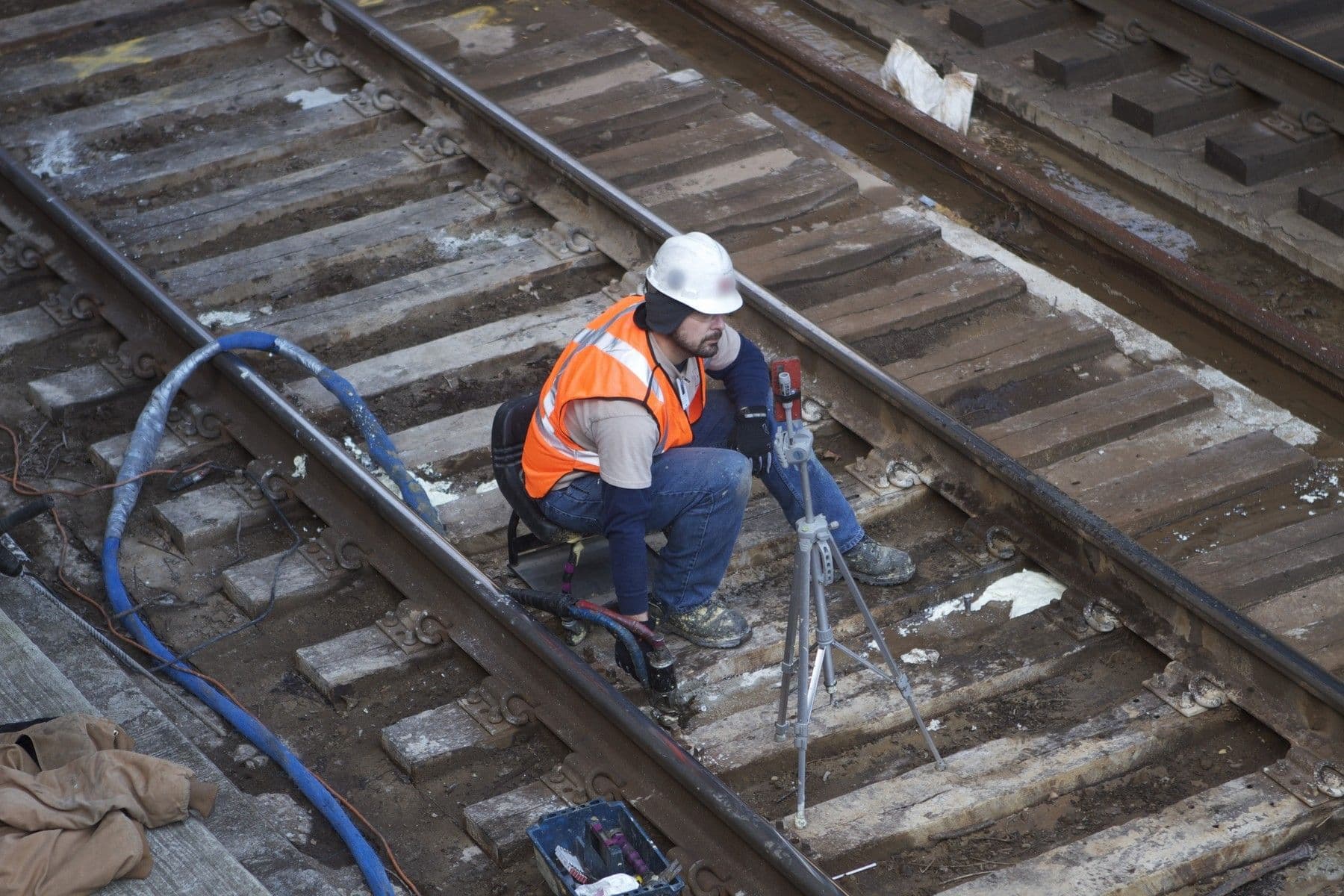
Polymer injection on active track. The work runs through small drilled holes and a hose line, so it can stop for a train and pick back up.
About 20 feet below an at-grade railroad crossing, a culvert was leaking. The water eroded the surrounding soil and carried the fines away, leaving voids and weak layers under the crossing.
Rail traffic made it worse. Vibration from every passing train worked the weakened soil, and differential settlement developed at the crossing. Drivers approaching it bottomed out, then got launched and came down hard on the far side.
The track was in trouble too. The project account reports that support under the crossing had degraded far enough that passing boxcars began striking the adjacent asphalt. The railroad and the state transportation agency needed it fixed without shutting down the railroad or the road.
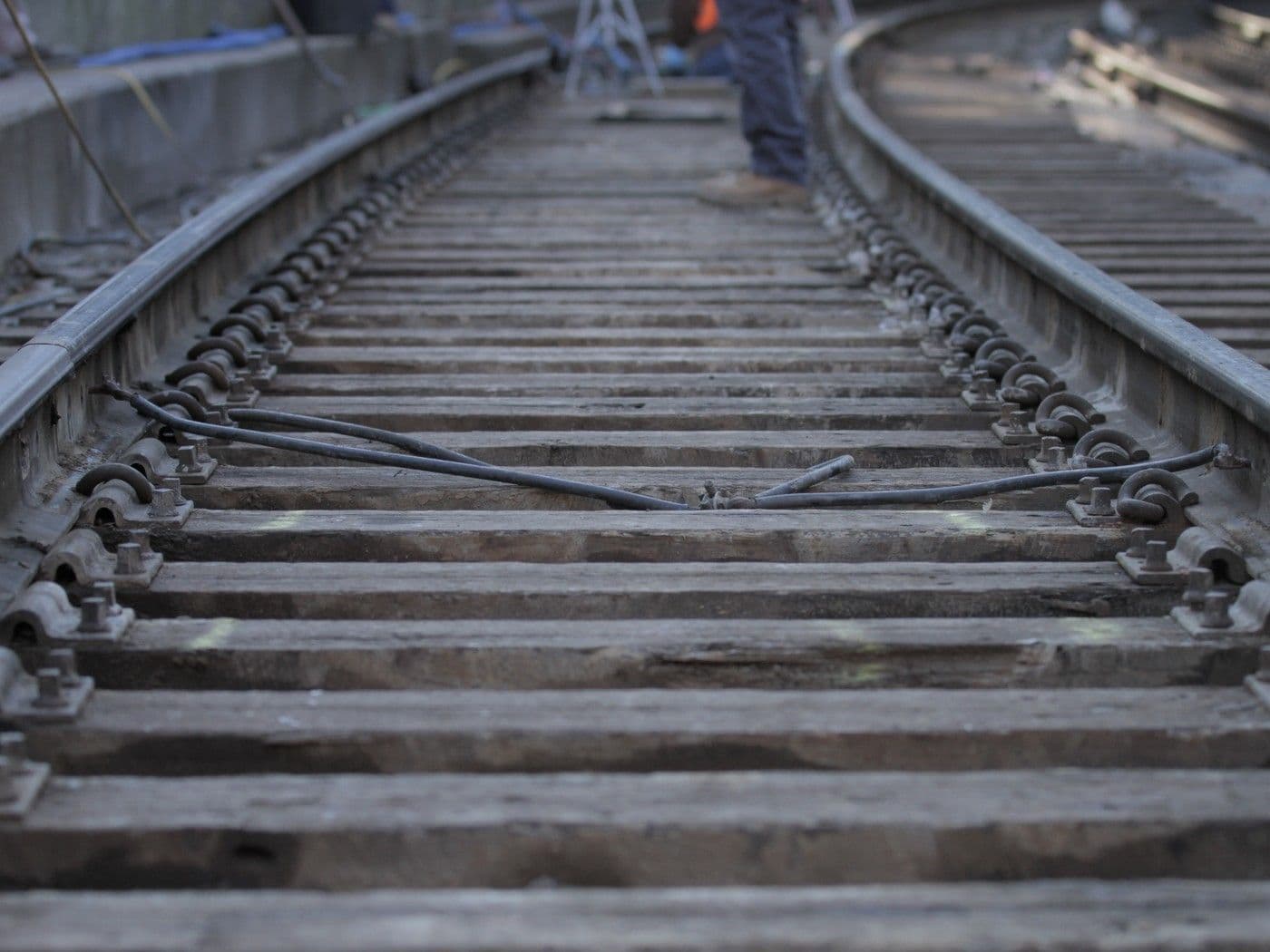
Track with injection lines laid between the ties. What holds the rails at grade is the soil underneath, and at this crossing that soil was washing into a culvert 20 feet down.
The standard fix for weak soil under a crossing is to overexcavate and recompact: pull the crossing, dig out the bad material, and rebuild the section in compacted lifts. Here the weak soil went down 20 feet. Reaching it meant a deep excavation through an active rail line and a busy roadway, with the cost and closure time that come with both.
DCP testing defined how deep the problem went. Profiles at several locations under the crossing showed relatively weak to weak soils all the way to 20 feet. Laser level and manometer surveys measured at least 6 inches of differential settlement at the center of the crossing, with more deflection as rail cars passed.
The culvert was split off as its own issue. The railroad and the agency agreed to abandon it and handle the drainage separately at a later date. That left one job: correct the settlement and strengthen 20 feet of soil without shutting down the railroad or the road.
After consulting with URETEK, the railroad and the agency agreed to try URETEK Deep Injection (UDI). Crews set injection points at 4-foot centers along the crossing and injected between 4 and 20 feet deep, working from the bottom of the problem to the top.
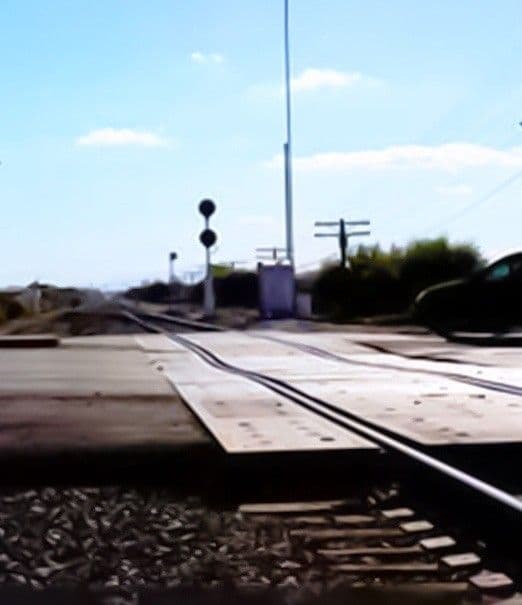
The crossing before UDI, with at least 6 inches of differential settlement measured at its center.
Injection started at 20 feet. The first goal was to fill the leaking culvert with polymer as part of an abandon-in-place strategy, closing off the conduit that had been carrying soil away. Once the culvert was full, the work moved up the soil column, with the expanding polymer filling voids and compacting and confining the weak layers from 20 feet to the surface.
Building support from the bottom gave the final injections a solid platform to push against, and shallow injections then undersealed the crossing and lifted it back to grade. Crews worked one roadway lane at a time. A flagger posted a quarter mile down the line called in approaching trains, and on each call the crew cut the tubes and cleared the crossing, then re-drilled, re-drove the tubes, and resumed once the train had passed. The polymer reaches about 90% of its strength within 15 minutes of injection, and the project ran with zero rail downtime.
The investigation matched the proof to the asset. DCP profiling defined the weak zone and its depth, which set the injection depth at 20 feet. Laser level and manometer surveys put a number on the settlement, which set what the lift had to recover.
The project account reports the crossing realigned to grade and the base soils stabilized to 20 feet. The limits of that record belong here too: it contains no post-injection DCP profile, no measured change in resilient modulus, no final elevation figures, and no long-term monitoring. The culvert was abandoned in place, and the drainage it served was left for a separate project.
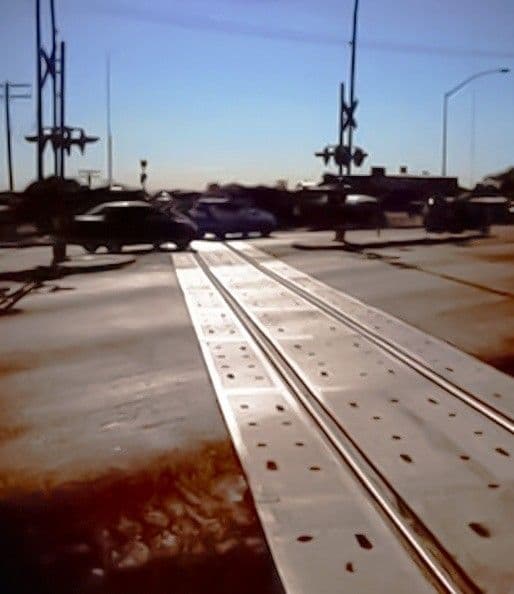
The crossing after UDI, back to grade and carrying traffic.
This is a measured starting condition and a reported finish. The before numbers come from DCP profiles and elevation surveys. The after side is the reported return to grade and the 7-day schedule, without post-injection test figures.
Before: relatively weak to weak soils to 20 feet by DCP at multiple locations, at least 6 inches of differential settlement at the center of the crossing by laser level and manometer survey, and further deflection under passing rail cars.
The work: injection points at 4-foot centers, depths from 4 to 20 feet, sequenced bottom up. Culvert filled first, soil column stabilized next, crossing undersealed and lifted last.
The schedule: 7 days start to finish, one roadway lane at a time, with crews clearing the crossing for every train and zero rail downtime reported.
A crossing with at least 6 inches of differential settlement was stabilized to 20 feet and lifted back to grade in 7 days, while the trains kept running.
 Crossing back to grade. The final shallow injections undersealed and lifted the crossing, correcting the settlement that had drivers bottoming out on approach.20 feet of soil stabilized. Injection from the bottom of the weak zone to the surface filled voids and compacted and confined the soil layers the DCP profiles had flagged as weak.Culvert abandoned in place. Filling the leaking culvert first closed off the conduit that had been carrying soil away. The drainage it served was left to a separate project.Zero rail downtime. A flagger a quarter mile out called in every train. Crews cleared the crossing, let it pass, and picked the work back up.Roadway kept open, 7 days total. Working one lane at a time kept vehicle downtime to little or none, and the whole job finished in 7 days.Backed by URETEK's two-year warranty against settlement. URETEK stands behind the stabilization and lift with its two-year warranty against settlement.
Find the bottom of the problem before you design. The settlement showed up at the surface, and DCP put the weak soil 20 feet down at the culvert. A repair that treated only the shallow layers would have left the source in place.
Stabilize first, lift last. Building support from the bottom up gives the final lift injections a stable platform. Lifting a crossing over 20 feet of weak soil without that platform invites the settlement to come back.
Deal with the water source in the scope. Here the culvert was filled and abandoned, and drainage became its own project. Writing that split down keeps everyone clear on what the injection fixed and what it left for later.
Plan the work around the trains. A flagger, a clear-the-crossing protocol, and injection holes that can be re-drilled and re-driven after each pass let the repair stop for every train with zero rail downtime.
If a crossing is settling and the cause sits well below the surface, the repair has to reach it. URETEK Deep Injection stabilizes soil at depth and lifts the crossing back to grade through small drilled holes, with no overexcavation and the line kept open. We'll profile the soil, find the depth of the weak zone, and stage the work around your train schedule and your traffic.

 800-240-7868


