

Location
Northern Virginia
Structure Type
An indoor competition natatorium (a 25-yard by 50-meter pool with an all-tile deck) at a public university, its shotcrete pool walls bearing on soils that were meant to stay drained
Core Challenge
Saturated soils along the west side of the pool were holding the shotcrete wall under persistent hydrostatic pressure, cracking the tile deck and loosening tiles, and the fix had to happen inside an operating aquatic facility during a short academic break
Verification
Consulting engineers traced the deck distress to saturated-soil and hydrostatic conditions along the west wall; URETEK worked to a site-specific injection plan, with the pool structure preserved and the surface monitored during injection
URETEK Scope
URETEK Deep Injection (UDI) of structural polymer into the saturated soils at the west end, through small holes in the tile deck, to displace trapped water and compact and densify the soils supporting the pool
Result
The targeted stabilization was completed in less than two weeks during a scheduled break, addressing the saturated-soil zones and preserving the existing pool structure, with no interruption to the facility's regular events
A public university's indoor competition natatorium, a 25-yard by 50-meter pool ringed by an all-tile deck, developed cracking in that deck, first noticed when the pool was drained for routine maintenance. Over the next couple of years, more tiles worked loose, raising real concern about the facility's availability and the risk of more serious damage.
Consulting engineers traced the trouble below the surface, to the west side of the pool. The original shotcrete wall had been designed on the assumption that the surrounding soils would stay properly drained. Instead, those soils had become saturated, holding the wall under persistent hydrostatic and lateral pressure, and moisture had migrated through the wall assembly and weakened parts of the tile mortar bed. Because the natatorium sat in a low area of the campus, groundwater and surface runoff were ongoing contributors.
That meant the cracked and loosening tile was a symptom, not the disease. Simply replacing finishes would not stop the movement; the repair had to reach the saturated soils driving the pressure. And it had to do so inside an operating aquatic facility, with minimal demolition, within a short scheduled closure before the next academic term.
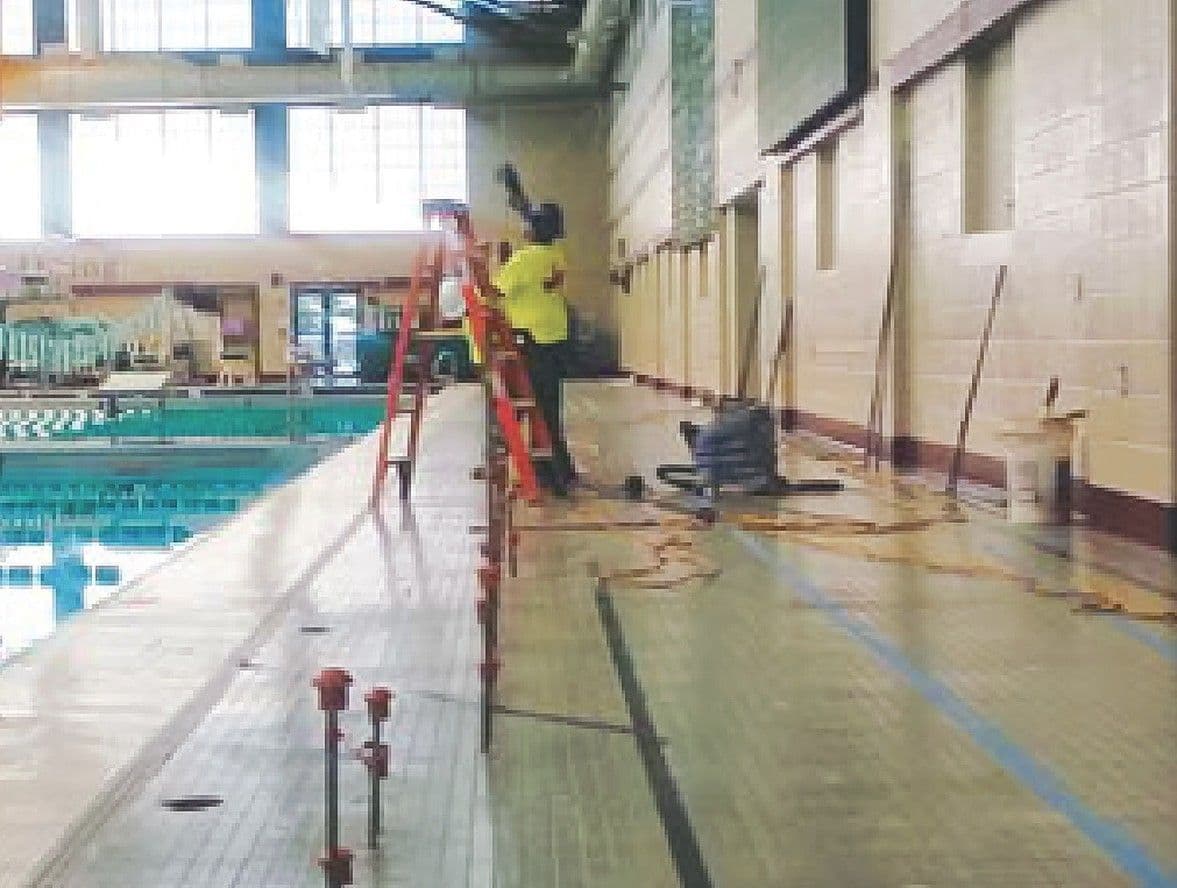
URETEK crews installed injection tubes through the tiled pool deck to reach the saturated soils at the west end, treating the cause with minimal disturbance to the facility
The project team weighed several ways to relieve the pressure and support the wall. Permanent groundwater wells around the building perimeter and a soil-nail system were both considered, but each meant significant permanent installation and disturbance around an operating facility. Replacing the finishes would have addressed only the visible cracking, not the soils below.
Cementitious grout could stabilize the soils, but it adds substantial mass, loading the very ground and structure already under stress, and it is harder to place in a controlled, targeted way through a finished tile deck. On a pool wall already carrying more load than it was designed for, adding weight was the wrong direction.
What the natatorium needed was a targeted, lightweight way to treat the saturated soils from small access points through the deck, fast enough to finish inside the academic break. That is what URETEK Deep Injection was selected to deliver.
URETEK developed a site-specific injection plan focused on the saturated soils at the west end of the natatorium. Crews installed injection tubes through the tiled deck to reach the affected soils, then injected a two-component, high-density structural polymer into the targeted zones.
As the polymer reacted and expanded, it filled accessible voids and weak zones, locally displaced the trapped water, and compacted and densified the surrounding soils, restoring firm support beneath the affected area.
The injections were placed in a controlled sequence so the improvement concentrated where the engineering evaluation pointed, along the saturated west end, while the pool deck and the facility's operations were kept as undisturbed as possible.
Two things made the method fit. It reached the soils through small holes rather than opening the deck or excavating around the building, so there was little demolition inside the natatorium. And the expanding polymer is comparatively lightweight, so it could fill voids and improve the ground without adding the mass of a cementitious grout program to a wall already carrying more load than it was designed for. The focused installation kept the work within the scheduled closure.
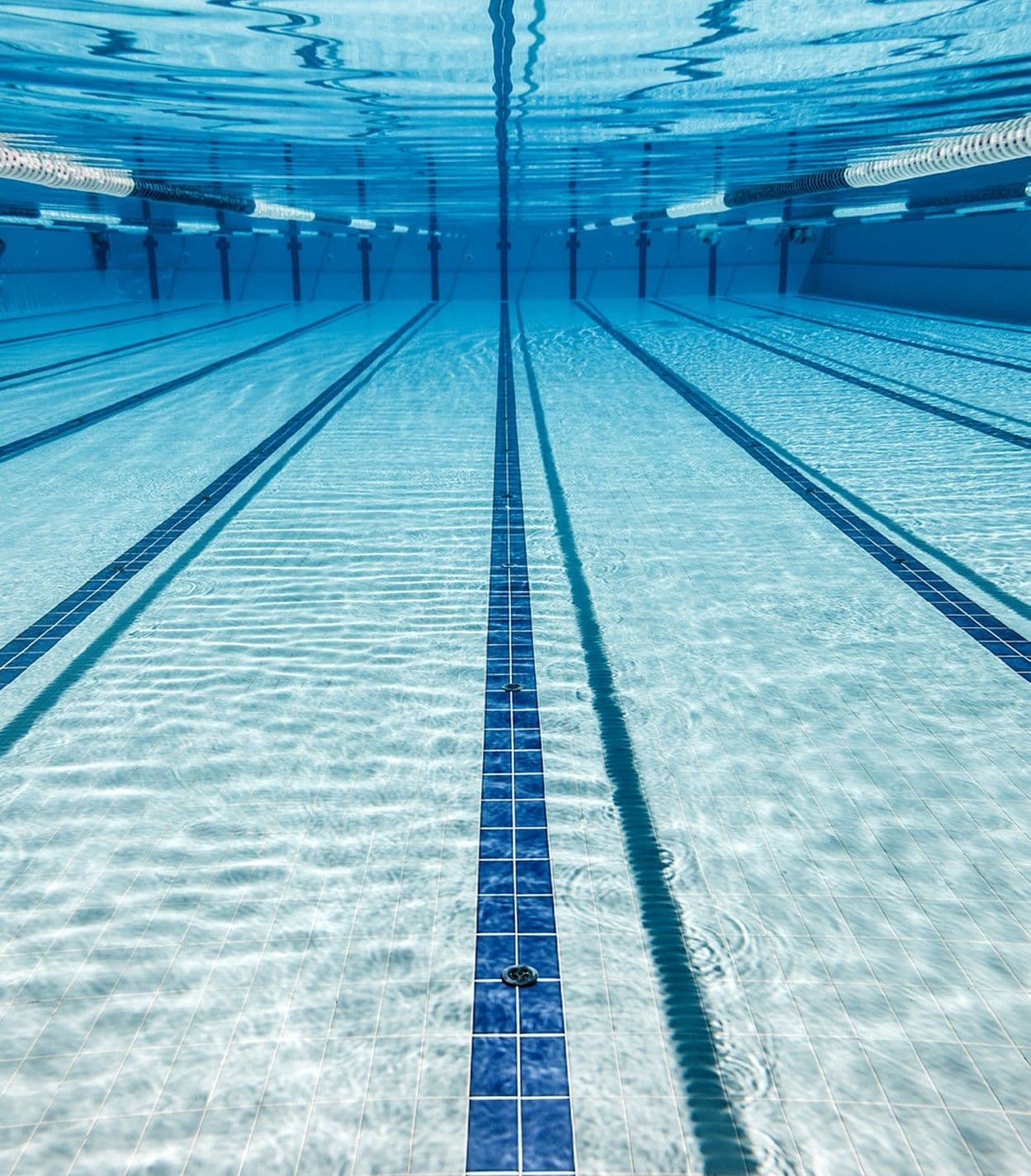
The competition pool: beneath its tile deck, saturated soils along the west wall were the real source of the surface cracking that URETEK was there to resolve
This was an older project, and the records establish the conditions, the options, and the schedule rather than a set of before-and-after test numbers. What they document is a targeted stabilization sized to a specific, well-diagnosed problem.
The asset was a 25-yard by 50-meter competition pool with an all-tile deck. The distress showed up as deck cracking when the pool was drained, then progressive tile loosening over roughly two years, and the diagnosis pointed to saturated soils and hydrostatic pressure along the west wall of a natatorium sitting in a low area of the campus.
Against that, the team weighed four approaches, perimeter groundwater wells, soil nails, cementitious grout, and expanding-polymer injection, and selected targeted injection through the deck for its combination of reach, low added weight, and minimal disturbance.
The installation was completed in less than two weeks, entirely within a scheduled academic break, so the pool returned to service for the start of the next term with no interruption to regularly scheduled events.
URETEK treated the cause, the saturated soils, not just the cracked tile, and did it without shutting the natatorium down.
 The cause was addressed, not just the symptom. Injection targeted the saturated soils and hydrostatic pressure along the west wall, the source of the deck cracking, rather than only replacing loosened finishes.The pool structure was preserved. Treating the soils through small holes in the tile deck avoided opening the deck or excavating around the building, keeping demolition inside the natatorium to a minimum.No added load on a stressed wall. The lightweight expanding polymer improved the ground and displaced trapped water without the added mass of a cementitious grout program, which mattered for a wall already carrying more load than it was designed for.Finished inside the academic break. The targeted program was completed in less than two weeks during a scheduled closure, and the competition pool was open for the start of the next term with no interruption to events.Backed by URETEK's two-year warranty against settlement. URETEK stands behind the completed ground-stabilization work with its two-year warranty against settlement.
Treat the cause, not the cracks. Cracking or loosening finishes around a pool are often symptoms of a deeper soil, groundwater, or drainage problem. A site-specific engineering evaluation is what points the repair at the real cause.
Mind the added weight. On a wall or slab already under load, a lightweight injected polymer improves the ground without the added mass a cementitious grout program would bring, an important distinction for stressed structures.
Reach the soil without opening the finish. Injecting through small holes in the tile deck let the crew treat the saturated soils while leaving the deck and pool structure largely intact, which is what made the work feasible inside an operating facility.
Design the work around the calendar. Fitting a targeted, low-disruption program into a scheduled academic break let the natatorium reopen on time, something a well-installation or excavation program would have struggled to match.
If tile, deck, or wall cracking around an aquatic facility traces back to saturated soils, voids, or hydrostatic pressure, URETEK can help. We treat the soils from small access points, displacing water and densifying the ground, with minimal disruption to an operating facility. We will start with the subsurface conditions, design a targeted injection program, and sequence the work around your schedule, so the underlying cause is addressed and your facility stays available.

 800-240-7868


