

Location
Texas Gulf Coast
Structure Type
Two sanitary sewer manholes on a 30-inch sanitary trunk line, beneath a utility easement carrying overhead power lines and six underground pipelines, with three 30-inch storm sewers running directly above and parallel.
Core Challenge
Wet-weather inflow and infiltration at the manholes was washing soil into the line, opening large voids around both structures and overloading the city's treatment plant. The utilities stacked above and beside the trunk line ruled out excavation.
Verification
Video inspection of the line located the I&I at the manholes before treatment. The project account reports both manholes leak-free afterward; no post-repair flow measurement is on record.
URETEK Scope
Void reduction with 3 cubic yards of flowable fill, then URETEK Deep Injection (UDI) through 5/8-inch holes drilled into the soil around each manhole, injected at depth in vertical increments to place a continuous polymer zone around the structure and its inlet and outlet joints.
Result
Both manholes sealed in less than 4 hours with no excavation and no disturbance to the adjacent utilities. The city reported savings of more than 75% against the cured-in-place lining option it had considered.
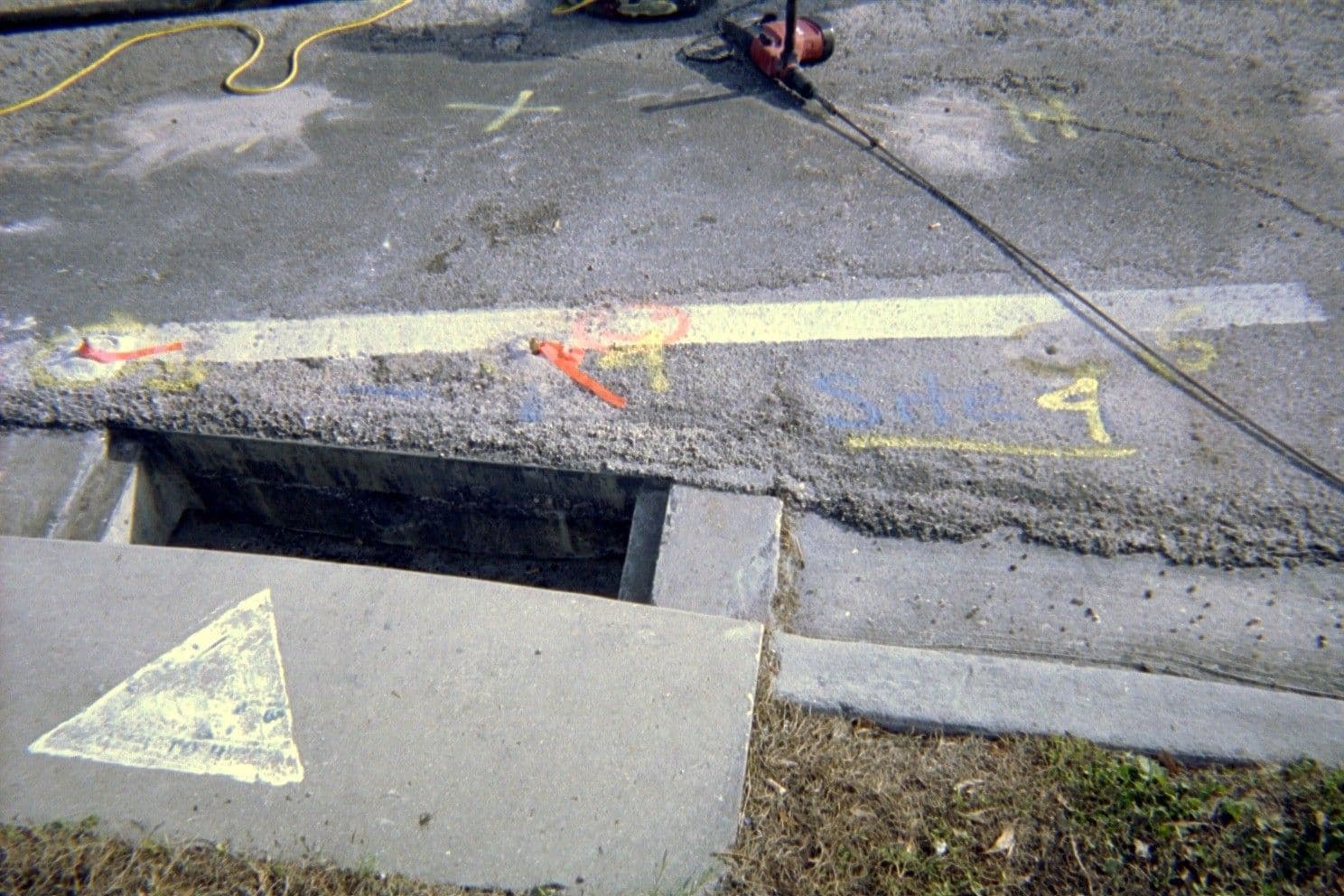
Trenchless injection at a street drainage structure. A hose line and a row of small drilled holes are the whole footprint, which is what makes this work possible in a crowded corridor.
During heavy rain, stormwater was getting into the sanitary system at two manholes on a 30-inch trunk line, one upstream and one downstream of the affected reach. That's inflow and infiltration (I&I): water the collection system was never sized to carry, entering at the structures.
The water didn't arrive alone. Soil was eroding into the line with it, and large voids were forming in the ground around the manholes. Every storm moved a little more soil and left the structures, and the pavement over them, with less support.
Then the treatment plant overloaded. The city faced treatment cost overruns from the extra volume and a sewer system getting weaker with each wet-weather event. It needed the leaks closed and the voids filled without disturbing anything around them.
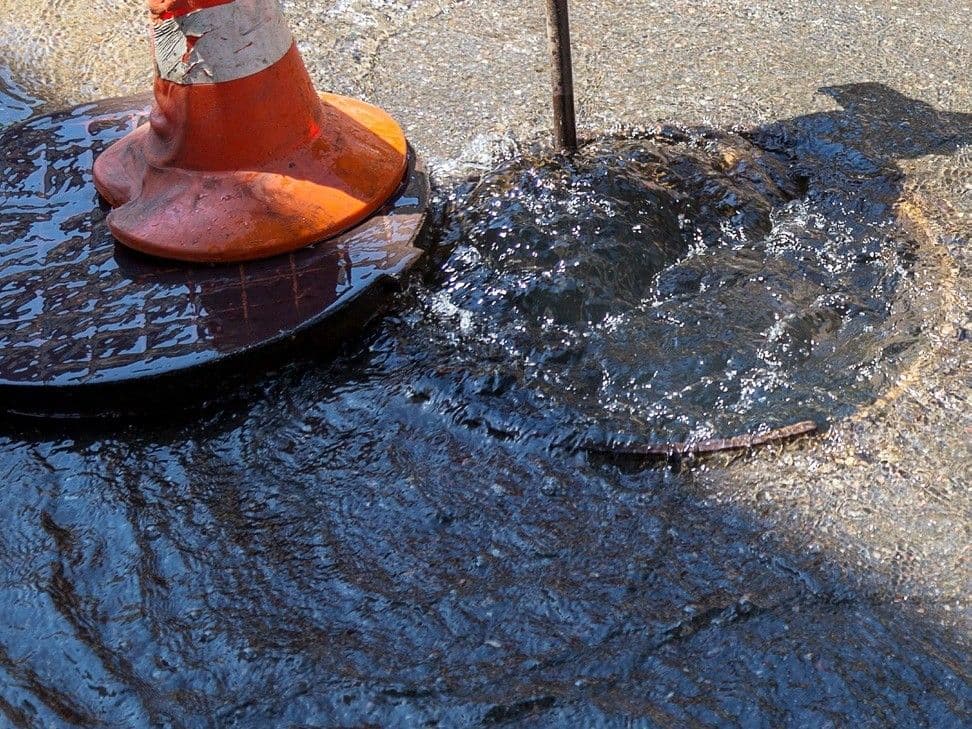
Wet-weather surcharge at a street manhole. Once I&I fills a sanitary system, the extra water has to go somewhere, and the plant pays for whatever it can still reach.
The trunk line sat in about as crowded a corridor as a city has. It ran parallel to a major street, beneath a utility easement carrying overhead power lines and six underground pipelines. Three 30-inch storm sewers ran directly above it and parallel to it, discharging to an adjacent canal. The project account records that digging down to the sanitary line was not feasible.
The city's first plan was a cured-in-place liner. Lining is a trenchless method too, and on a pipe defect it's often the right call. Here a video run of the line put the I&I at the manholes, so the repair was scoped to the manhole inlet and outlet connections and the voided soil around them. The city reports that the URETEK repair cost more than 75% less than the lining option.
So the requirements were narrow. Close the leakage pathways at two structures, fill the voids the water had opened, and do it from the surface through access small enough to stay clear of the power lines, the pipelines, and the storm sewers overhead.
The city selected URETEK to seal the inlets and outlets of both manholes with URETEK Deep Injection (UDI). The work happened in the soil outside the structures, where the water was traveling and where it had carried the soil away. Nothing was excavated.
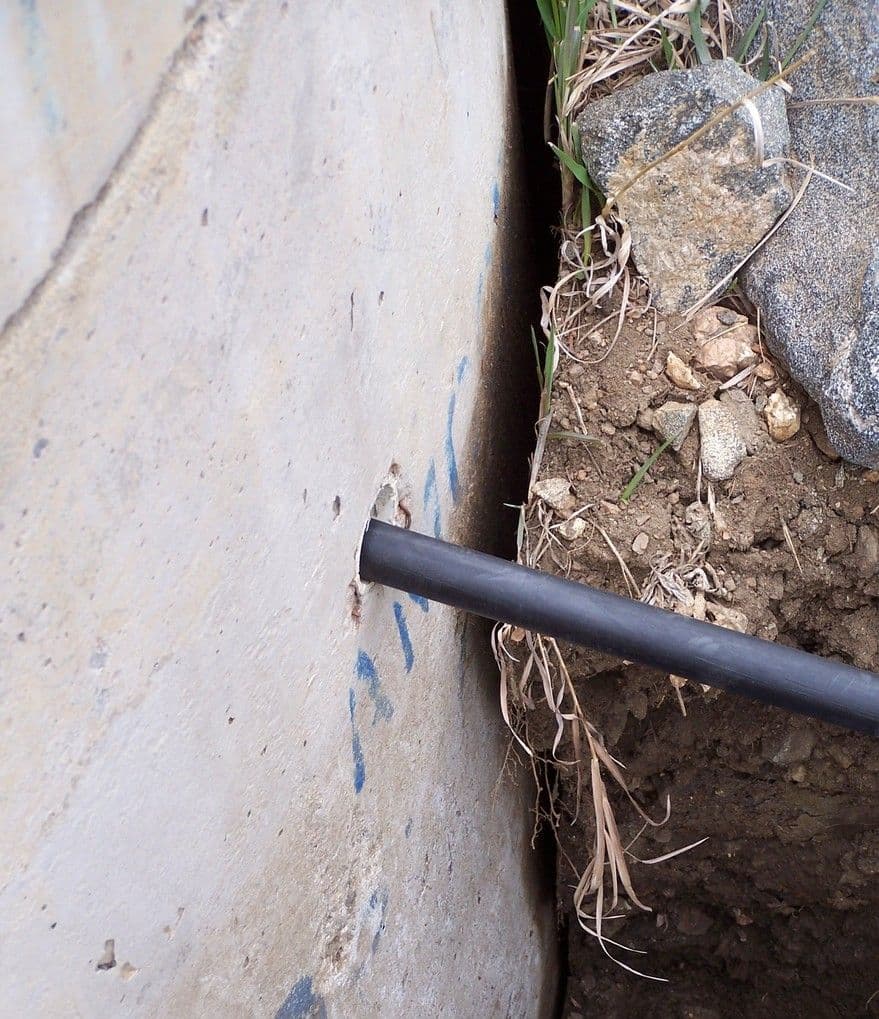
An injection line at the outside face of a precast manhole. On this project the injection holes were drilled through the soil around each manhole's circumference, so the polymer went where the water and the voids were.
The erosion had opened enough void space that 3 cubic yards of flowable fill were placed first to reduce it ahead of injection. Bulk fill takes up a large cavity economically. It also leaves the polymer for the precise work at the structure: filling the remaining voids, confining the soil against the wall, and closing the pathways at the joints.
Crews then drilled a series of 5/8-inch holes into the soil around the circumference of each manhole and injected structural polymer at depth, withdrawing vertically in increments. Each lift placed material higher on the structure, building a continuous zone around the manhole and across its inlet and outlet joints. The expanding polymer fills voids and compacts and confines the surrounding soil, and because it's hydro-insensitive, it cures in wet ground. Both manholes were done in less than 4 hours.
Verification started before any drilling. The video inspection of the trunk line located the I&I at the manholes, and that finding set the scope: two structures and their inlet and outlet connections.
After treatment, the project account reports both manholes leak-free and a reduced load reaching the treatment plant. Two limits belong on the record. The available documentation includes no post-repair video run, flow measurement, or long-term follow-up inspection, and the plant-load reduction is stated without a measured figure.
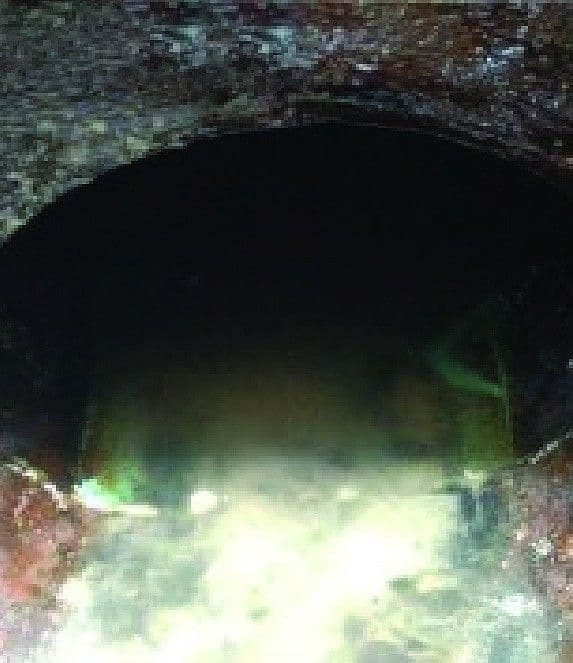
Looking down a sewer line from inside a manhole. A video run of the trunk line is what located this project's leakage at the manholes.
This is a production and cost record. It carries no quantified leakage rate and no before-and-after flow comparison, so the case for the method rests on what was observed at the structures and on what the repair cost against the alternative.
On the site: two manholes on a 30-inch sanitary trunk line, under an easement holding overhead power lines and six underground pipelines, with three 30-inch storm sewers directly above.
On the work: 3 cubic yards of flowable fill to reduce the void space, then 5/8-inch injection holes around each manhole's circumference, injected at depth in vertical increments. Both manholes were sealed in less than 4 hours.
On cost: the city reported saving more than 75% against the cured-in-place lining repair it had first considered. That figure is the owner's comparison against its own alternative, and it appears here as the city reported it.
Two leaking manholes on a 30-inch sanitary trunk line were sealed from the surface in less than 4 hours, inside a corridor where excavation was off the table.
 Both manholes sealed in less than 4 hours. Injection around each structure's circumference closed the leakage pathways at the inlet and outlet joints, and the project account reports both manholes leak-free after the work.Voids around the structures filled. Flowable fill took up the bulk of the eroded volume, and the polymer filled the remaining voids and confined the soil against each manhole, where soil had been washing into the line.No excavation in a congested corridor. Work through 5/8-inch holes left the overhead power lines, the six underground pipelines, and the three storm sewers above the trunk line undisturbed.More than 75% below the lining option. The city reported savings of more than 75% against the cured-in-place liner it had first considered.Less stormwater reaching the plant. The project account reports a reduced load on the city's treatment plant once the leaks were sealed. No measured flow figure is on record.
Find the leak before you pick the repair. The first plan here was a liner. A video run put the I&I at the manholes, and that one finding moved the repair to the structures and, by the city's figure, cut the cost by more than three-quarters.
Treat the ground around the structure. Infiltration that carries soil leaves voids behind the wall. Seal the joints and leave the voids, and the next pathway forms in the loose ground while the pavement above loses support. Fill them in the same visit.
Match the fill to the void. When erosion has opened a large cavity, reduce the volume with bulk fill first and save polymer injection for the work that needs precision at the structure and its joints.
Let utility congestion pick the access method. Overhead power, six pipelines, and three storm sewers stacked over the trunk line would have turned any excavation into a utility-protection project of its own. Injection from the surface kept the footprint to a series of 5/8-inch holes.
If wet-weather I&I is loading your treatment plant and the structures sit where excavation isn't practical, the repair can start at the surface. URETEK Deep Injection seals the pathways around existing manholes and fills the voids the water has opened, through 5/8-inch holes and with no digging. We'll start from what your inspection shows, size the approach to the voids and the leak locations, and work around the utilities already in the ground.

 800-240-7868


