

Location
Dallas-Fort Worth region, Texas
Structure Type
Vehicular departure ramp serving an on-site airport hotel and feeding a major international airport’s main access thoroughfare
Triggering Event
Rupture of a 10-inch high-pressure water main over a New Year’s holiday weekend
Core Challenges
Washed-out subgrade soils, 3–4 inches of ramp settlement, forced lane closures, and a hard overnight reopening deadline
URETEK Scope
URETEK Deep Injection® (UDI) to stabilize soils, fill voids, and lift the ramp back to grade, plus stabilization and filling of the failed utility trench
Result
Ramp restored to grade and reopened to traffic within 12 hours of the initial call, before the Saturday morning rush
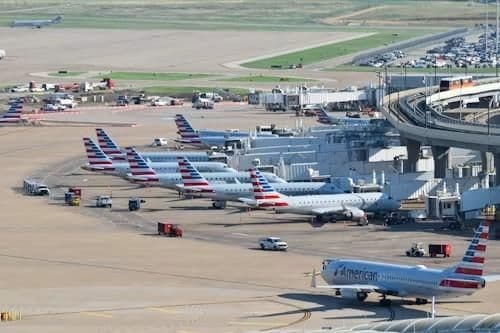
For a high-traffic international airport, a closed access ramp over a holiday weekend cascades into delays for thousands of travelers, and intense pressure to restore traffic fast.
The call came at 7:00 PM on the Friday of a New Year’s holiday weekend. A 10-inch high-pressure water line running alongside an on-site airport hotel had ruptured, and the break was causing significant damage, flooding the hotel’s basement level with roughly three feet of water.
The more serious structural problem was below grade. The escaping water was washing out the soils supporting the hotel’s vehicular departure ramp, the ramp that fed traffic onto the airport’s main thoroughfare. As the supporting soil eroded, the slab lost its foundation and settled three to four inches almost immediately.
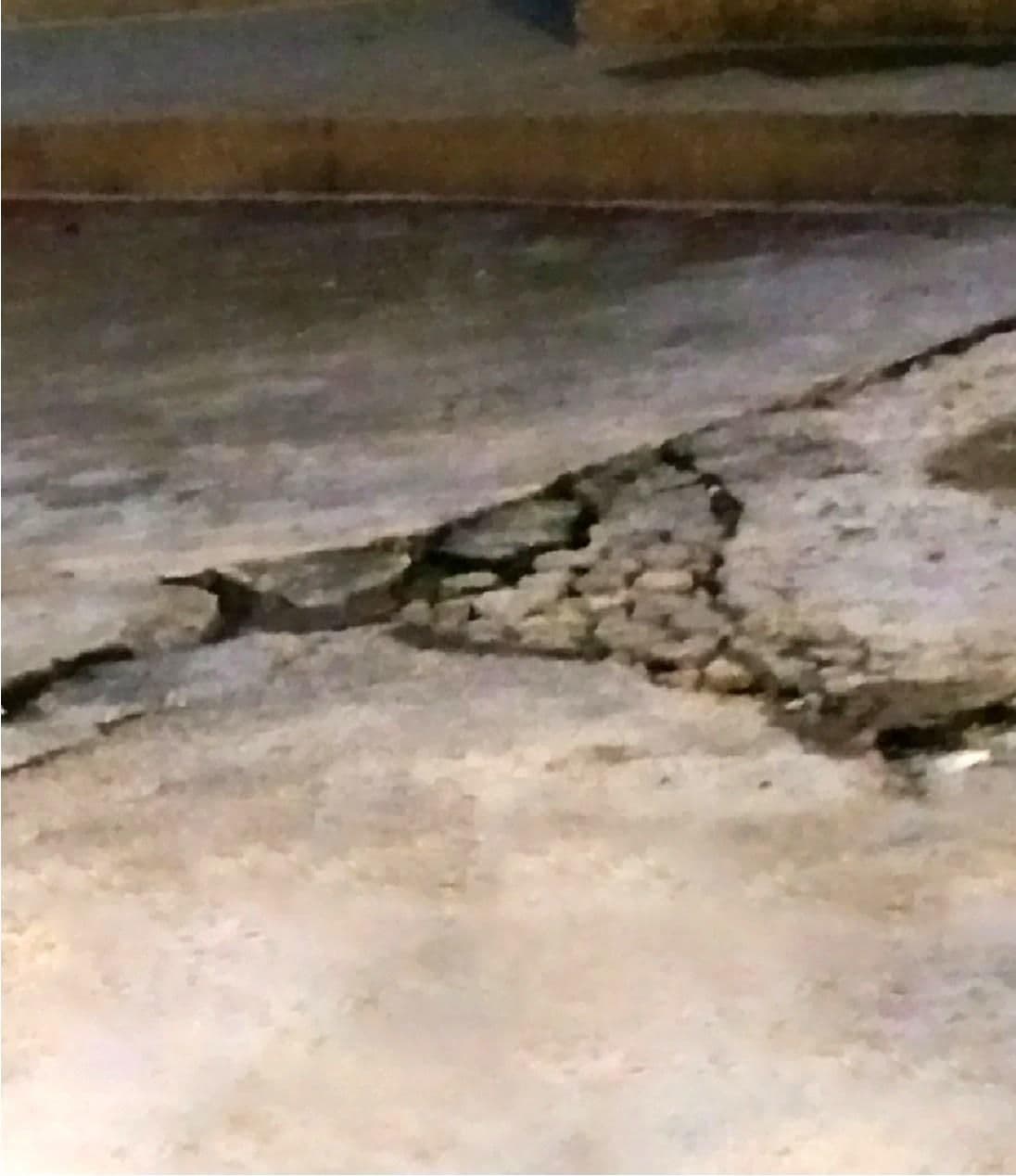
Soil loss beneath the ramp left the slab cracked and displaced, the surface symptom of voids opening in the subgrade below.
That settlement forced lane closures and rerouted traffic at one of the busiest travel periods of the year, creating severe delays for arriving and departing passengers. Every hour the ramp stayed closed compounded the congestion. The owner needed the ramp stabilized, lifted back to grade, and safe for travel before the Saturday morning rush, a hard, non-negotiable overnight deadline.
The traditional response to a settled, undermined slab is to excavate: remove the pavement, dig out and replace or re-compact the lost soil, and repour. On a live airport access ramp, over a holiday weekend, against a sunrise deadline, that approach was off the table. There was no time to excavate, no staging room, and no tolerance for a multi-day closure.
Excavation would also have meant working directly around a ruptured high-pressure utility corridor and a flooded structure, slow, disruptive, and hazardous. Conventional repair timelines for this kind of failure run days to weeks, not hours.
What the situation demanded was a method that could restore soil support and lift the slab from within the ground, through the existing pavement, with no excavation, fast enough to reopen lanes by morning and durable enough to keep the failure from returning.
URETEK called in local crew members along with support staff from company headquarters and mobilized overnight. The crew was on site and assessing conditions by 12:30 AM, and after agreeing on a URETEK Deep Injection® (UDI) plan, injections began at 1:00 AM, hours after the initial call, not days. The work was executed in two coordinated phases: first restoring support and grade, then sealing the source of the washout.
URETEK Deep Injection® (UDI) restores load-bearing capacity by injecting structural polymer directly into the base and subgrade soils, through small holes drilled through the existing pavement to depths determined by site-specific analysis, with no excavation and no removal of the slab. URETEK 486 Star® material flows into the voids and weak zones within the soil mass, then, through a controlled chemical reaction, expands to compact the surrounding soil and apply controlled upward pressure on targeted areas of the pavement above. A multi-injection design plan gently returns the slab to its original grade.
URETEK 486 Star® is a two-component, high-density, expanding thermoset polyurethane that cures quickly into a strong, dimensionally stable, water-resistant geo-material. It is environmentally inert, non-toxic, and, critically for a failure caused by water, hydrophobic, resisting the underground water erosion that undermined the ramp in the first place.
With the ramp lifted and the soils beneath it stabilized, the second phase addressed why the failure happened at all. The escaping water had scoured out a void along the ruptured utility corridor; unless that void was sealed, the pavement above it would remain prone to settle again.
URETEK stabilized and filled the utility trench where the 10-inch line had run, sealing the void that had allowed the washout and eliminating the pathway for future settlement of the pavement above. Correcting both the displaced slab and the underlying voided soil is what turns an emergency response into a lasting repair.
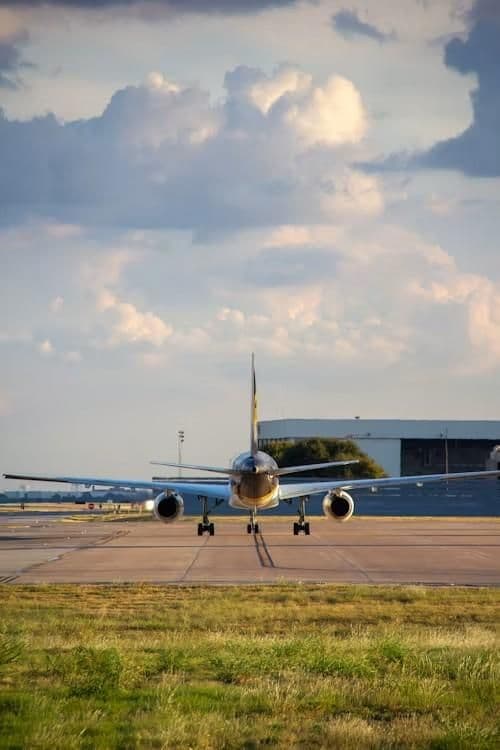
By the Saturday morning rush, the ramp was carrying traffic again, and airport operations continued without added delay.
By 7:00 AM Saturday, just 12 hours after the initial 7:00 PM call, the URETEK crew was already demobilizing. The emergency response met every objective the situation demanded:

Ramp restored to grade. UDI lifted the settled departure ramp back to its original elevation and reopened it to traffic within the overnight window.
Root cause eliminated. Stabilizing and filling the voided utility trench removed the pathway that had allowed the soils to wash out, guarding against a repeat failure.
No excavation, minimal disruption. Injecting through small holes in the existing pavement avoided demolition, spoil removal, and the extended closure a conventional rebuild would have required.
Twelve-hour emergency turnaround. From a 7:00 PM Friday call to a demobilized crew by 7:00 AM Saturday, traffic was flowing again before the morning rush.
Durable, water-resistant repair. The cured URETEK 486 Star® polymer forms a dimensionally stable, hydrophobic geo-material engineered to resist future water erosion and provide years of reliable service.
For critical facilities, speed is an engineering requirement. At airports, hospitals, ports, and similar sites, the cost of downtime often dwarfs the cost of the repair itself. A method that restores service in hours instead of weeks changes what is possible in an emergency.
Lift and stabilize with little or no excavation. Injecting structural polymer through the existing slab restores soil support and corrects grade with no demolition and no spoils, a decisive advantage where there is no room, no time, or no tolerance for a full tear-out.
Treat the cause, not only the symptom. Re-leveling a slab that still sits over an open void is temporary. Filling the void and stabilizing the surrounding soil is what keeps the settlement from coming back.
If you are responsible for pavement, ramps, or slabs that have settled, especially over failed utilities or washed-out soils, in locations where excavation is impractical and downtime is costly, URETEK can help. URETEK will assess your site conditions, design a targeted URETEK Deep Injection® plan, and restore soil support and grade with minimal disruption, often within a single overnight window.

 800-240-7868


