

Written By Admin
|
Published on 8/12/2026
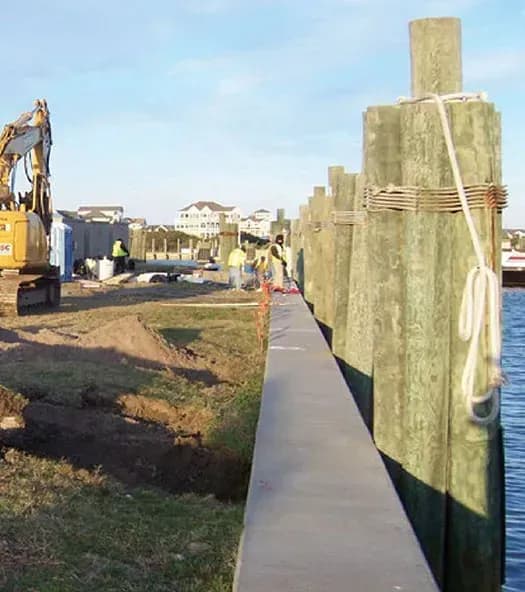
Coastal landowners understand the importance of erosion control. They do today, and they have for thousands of years. Human history is full of examples of efforts put forth to stop the natural effects of wave action and coastal flooding. Constantine I is credited as the ruler behind the ancient seawalls in Byzantium, some of which are still visible today. Yet, for as long as humans have built structures to keep the water out, water has been finding ways to creep back in.
Today's seawalls are designed and constructed with the latest materials and methods, utilizing machinery and practices that reflect advances in human knowledge and experience. Modern seawalls are constructed out of many materials, including concrete, steel sheet pile, wood, and rock-filled wood structures, in an effort to limit the negative consequences of wave action, tidal movement, and storm surges. Still, even as we build the best seawalls in human history, water still gets in.
Land and water interact in complex ways to erode, extend, and reshape the earth. For waterfront communities and public infrastructure assets like ports and ferry terminals, this interaction can sometimes lead to disastrous consequences.
Among the biggest threats to seawalls is what happens when waves, tides, and storm surges come into contact with them. Because seawalls do not absorb the energy that waves, tides, and storm surges bring with them, that energy is typically directed downward and sideways. This downward-directed energy scoops out soil at the base of the seawall in a process called scouring.
Over many years, this natural scouring process can undercut the bottom of a seawall and lead to erosion behind it. Many of our nation's most important coastal assets are protected by seawalls, some of which have fallen into serious disrepair. These assets are threatened when the long-term effects of scouring show up in the form of sinkholes and weak soils behind them.
While environmental concerns are important wherever we consider them, perhaps nowhere are they more urgent than when considering our nation's waterways and coastal areas. A critical concern for any seawall repair project must involve possible environmental impact.
What do you do when your ferry terminal, commercial port, or community seawall starts to develop sinkholes? You need a fast solution, but not just any solution will do. Of primary importance is the impact of any mitigation measure on the surrounding environment.
URETEK 486 Star® is a two-component, high-density, expanding thermoset polyurethane system. UDI can reduce demolition and material movement compared with remove-and-replace, and the current SDS and TDS for URETEK 486 Star® are available on request. That makes it a practical choice for seawall repair projects. Its hydrophobic properties resist the underground water erosion that leads to seawall failure in the first place.
URETEK developed its polymer to be the ideal solution for under-sealing, filling voids, lifting settled pavement, stabilizing and stiffening weak soils, and for encapsulating and sealing buried infrastructure.
For over 30 years, URETEK has been a trusted, reliable partner for DOT officials in charge of ferry terminal maintenance and repair, city officials with seawall concerns, and private property owners with shoreline erosion issues. Our URETEK Deep Injection® (UDI) application is the perfect solution for coastal structures showing signs of failure due to erosion. With its rapid response and experienced crews, URETEK is well prepared to complete emergency seawall repair and standard maintenance tasks on time and on budget.
Contact URETEK today to learn more about our speedy repair and maintenance services for your coastal infrastructure assets.
Wave, tide, and storm energy directed downward and sideways against a seawall scoops out soil at its base in a process called scouring, which can undercut the wall and lead to erosion behind it over many years.
Yes. The current SDS and TDS for URETEK 486 Star® are available on request, so owners can review the material for environmentally sensitive coastal repair projects.
Yes. Its hydrophobic properties help resist the underground water erosion that leads to most seawall failures in the first place.
See how URETEK protects seawalls, bulkheads, and ports from the erosion that threatens them.
Contact URETEK

 800-240-7868


